Coordination, control & how ShoulderBack Pro works
Why Training Both Arms Together Changes How the Brain Learns Movement
6-minute read · Published September 8, 2025 · Updated September 8, 2025
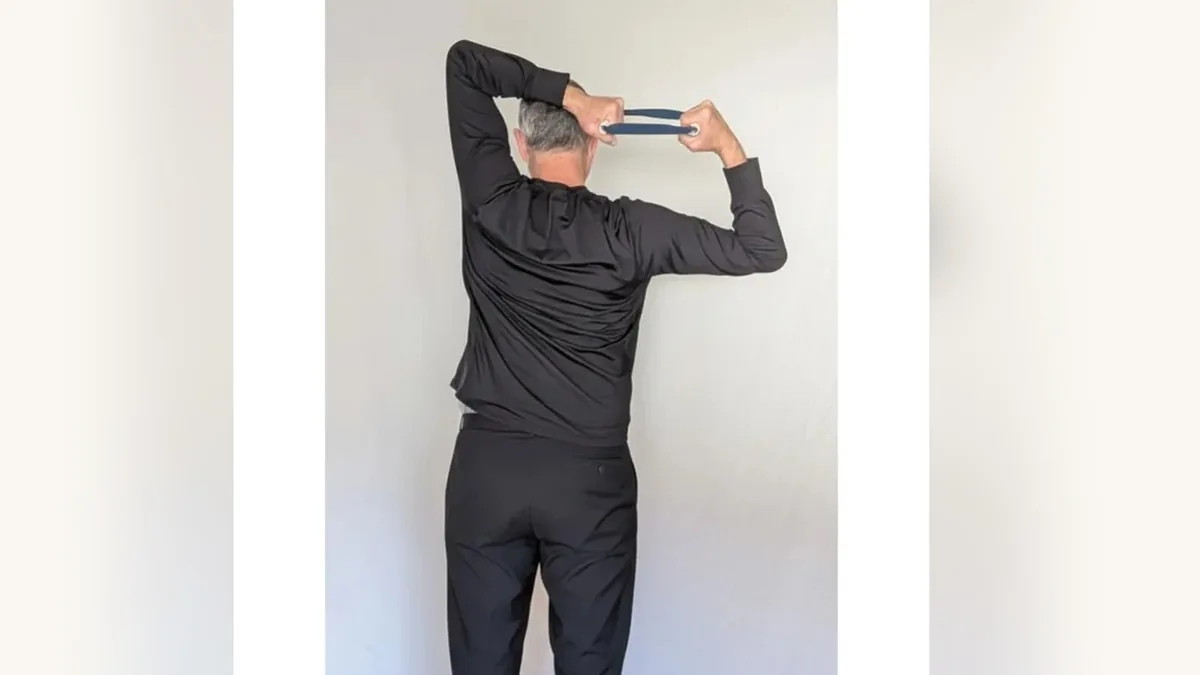
What this is
Your brain controls each arm, but the two sides are not separate. They share pathways, and movements of one arm can influence the other. Researchers call the link between limbs interlimb coupling. When both arms move together, the nervous system has to coordinate them.
This is a plain-language idea, not a settled model. Much of the research comes from people recovering from stroke, not from healthy adults, so we need to read it carefully.
What the research says
- In chronic stroke, bilateral, or both-arm, training produced greater shoulder-movement improvement than single-arm training. The authors describe the benefit as linked to interlimb coupling. This is evidence from stroke rehabilitation, not from healthy adults [R14].
- Training that challenges joint position sense improved proprioception and motor control in the trained wrist and in the untrained opposite wrist, 24 hours later. In plain terms, the two sides of the body learn from each other [R15].
- Shoulder disorders are linked with reduced joint position sense, and proprioception affects how accurately you move [R16].
What you can do
- Move both arms at once. Choose a simple pattern, such as both arms reaching forward together, and do it slowly. Matching movements ask both sides to coordinate.
- Try alternating patterns. When one arm moves, the other follows or stays still. This asks the two sides to take turns, which is a different kind of coordination.
- Pay attention to the feel. Notice whether the arm that is working harder feels different. Small differences are normal, and a big difference is worth mentioning to a clinician.
- Keep it short and regular. A few minutes most days is easier to keep than one long session you dread.
- Seated option. Sit tall with your back supported. Do the same two-arm patterns in a chair, at a pace that feels calm.
Where ShoulderBack Pro fits, and where it doesn't
The trainer is built around the two-arm idea: two handles on a fixed-length, non-elastic strap, so one arm assists while the other resists and the effort is yours to set. SeeSaw, alternating reaches with one arm guiding the other, shows the idea most clearly, and Arm Wrestler pivots both forearms inward so the sides work in a matched pattern. Both can be done seated. To make it harder, resist more firmly or move through more range. The studies above did not test it, the stroke evidence is not about healthy adults at home, and there are no clinical trials of the trainer yet. If you want to try the idea, you can look at the trainer or start with the video lessons.
For more on how the device works, read Mechanical Coupling: Why a Fixed-Length Strap Feels Different From a Band and What Is Interlimb Coordination and Why Does It Matter After 50?.
When to see a professional
See a doctor or physiotherapist promptly if you have: pain after a fall or injury with sudden weakness or loss of movement; a shoulder that looks deformed, very swollen or bruised; fever or feeling unwell alongside the pain; chest pain or breathlessness (call emergency services); constant pain that doesn't change with rest or activity; pain that wakes you most nights; numbness, tingling or weakness into the arm or hand; pain in several joints at once; or pain that hasn't improved after a couple of weeks of sensible self-care.
If you have had a stroke, follow your rehabilitation team's plan before you try any new two-arm routine. Numbness or weakness in one arm or hand needs assessment first.
Try this movement
All 16 video lessons →Frequently asked questions
Does training one arm help the other arm?
Some studies suggest it can. A 2021 study found proprioceptive training in one wrist improved control in the untrained opposite wrist [R15].
Is two-arm training better than one-arm training?
In stroke rehabilitation, bilateral training gave greater shoulder-movement improvement than single-arm training [R14]. We have not seen the same comparison in healthy adults.
Does this mean the ShoulderBack Pro proves something?
No. The research is about bilateral training in general, not about ShoulderBack Pro. Treat it as a reason the design is interesting, not as proof it works.
Can I try two-arm movement seated?
Yes. Sit tall in a supported chair and move both arms in matching or alternating patterns, at a comfortable pace.
Sources
- Journal of Physical Therapy Science (2016). The effects of bilateral movement training on upper limb function in chronic stroke patients. https://pmc.ncbi.nlm.nih.gov/articles/PMC5011582
- Scientific Reports (2021). Proprioceptive-focused training transfers gains to the opposite, untrained limb. https://pmc.ncbi.nlm.nih.gov/articles/PMC7935923
- Mureşan et al. (2022). Effects of a novel proprioceptive rehabilitation device on shoulder joint position sense, pain and function. Medicina. https://www.ncbi.nlm.nih.gov/pmc/articles/PMC9505091/
More in this topic
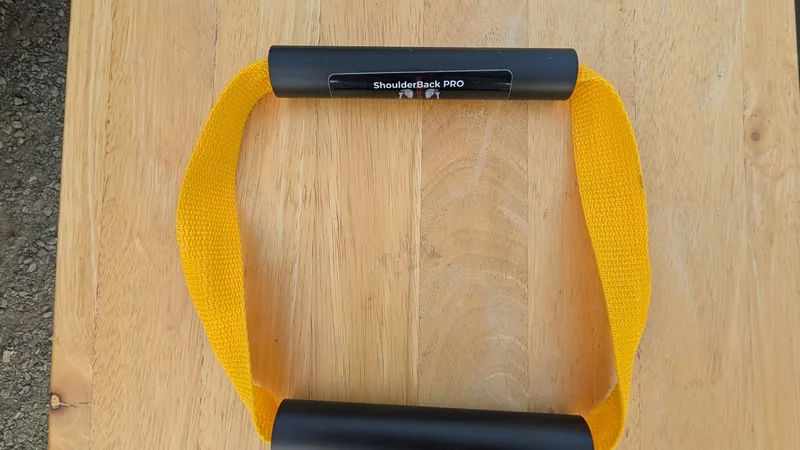 Essential guide: How ShoulderBack Pro Works: One Device, Two Connected Handles, Your Own Resistance
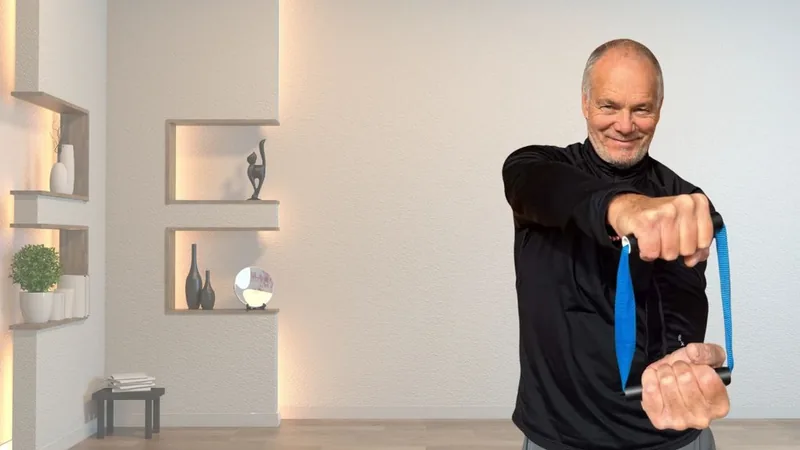 Pairing SBP With Walking: The Simplest Whole-Body Routine for Active Aging
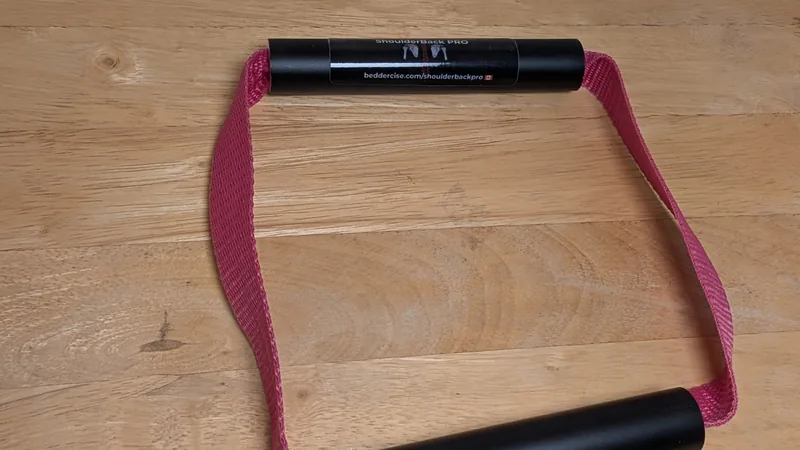 Locomotive: Rolling Circles for the Upper Back and Rear Cuff
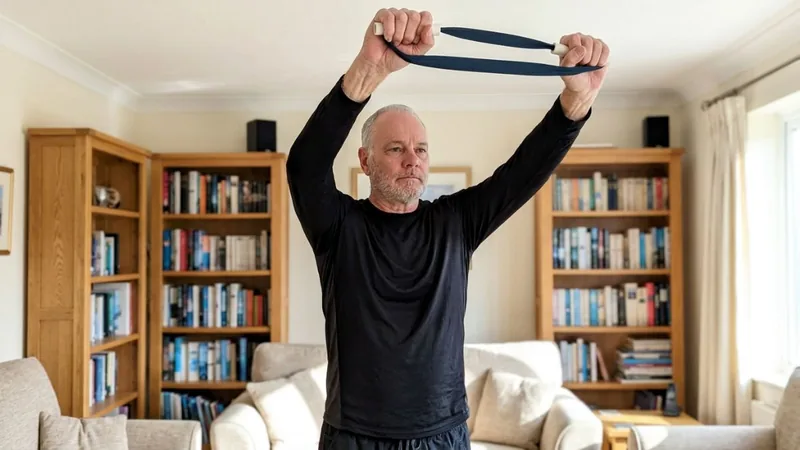 Overhead Press (High Shelf Reach): Trapezius and Deltoids Without a Weight