Coordination, control & how ShoulderBack Pro works
Mechanical Coupling: Why a Fixed-Length Strap Feels Different From a Band
5-minute read · Published November 21, 2024 · Updated November 21, 2024
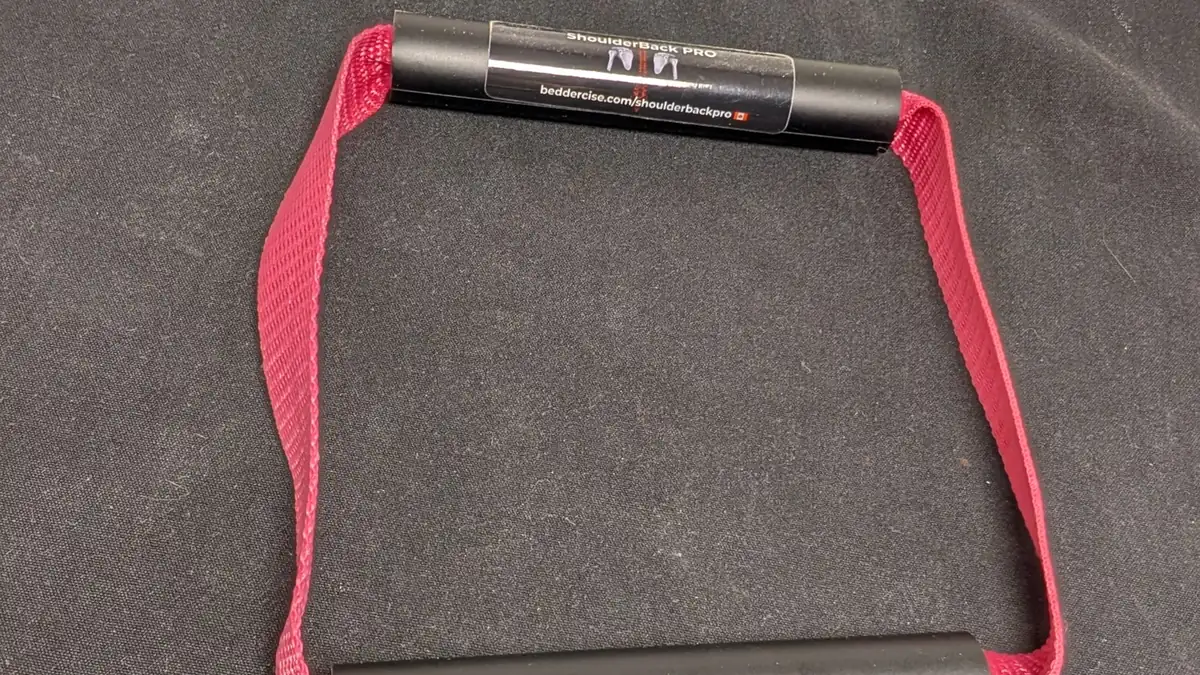
Why this happens / What this is
Most resistance tools work on tension. You pull an elastic band, the band stretches, and it pushes back harder as it gets longer. The resistance grows with the stretch.
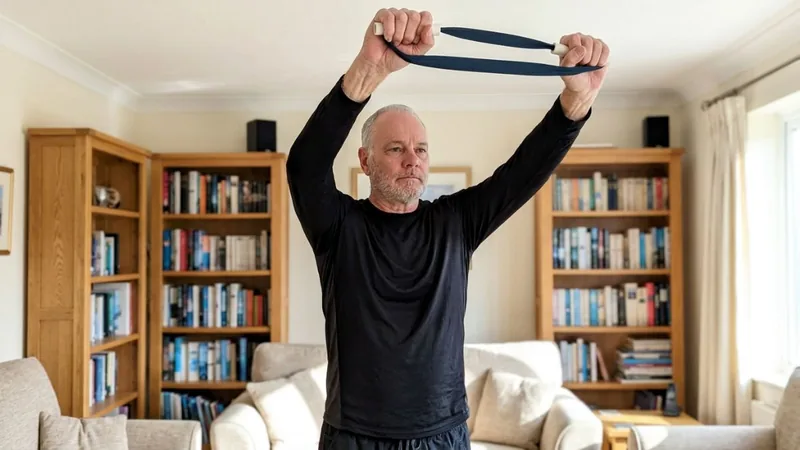
ShoulderBack Pro works differently. Two handles are joined by a fixed-length, non-elastic strap. Nothing stretches. One arm assists while the other resists, so the challenge comes from the link between your two arms. You set the effort, pace and range.
We call this mechanical coupling here. The word describes how the parts are connected. Two arms are linked by a length, not a spring. That is a feature of how the device is built, not a claim about your body's response. In practice, the feel of each repeat depends more on how you move than on how far the handles have been pulled.
What the research says
- Both arms working together produced greater shoulder-movement gains than single-arm training in stroke rehabilitation. The study is about stroke patients, not healthy adults, so treat it as a reason to be curious [R14].
- Training that challenges joint position sense improved control in a trained wrist and in the untrained opposite wrist. The two sides of the body seem to learn from each other [R15].
- Shoulder disorders are linked with reduced joint position sense. Better sense of where the joint is may help movement accuracy, though the link is not fully understood [R16].
- Programs focused on motor control may reduce disability a little more than generic exercise [R02].
These are findings about related ideas. None of them tests a fixed-length strap.
What you can do
- Start with one arm leading. Notice how the other arm responds. Seated option: sit in a stable chair with your back supported.
- Keep the effort gentle. A fixed strap can feel more direct than an elastic band, so start lighter than you think you need. Seated option: keep your elbows close to your sides.
- Pay attention to both sides. Notice whether one arm feels more controlled. Note it, and do not force the weaker side.
- Slow the pace. Smooth, controlled movement gives you more feedback about how each arm is working.
- Stop with sharp pain or numbness. Any sensation down the arm or into the hand needs a clinician's check.
- Compare with a band if you have one. Try the same gentle movement with each tool and note how it feels. Seated option: do both from an armchair.
Where ShoulderBack Pro fits — and where it doesn't
If you want to feel the coupling for yourself, two lessons show it most clearly. SeeSaw has one arm guide the other through alternating reaches, and Bicep Tricep has one arm curl while the other extends, so each arm is the other's resistance. Both can be done in an armchair, with no anchor and no weights. The lessons are on the video lessons page.
It is not a medical device and not a treatment, and there is no trial evidence about it specifically, so the strap design is a reasonable idea rather than a proven result. It will not replace a band or weights if you want heavy, progressive loading. You can find it in the shop.
Related reading: assist and resist, how one arm helps the other move and what is body-controlled resistance.
When to see a professional
See a doctor or physiotherapist promptly if you have: pain after a fall or injury with sudden weakness or loss of movement; a shoulder that looks deformed, very swollen or bruised; fever or feeling unwell alongside the pain; chest pain or breathlessness (call emergency services); constant pain that doesn't change with rest or activity; pain that wakes you most nights; numbness, tingling or weakness into the arm or hand; pain in several joints at once; or pain that hasn't improved after a couple of weeks of sensible self-care.
Only a doctor, physiotherapist or other qualified clinician can diagnose the cause of shoulder or arm symptoms. Numbness, tingling or weakness in the arm or hand should be assessed before you start any new movement.
Try this movement
All 16 video lessons →Frequently asked questions
What does mechanical coupling mean?
Here it means two handles linked by a fixed length, so one arm's movement and effort shape what the other arm feels. It describes how the device is built, not a proven health effect.
Is a fixed strap better than a band?
It is different, not automatically better. Some people prefer the predictable feel of a fixed strap. Others prefer the wide range of exercises a band allows.
Why does it matter for desk workers?
Long hours in one position can leave shoulders less varied. Short, controlled sessions that use both arms give the shoulders a different job. This is a reasonable idea, not a proven result.
Sources
- Journal of Physical Therapy Science (2016). The effects of bilateral movement training on upper limb function in chronic stroke patients. https://pmc.ncbi.nlm.nih.gov/articles/PMC5011582
- Scientific Reports (2021). Proprioceptive-focused training transfers gains to the opposite, untrained limb. https://pmc.ncbi.nlm.nih.gov/articles/PMC7935923
- Mureşan et al. (2022). Effects of a novel proprioceptive rehabilitation device on shoulder joint position sense, pain and function. Medicina. https://www.ncbi.nlm.nih.gov/pmc/articles/PMC9505091/
- Dubé M-O et al. (2024). The Efficacy of Exercise Therapy for Rotator Cuff-Related Shoulder Pain According to the FITT Principle: Systematic Review With Meta-analyses. JOSPT. https://pubmed.ncbi.nlm.nih.gov/38848304/
More in this topic
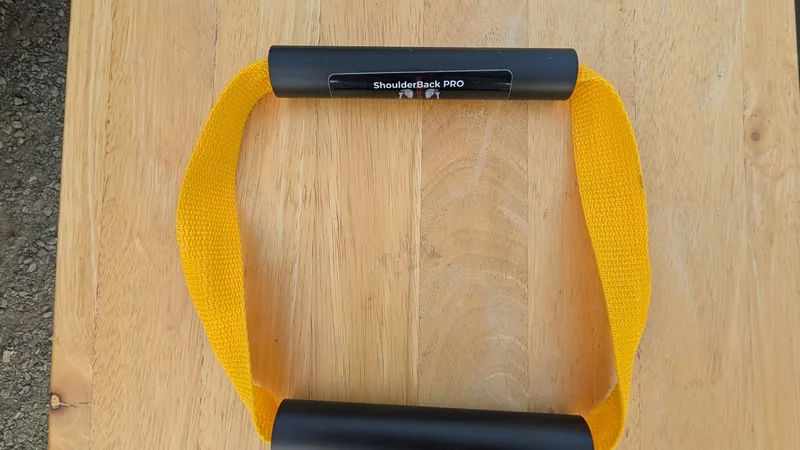 Essential guide: How ShoulderBack Pro Works: One Device, Two Connected Handles, Your Own Resistance
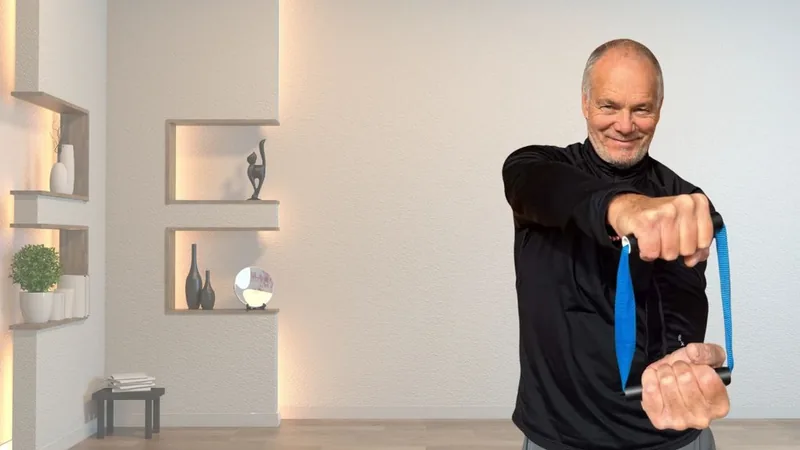 Pairing SBP With Walking: The Simplest Whole-Body Routine for Active Aging
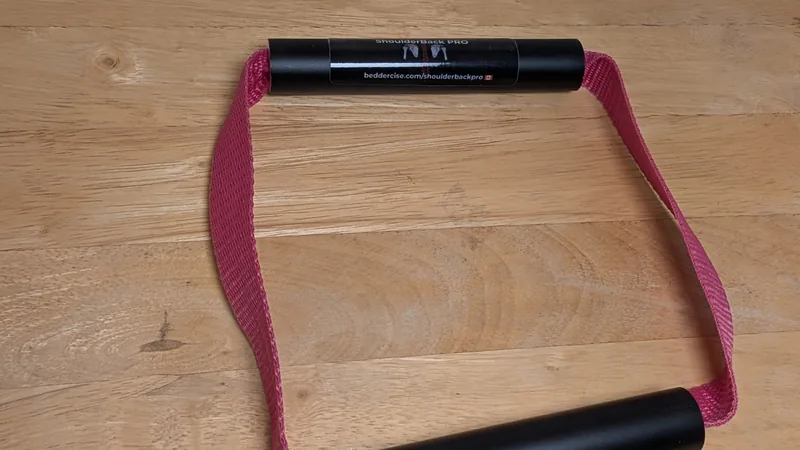 Locomotive: Rolling Circles for the Upper Back and Rear Cuff
 Overhead Press (High Shelf Reach): Trapezius and Deltoids Without a Weight