Coordination, control & how ShoulderBack Pro works
Overhead Press (High Shelf Reach): Trapezius and Deltoids Without a Weight
4-minute read · Published June 19, 2026 · Updated June 19, 2026
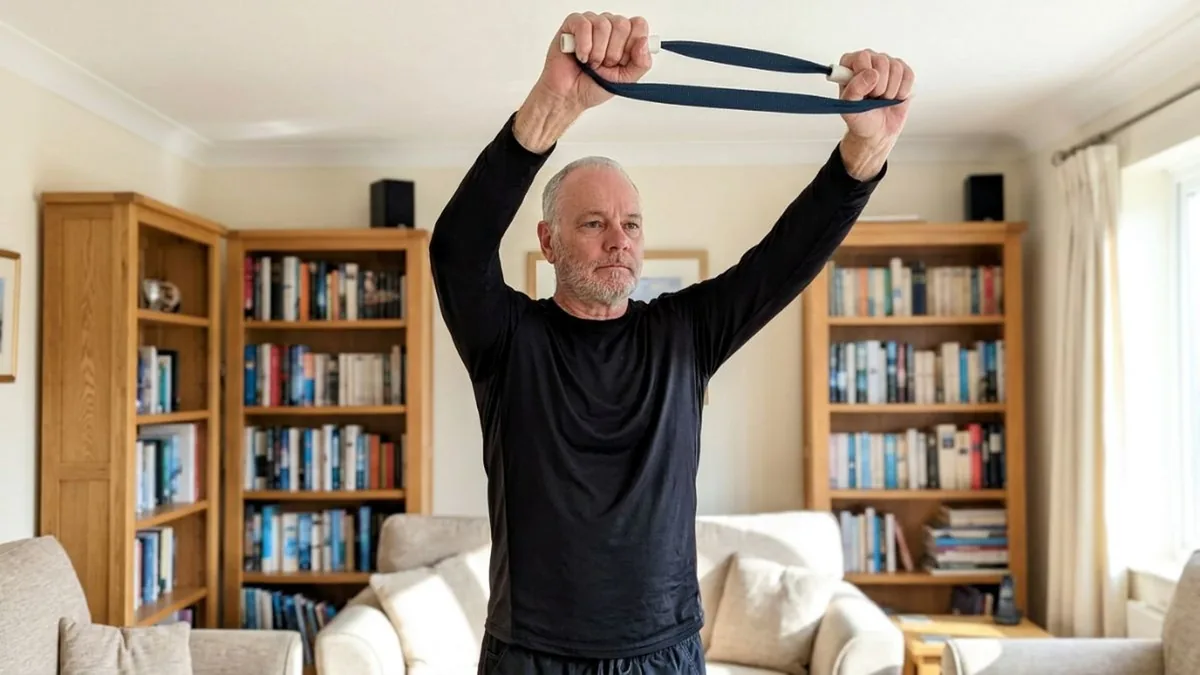
What this movement is
The overhead press is one of the 16 guided movements in the ShoulderBack Pro video lessons. The cue is practical: lift your hand as if setting a cup on a high shelf. No weight is needed.
Three muscle groups do most of the work. The upper and lower trapezius sit across the upper back and help move and steady the shoulder blades (scapulae). The deltoids are the rounded muscles over the shoulder that lift the arm.
What the research says
- Strength, mobility, body composition and posture are each associated with shoulder pain and disability in adults over 60. Evidence for posture specifically is limited and indirect [R28].
- A 2025 review found that scapular stabilisation exercise improved pain and function in people with rotator-cuff-related shoulder pain [R03].
- Resistance training supports strength, mobility and independence in older adults [R06].
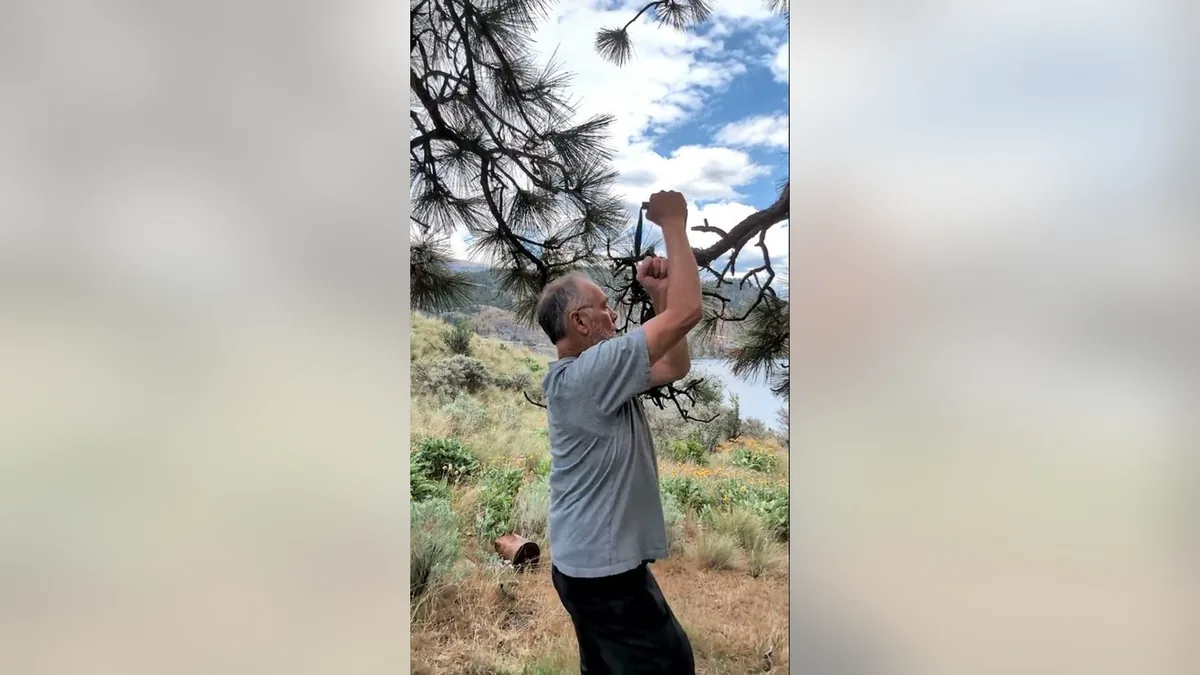
What you can do
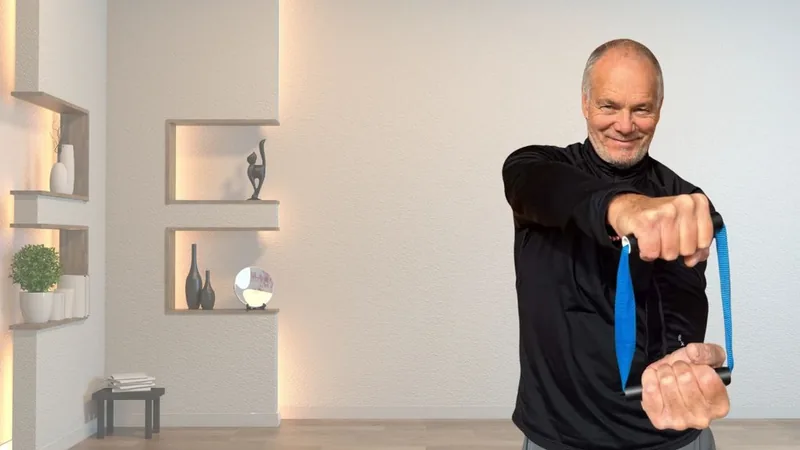
- Sit tall in an armchair with your feet flat. Hold the trainer in both hands at about chest height.
- Let one arm lead slowly up and forward, as if placing a teacup on a high shelf. Keep the elbow soft.
- Let the other arm guide with light resistance. Stop before the shoulder shrugs up toward your ears.
- Lower slowly, with control, and repeat a few times. Begin with a small range and increase it over weeks only if it feels comfortable.
Standing option: stand with feet hip-width apart and repeat the reach, keeping your ribs down and your lower back relaxed.
Where ShoulderBack Pro fits — and where it doesn't
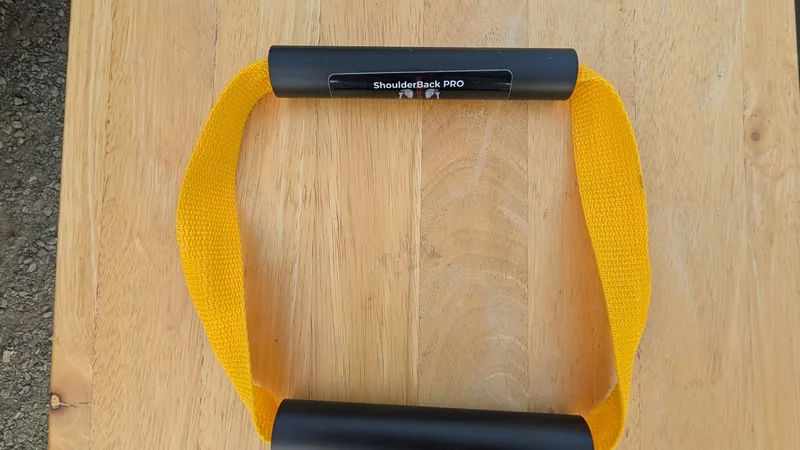
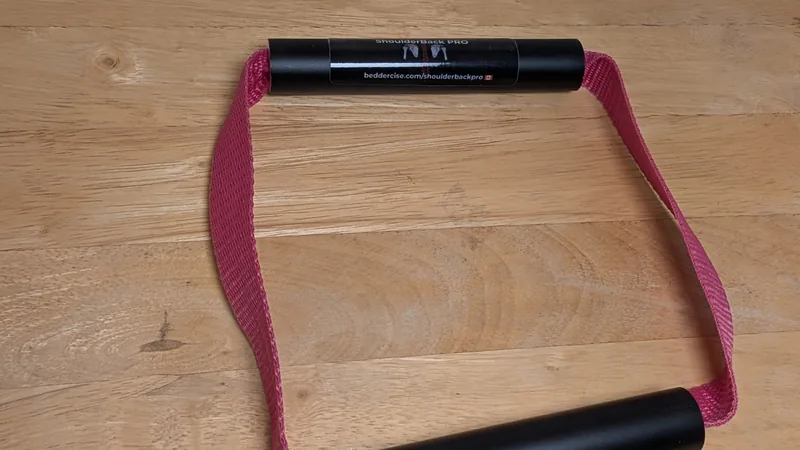
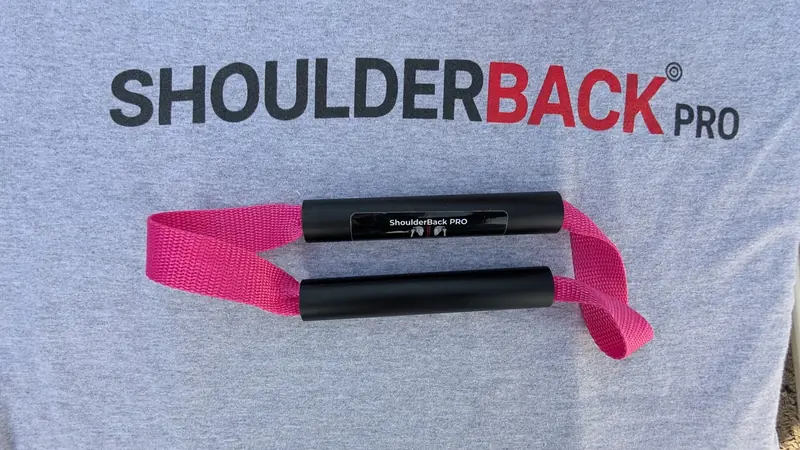
This is one of the trainer's own 16 exercises, so it fits well. The strap links your hands: one arm reaches up while the other resists, and the resistance is yours to set. To progress, resist a little harder, reach through more range, or do longer sets, rather than adding weight. It can be done seated, and all 16 lessons are on the routines page.
It is a wellness tool, not a treatment, and there are no clinical trials of it yet. Check with a clinician first if you have a diagnosed shoulder problem. If you would like to try it, the trainer is $29 CAD with a 30-day guarantee. Related reading: Around the World and Steering.
When to see a professional
See a doctor or physiotherapist promptly if you have: pain after a fall or injury with sudden weakness or loss of movement; a shoulder that looks deformed, very swollen or bruised; fever or feeling unwell alongside the pain; chest pain or breathlessness (call emergency services); constant pain that doesn't change with rest or activity; pain that wakes you most nights; numbness, tingling or weakness into the arm or hand; pain in several joints at once; or pain that hasn't improved after a couple of weeks of sensible self-care.
Only a doctor or physiotherapist can find out why your shoulder hurts when you reach up.
Try this movement
All 16 video lessons →Frequently asked questions
Is an overhead reach safe after 70?
A gentle, controlled range is usually fine for most people. Check with a clinician first if you have had a shoulder injury or surgery, or if the shoulder wakes you at night.
Why does my shoulder pinch when I reach up?
Pinching or catching can have several causes, and only a clinician can work them out. Keep the range small, avoid forcing it, and get checked if it continues.
Can I add a weight instead?
In rotator-cuff-related shoulder pain, resisted exercise that progresses over time probably helps more than gentle unloaded movement [R01]. Add load only after a clinician has cleared you, and increase it slowly.
Sources
- Naunton J et al. (2020). Effectiveness of progressive and resisted and non-progressive or non-resisted exercise in rotator cuff related shoulder pain: systematic review and meta-analysis of RCTs. Clinical Rehabilitation. https://search.pedro.org.au/search-results/record-detail/61404
- Frontiers in Bioengineering & Biotechnology (2025). Specific modes of exercise to improve rotator cuff-related shoulder pain: systematic review and meta-analysis. https://pmc.ncbi.nlm.nih.gov/articles/PMC12011739/
- Fragala MS, Cadore EL, Dorgo S et al. (2019). Resistance Training for Older Adults: Position Statement From the National Strength and Conditioning Association. Journal of Strength and Conditioning Research. https://pubmed.ncbi.nlm.nih.gov/31343601/
- PMC narrative review (2026). Body composition, strength, mobility and posture associated with shoulder pain and disability in community-dwelling older adults. https://www.ncbi.nlm.nih.gov/pmc/articles/PMC13513864/