Coordination, control & how ShoulderBack Pro works
What Is Interlimb Coordination, and Why Does It Matter After 50?
5-minute read · Published August 4, 2025 · Updated August 4, 2025
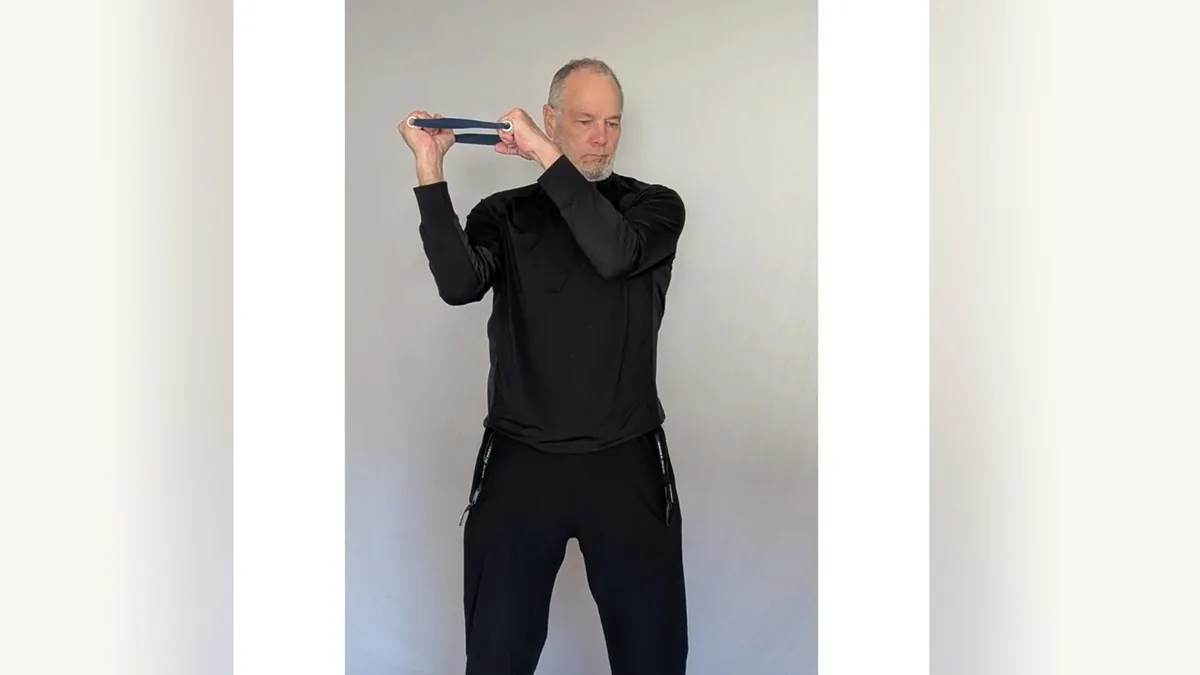
Why this happens
Your brain controls the two arms through connected pathways. When you move one arm, the other side of the body is often quietly involved, holding posture, balancing or stabilizing. Interlimb coordination is the skill of timing and sharing that work so that both arms move well together.
This matters in daily life more than most people notice. Lifting a laundry basket, opening a jar while holding it steady, or reaching overhead while bracing with the other hand all depend on it. When coordination is rusty, movements can feel clumsy, and people often compensate by using one side too much.
Joint position sense, or proprioception, is part of the same system. It tells you where your arm is in space without looking. It can be reduced in many shoulder disorders [R16].
What the research says
- Bilateral, or two-arm, training improved shoulder movement more than single-arm training in stroke rehabilitation [R14]. That is evidence from people recovering from stroke, not from healthy adults, and it suggests the idea is worth testing.
- Training that challenges joint position sense improved control in the trained wrist and also in the untrained opposite wrist [R15]. In plain terms, the two sides of the body can learn from each other.
- Motor-control exercise programs reduced disability slightly more than generic exercise in the short and medium term for rotator cuff-related pain [R02]. Researchers are not sure whether control itself is the reason for the gain.
- Taken together, these findings suggest coordination is a reasonable thing to train. They do not show that any device, including ShoulderBack Pro, improves shoulder health on its own.
What you can do
- Start with a seated, slow pattern. Sit tall and rest both forearms on your thighs. Move both hands forward and back together, keeping the pace even.
- Try one arm guiding the other. Let one hand lead a slow, smooth movement while the other follows. Switch sides after a few breaths.
- Add opposite movement. Keep one arm still while the other moves, then swap. This asks the two sides to do different jobs.
- Keep the range comfortable. Coordination improves at a comfortable effort. Stop before you have to tense your neck or hold your breath.
- Practise briefly and often. Two to three minutes a day is easier to keep than a long session once a week.
- Notice the difference. Are both arms moving smoothly? Is one side doing more of the work? Those observations are useful information.
If you are curious about the bigger picture, our guide to how ShoulderBack Pro works explains the two-handle design. You may also enjoy what body-controlled resistance means and why both sides of the body learn from each other.
Where ShoulderBack Pro fits — and where it doesn't
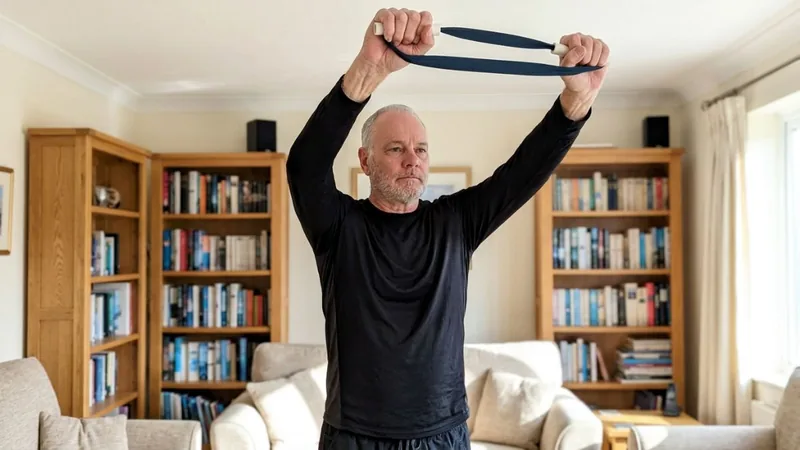
The trainer is built around this idea: two handles on a fixed-length, non-elastic strap, so one arm assists while the other resists. SeeSaw (the first of the 16 video lessons; alternate gentle reaches, one arm guiding the other) is the plainest coordination drill, and Bicep Tricep, where one arm curls while the other extends, asks the two sides to do different jobs at once. You set the effort, pace and range, seated or standing.
It's a wellness product, not a medical device, and no clinical trial has studied it. If you are recovering from stroke or another neurological condition, work with your therapist first. Otherwise you can order online.
When to see a professional
See a doctor or physiotherapist promptly if you have: pain after a fall or injury with sudden weakness or loss of movement; a shoulder that looks deformed, very swollen or bruised; fever or feeling unwell alongside the pain; chest pain or breathlessness (call emergency services); constant pain that doesn't change with rest or activity; pain that wakes you most nights; numbness, tingling or weakness into the arm or hand; pain in several joints at once; or pain that hasn't improved after a couple of weeks of sensible self-care.
A doctor, physiotherapist or other licensed clinician should assess any new weakness, loss of control or numbness in one arm. Coordination changes can have many causes, and only a clinician can tell which applies to you.
Try this movement
All 16 video lessons →Frequently asked questions
Is interlimb coordination the same as strength?
No. Strength is how much force a muscle can produce. Coordination is how well your muscles and nerves time and share that force, especially across both sides of the body.
Why does coordination matter more after 50?
Coordination and joint position sense can change with age and with inactivity. Keeping the skill active is a reasonable goal, though the research on healthy older adults is still growing.
Can I practise this seated?
Yes. Sit tall and move both arms in a controlled way, such as one arm guiding the other. Keep the range comfortable and the pace slow.
Sources
- Dubé M-O et al. (2024). The Efficacy of Exercise Therapy for Rotator Cuff-Related Shoulder Pain According to the FITT Principle: Systematic Review With Meta-analyses. JOSPT. https://pubmed.ncbi.nlm.nih.gov/38848304/
- Journal of Physical Therapy Science (2016). The effects of bilateral movement training on upper limb function in chronic stroke patients. https://pmc.ncbi.nlm.nih.gov/articles/PMC5011582
- Scientific Reports (2021). Proprioceptive-focused training transfers gains to the opposite, untrained limb. https://pmc.ncbi.nlm.nih.gov/articles/PMC7935923
- Mureşan et al. (2022). Effects of a novel proprioceptive rehabilitation device on shoulder joint position sense, pain and function. Medicina. https://www.ncbi.nlm.nih.gov/pmc/articles/PMC9505091/
More in this topic
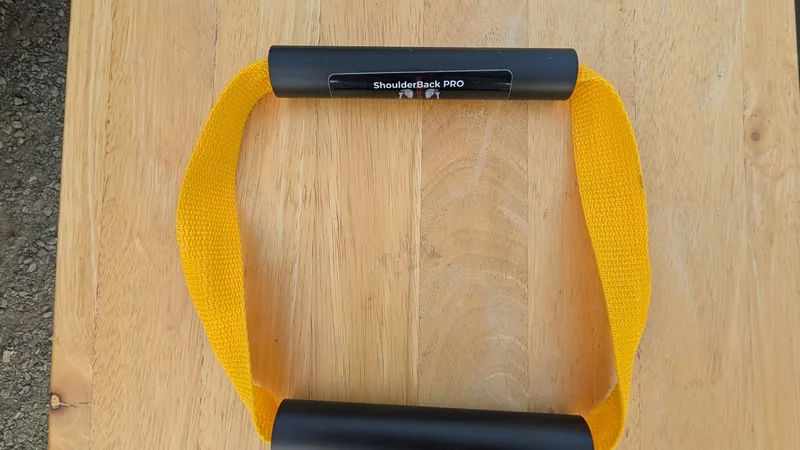 Essential guide: How ShoulderBack Pro Works: One Device, Two Connected Handles, Your Own Resistance
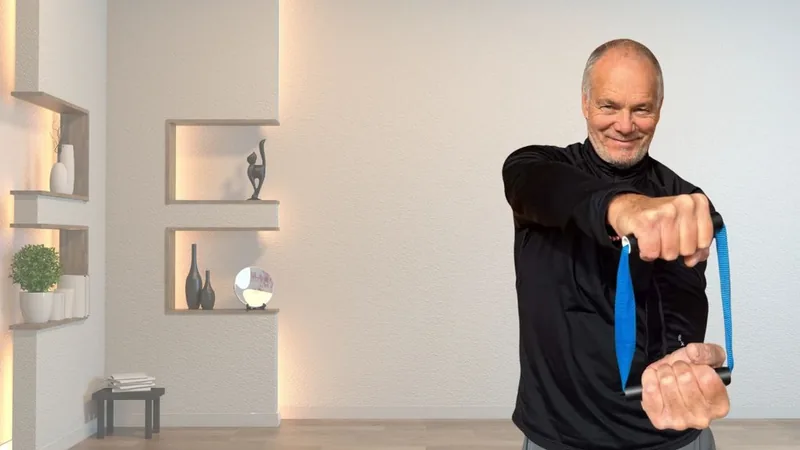 Pairing SBP With Walking: The Simplest Whole-Body Routine for Active Aging
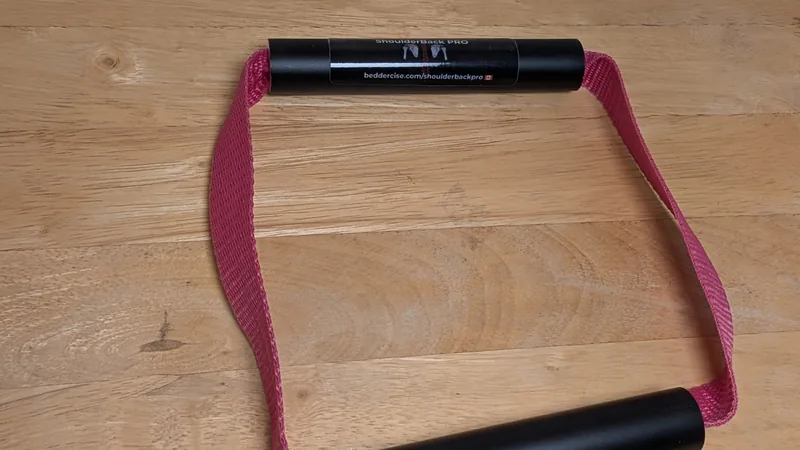 Locomotive: Rolling Circles for the Upper Back and Rear Cuff
 Overhead Press (High Shelf Reach): Trapezius and Deltoids Without a Weight