Coordination, control & how ShoulderBack Pro works
Locomotive: Rolling Circles for the Upper Back and Rear Cuff
4-minute read · Published June 26, 2026 · Updated June 26, 2026
Why this happens / What this is
The name comes from the rolling motion of train wheels. Your arms move in slow, forward circles, and one arm guides the other. The movement works two areas.
The first is the thoracic extensors. These are the muscles along your upper back that help you stand tall. The second is the back of the rotator cuff. The infraspinatus and teres minor sit here, and they help turn the arm outward.
Your shoulder blade rests on your rib cage, so the upper back sets the position your shoulder works from.
What the research says
- Strength, mobility and posture are each linked with shoulder pain and disability in adults over 60. Those are associations, not proof of cause, and no study has tested this movement [R28].
- Programs that teach control and coordination may reduce disability a little more than generic exercise [R02].
- Official guidance says every move counts. Adults 65 and over are encouraged to do activity that builds strength and balance at least three days a week [R07].
What you can do
- Sit tall. Use an armchair with back support. Relax your shoulders and keep your feet flat on the floor.
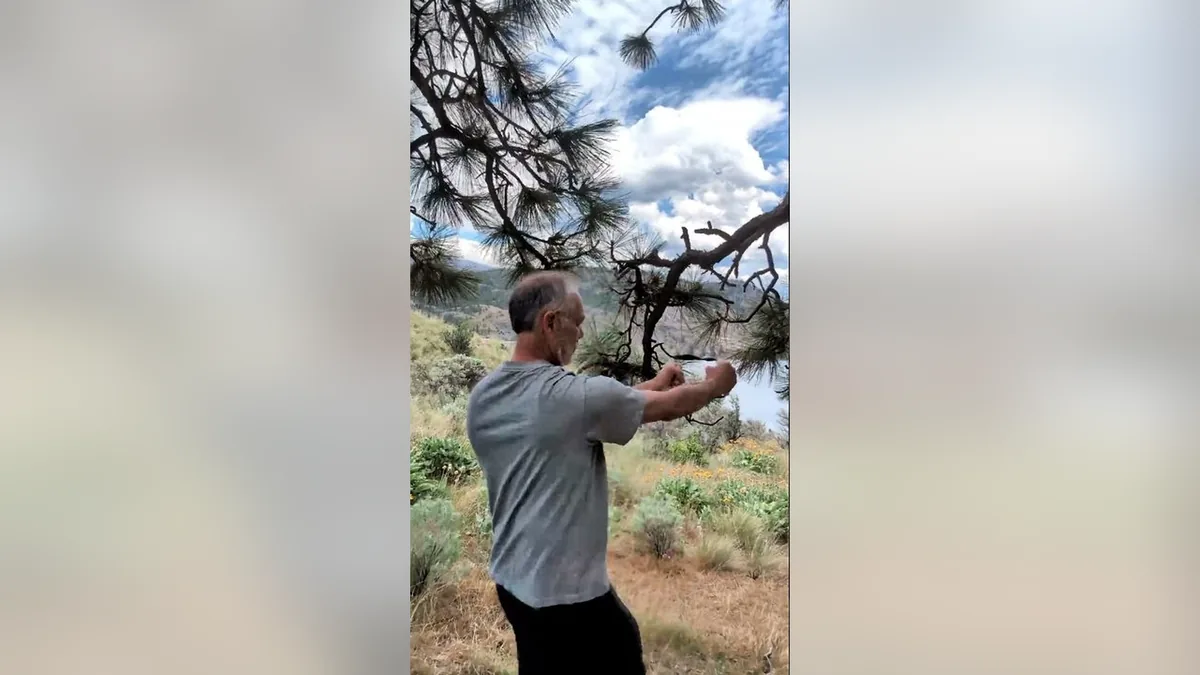
- Hold the trainer comfortably. Follow the lesson for hand position. Let one arm lead, slowly, while the other follows.
- Make one small, slow forward circle. Think of a train wheel turning. Stop well before you feel any pinch or strain.
- Keep the upper back long. Do not hunch forward to make the circle bigger. Smaller and smoother is better.
- Repeat a few times, then rest. Build up across weeks, not days. Standing is an option once seated feels easy, with feet hip-width apart.
Where ShoulderBack Pro fits — and where it doesn't
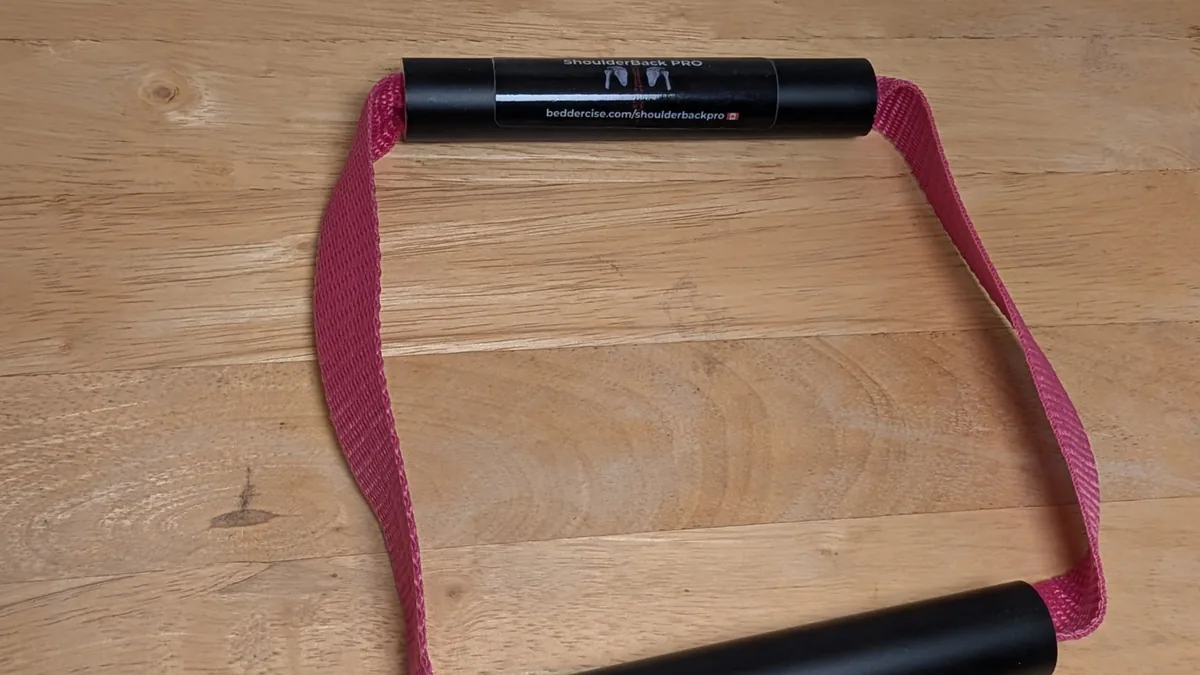
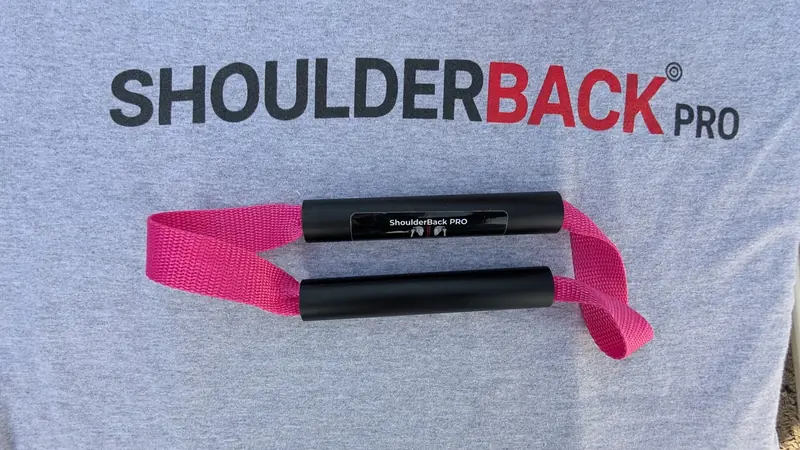
Locomotive is one of the trainer's own exercises, designed to work the thoracic extensors and the posterior rotator cuff. The other arm provides the resistance through the fixed strap, so you choose the effort. As it gets easier, resist a little harder, make the circle slightly larger, or do longer sets. Find the lesson on the video lessons page and begin with the smallest circle you can make.
It's a wellness tool with no clinical trials, and it isn't a treatment for a cuff tear, a painful tendon or any diagnosed condition. If you'd like to try it, the trainer is $29 CAD with free video lessons.
When to see a professional
See a doctor or physiotherapist promptly if you have: pain after a fall or injury with sudden weakness or loss of movement; a shoulder that looks deformed, very swollen or bruised; fever or feeling unwell alongside the pain; chest pain or breathlessness (call emergency services); constant pain that doesn't change with rest or activity; pain that wakes you most nights; numbness, tingling or weakness into the arm or hand; pain in several joints at once; or pain that hasn't improved after a couple of weeks of sensible self-care.
Only a doctor, physiotherapist or other qualified clinician can diagnose the cause of upper-back or shoulder pain.
Try this movement
All 16 video lessons →Frequently asked questions
Is Locomotive safe for a sore shoulder?
Only if a clinician has cleared gentle, controlled movement for your shoulder. Stop if the movement sharpens your pain.
Can I do Locomotive seated?
Yes. Sit tall in an armchair with your back supported, and keep the circles small.
How often should I practise it?
Short, regular sessions are easier to keep up than long, occasional ones. Build up slowly and rest when you need to.
Sources
- PMC narrative review (2026). Body composition, strength, mobility and posture associated with shoulder pain and disability in community-dwelling older adults. https://www.ncbi.nlm.nih.gov/pmc/articles/PMC13513864/
- Dubé M-O et al. (2024). The Efficacy of Exercise Therapy for Rotator Cuff-Related Shoulder Pain According to the FITT Principle: Systematic Review With Meta-analyses. JOSPT. https://pubmed.ncbi.nlm.nih.gov/38848304/
- WHO (2020). Guidelines on physical activity and sedentary behaviour. https://www.sydney.edu.au/news-opinion/news/2020/11/26/new-global-guidelines-on-physical-activity-and-sedentary-behavio.html
More in this topic
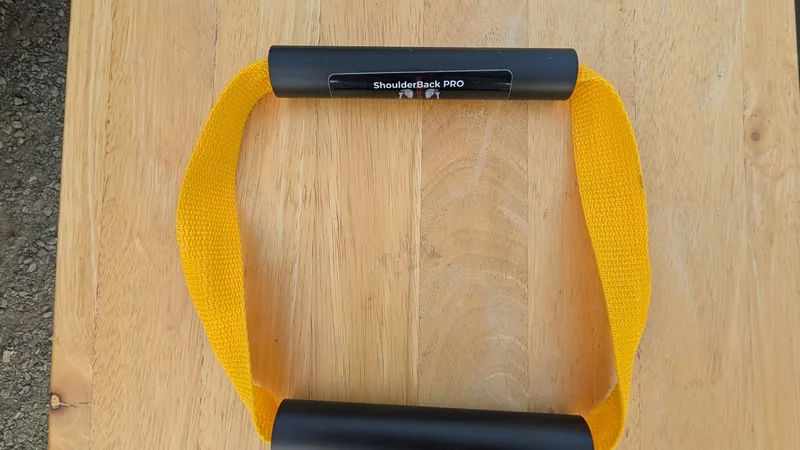 Essential guide: How ShoulderBack Pro Works: One Device, Two Connected Handles, Your Own Resistance
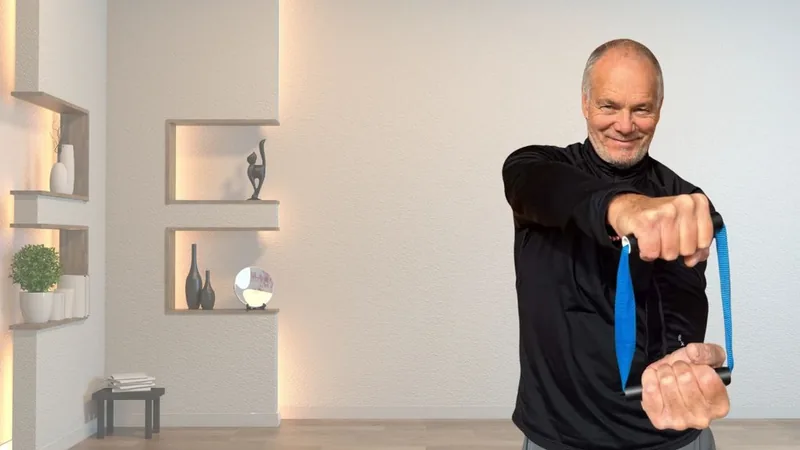 Pairing SBP With Walking: The Simplest Whole-Body Routine for Active Aging
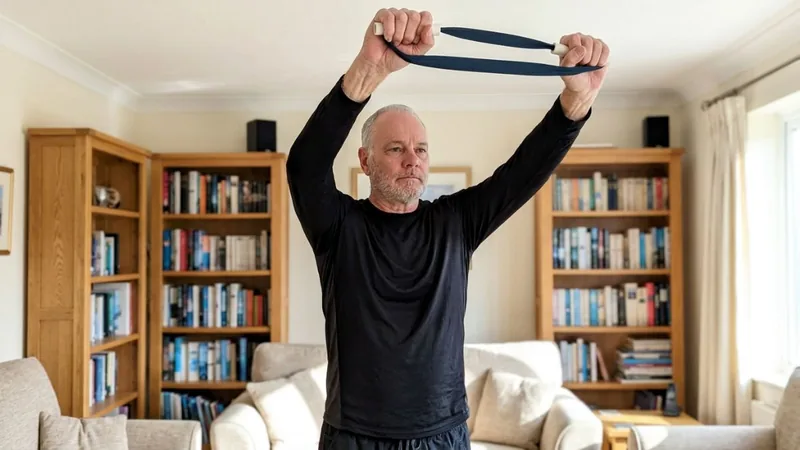 Overhead Press (High Shelf Reach): Trapezius and Deltoids Without a Weight
 Grinders: Small Circles That Massage Between the Shoulder Blades