Coordination, control & how ShoulderBack Pro works
Pairing SBP With Walking: The Simplest Whole-Body Routine for Active Aging
4-minute read · Published September 11, 2026 · Updated September 11, 2026
Why pair the two
Walking is one of the easiest habits to keep. It needs no equipment and can happen outdoors or indoors. It is widely thought to support heart health, general fitness and mood, and most people already enjoy it.
Walking does not train the muscles around your shoulder blade in a targeted way. A short seated routine can cover that gap. Together, the two make a whole-body habit that takes little time.
What the research says
- Regular activity is the foundation. WHO guidance for adults recommends 150 to 300 minutes of moderate activity each week, plus muscle-strengthening on at least two days. For adults over 65, it adds multicomponent activity that builds balance and strength on at least three days. Every move counts [R07].
- Strength training supports independence. Resistance training counters loss of muscle strength and mass and supports function and independence in older adults. The position statement also says that barriers and fears should be addressed [R06].
- Enjoyment helps you stick with it. In low back pain, the research found no clear winner among exercise types. It suggested people choose exercise they enjoy and will keep doing [R05]. That finding is about low back pain, not shoulders, but the habit idea transfers.
What you can do
- Walk at a comfortable pace. Choose a pace where you can still talk in full sentences.
- Finish with seated shoulder work. Sit in a sturdy chair for a few minutes of slow, controlled shoulder movement. Keep each motion within a comfortable range.
- Seated option: shoulder blade setting. Draw your shoulder blades gently down and back, hold briefly, and release.
- Build strength twice a week. Add a few seated strength moves for the arms and legs on at least two days a week.
- Add balance practice. If you are over 65, or your clinician suggests it, hold a steady counter or chair back during simple standing balance practice.
- Keep a simple log. Note what you did and how your shoulders felt the next day. Patterns help you adjust.
Where ShoulderBack Pro fits — and where it doesn't
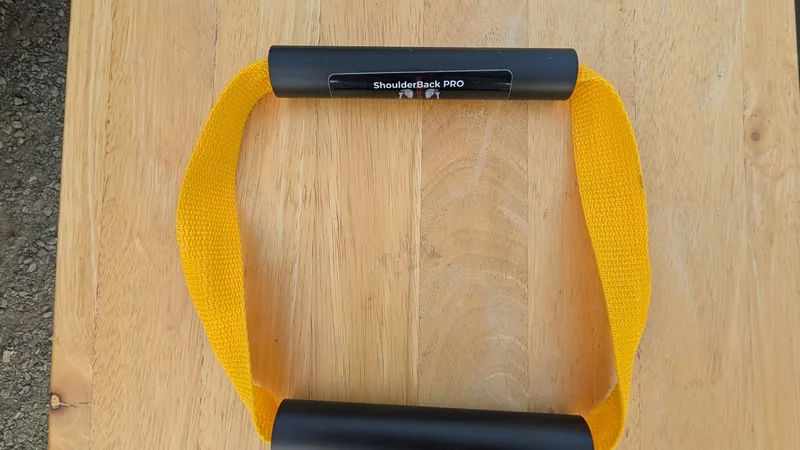
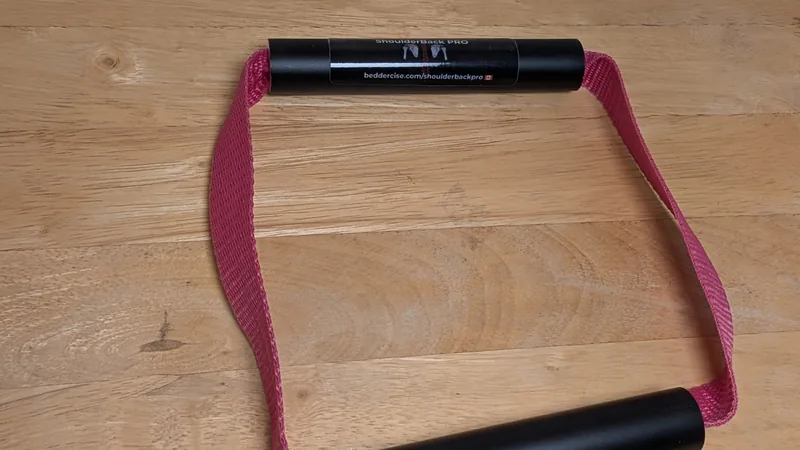
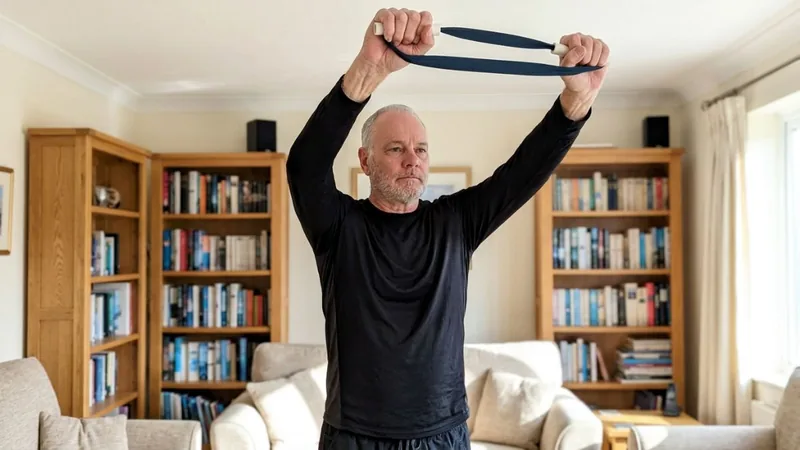
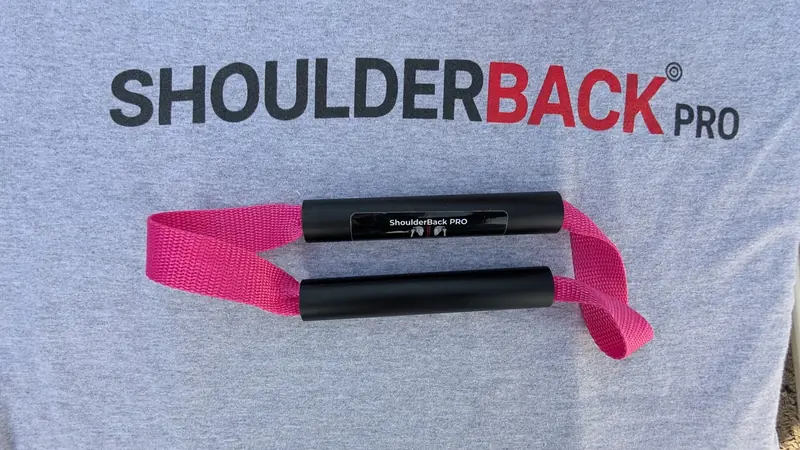
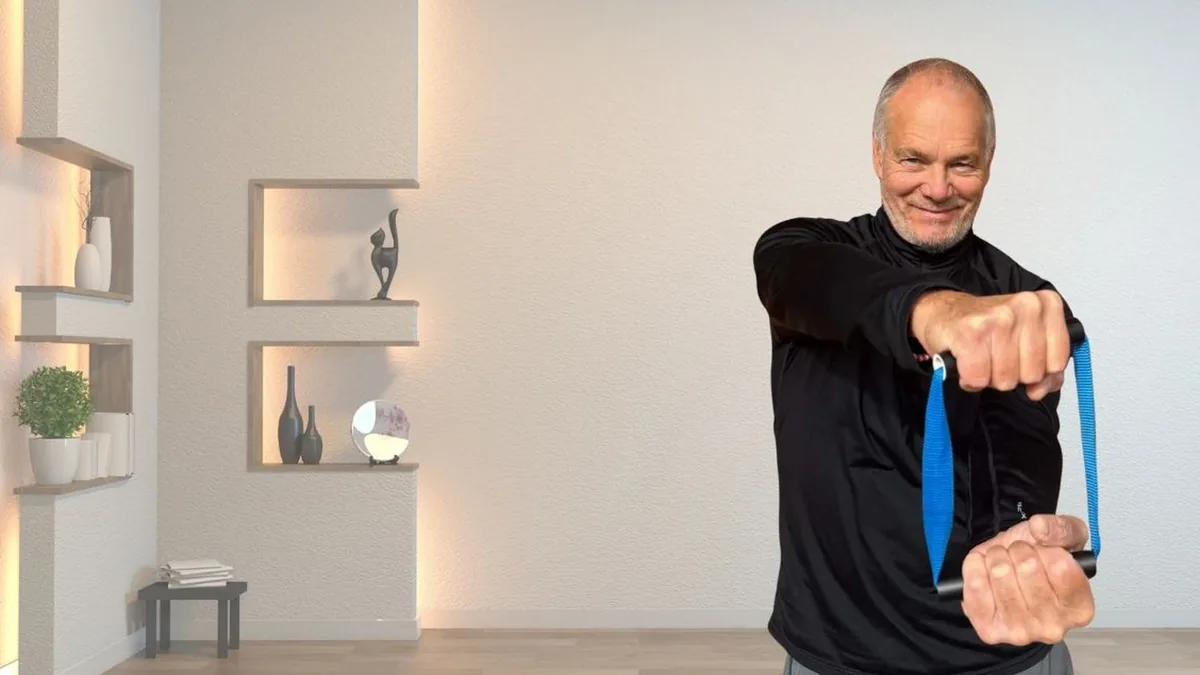
ShoulderBack Pro fits the seated shoulder part because you can sit down right after a walk. Locomotive uses rolling forward circles, which the site lists for the thoracic extensors and posterior rotator cuff, and Around the World is one large, unhurried circle in front of you. Both are among the 16 free video lessons.
The other arm provides the resistance, so you set the effort. Progress by resisting harder, moving through more range, or doing longer sets. It's a wellness tool rather than a treatment, and it has not been tested in clinical trials. The trainer is $29 CAD with a 30-day guarantee on the shop page.
When to see a professional
See a doctor or physiotherapist promptly if you have: pain after a fall or injury with sudden weakness or loss of movement; a shoulder that looks deformed, very swollen or bruised; fever or feeling unwell alongside the pain; chest pain or breathlessness (call emergency services); constant pain that doesn't change with rest or activity; pain that wakes you most nights; numbness, tingling or weakness into the arm or hand; pain in several joints at once; or pain that hasn't improved after a couple of weeks of sensible self-care.
If chest pain or breathlessness comes on during a walk, stop and call emergency services. A doctor or physiotherapist assesses any shoulder pain that does not settle.
Try this movement
All 16 video lessons →Frequently asked questions
Do I need to walk before doing the shoulder work?
No. The order is up to you. Many people find it easy to finish a walk and then sit down for a few minutes of seated movement.
How much walking does the research suggest?
WHO guidance suggests 150 to 300 minutes of moderate activity each week for adults, with muscle-strengthening at least two days a week [R07].
Is walking enough for my shoulders?
Walking supports general activity, but it does not target the shoulder muscles. Adding controlled, seated shoulder work covers that gap.
Sources
- Hayden JA et al. (2021). Exercise therapy for chronic low back pain. Cochrane Database of Systematic Reviews, Issue 9, CD009790. https://pmc.ncbi.nlm.nih.gov/articles/PMC8477273
- Fragala MS, Cadore EL, Dorgo S et al. (2019). Resistance Training for Older Adults: Position Statement From the National Strength and Conditioning Association. J Strength Cond Res. https://pubmed.ncbi.nlm.nih.gov/31343601/
- WHO (2020). Guidelines on physical activity and sedentary behaviour. https://www.sydney.edu.au/news-opinion/news/2020/11/26/new-global-guidelines-on-physical-activity-and-sedentary-behavio.html