Shoulder anatomy & how it works
Teres Minor: The Rotator Cuff Muscle Nobody Talks About
4-minute read · Published September 1, 2025 · Updated September 1, 2025

What this is
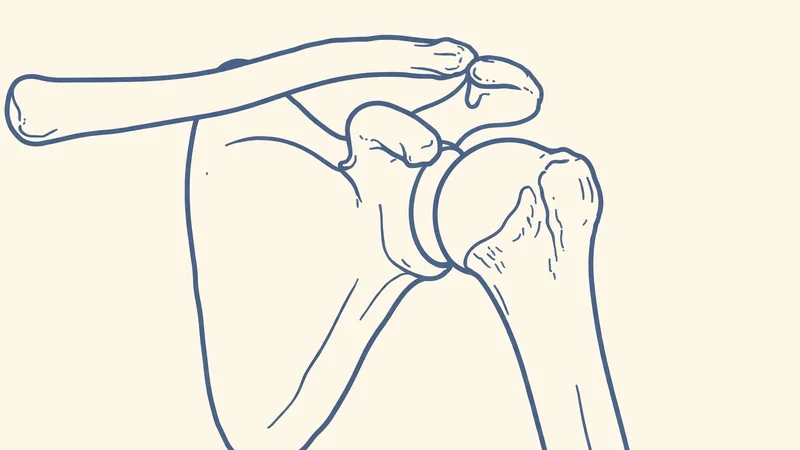
The rotator cuff is a group of small muscles and tendons that wrap around the ball of the shoulder joint. The teres minor sits at the back of the shoulder blade, runs to the upper arm bone, and helps turn the arm outward. Its job is subtle, but it matters for reaching behind you and for steady, accurate movement.
Its work is to hold the ball steady while the bigger muscles move the arm. Clinicians often pay attention to the small muscles for this reason.
What the research says
- Rotator-cuff-related shoulder pain includes subacromial pain, tendinopathy and symptomatic tears, and it is the most common cause of shoulder pain [R03].
- Shoulder disorders are linked with reduced joint position sense, and that affects how accurately the arm moves [R16].
- There isn't strong research on the teres minor specifically; the closest evidence is on the rotator cuff as a group.
What you can do
- Learn the muscle's job. Practise slow outward rotation with the elbow tucked at your side. Keep the movement gentle and small at first.
- Use slow side-to-side arcs. Windshield Wipers, with the forearm moving in slow arcs in front of you, is one gentle way to move the back of the shoulder.
- Progress only as comfort allows. Resist a little harder, or move through a bit more range, once it feels easy; check with a clinician first.
- Seated option. Sit tall in a chair with your elbow at your side and move your forearm slowly in front of you.
Where ShoulderBack Pro fits, and where it doesn't
The site lists the teres minor among the muscles Windshield Wipers is designed to work, along with the subscapularis and infraspinatus; Open The Door is the companion move for the infraspinatus. In both, one arm resists the other, so the effort is yours to set. It does not address a tear or weakness that needs assessment, and there are no clinical trials of it yet. You can see the trainer or start with SeeSaw once cleared to move.
For the bigger picture, read How the Shoulder Works. Related reading: Supraspinatus: The Small Muscle Behind Big Shoulder Problems and Subscapularis: The Hidden Rotator Cuff Muscle.
When to see a professional
See a doctor or physiotherapist promptly if you have: pain after a fall or injury with sudden weakness or loss of movement; a shoulder that looks deformed, very swollen or bruised; fever or feeling unwell alongside the pain; chest pain or breathlessness (call emergency services); constant pain that doesn't change with rest or activity; pain that wakes you most nights; numbness, tingling or weakness into the arm or hand; pain in several joints at once; or pain that hasn't improved after a couple of weeks of sensible self-care.
Weakness or numbness in the arm or hand needs assessment first. A clinician is the person who can diagnose a problem with the teres minor.
Try this movement
SeeSaw (the muscles around the shoulder blade) →Frequently asked questions
Where is the teres minor?
It sits at the back of the shoulder blade and runs to the upper arm bone. It helps turn the arm outward.
Can I train the teres minor on its own?
Most movements work several shoulder muscles at once. Gentle, controlled outward movement is the usual approach, and the studies we reviewed do not test this muscle separately.
Who can tell if my teres minor is injured?
A clinician who examines your shoulder can assess it, sometimes with imaging.
Sources
- Frontiers in Bioengineering & Biotechnology (2025). Specific modes of exercise to improve rotator cuff-related shoulder pain: systematic review and meta-analysis. https://pmc.ncbi.nlm.nih.gov/articles/PMC12011739/
- Mureşan et al. (2022). Effects of a novel proprioceptive rehabilitation device on shoulder joint position sense, pain and function. Medicina. https://www.ncbi.nlm.nih.gov/pmc/articles/PMC9505091/