Shoulder anatomy & how it works
Subscapularis: The Hidden Rotator Cuff Muscle on the Front of Your Shoulder Blade
3-minute read · Published October 6, 2025 · Updated October 6, 2025
What this muscle is
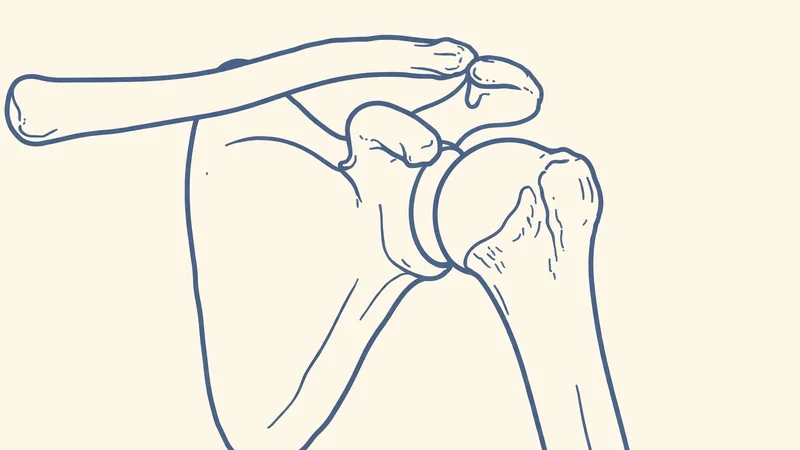
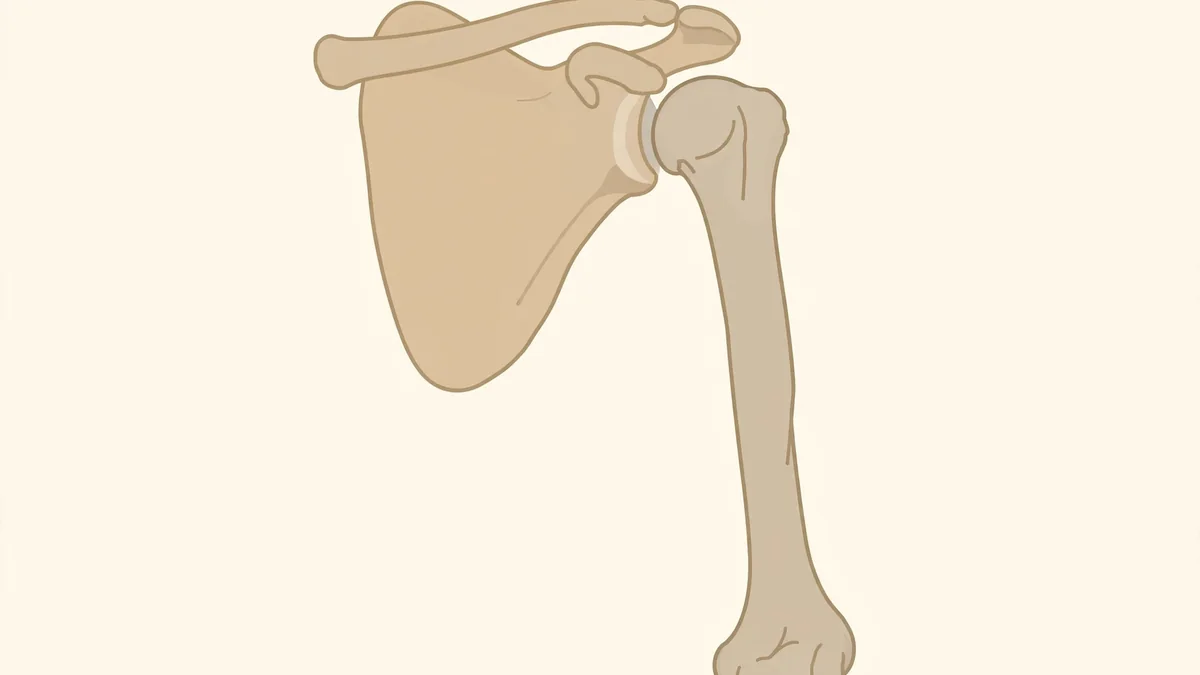
The subscapularis is one of the four rotator cuff muscles. Those muscles wrap around the shoulder joint and help hold the ball of the upper arm bone in its socket. The subscapularis sits on the front, rib-facing side of the shoulder blade (scapula). Because it is on the front, you cannot easily see or feel it.
Its main job is to turn the arm inward, toward the belly. It also helps the shoulder stay steady when you reach forward, lift or push.
Why it matters
Because it is hidden, the subscapularis is easy to overlook. Its position means it helps with reaching forward and across the body. When the shoulder feels unstable or a reach feels unsteady, the cuff muscles are part of the picture.
Still, shoulder pain research looks at the rotator cuff as a whole, not one muscle at a time. Rotator cuff-related shoulder pain is the most common cause of shoulder pain. It includes subacromial pain, tendon problems and symptomatic tears [R03].
What the research says
- Scapular stabilization exercise improved pain and function in rotator cuff-related shoulder pain [R03].
- Programs that teach control and coordination probably reduce disability slightly more than generic exercise, with moderate certainty [R02].
- Shoulder disorders are linked with reduced joint position sense, and that sense influences how accurately the joint moves [R16].
What you can do
- Find the front of your shoulder. Sit tall and place your other hand gently on the front of your shoulder. Seated option: this is easiest in an armchair, with your back supported.
- Try a small inward turn. Bend the elbow to a right angle, keep it at your side, and turn the forearm gently toward your belly. Use no force, and stop at mild effort.
- Do slow, controlled reaches. Keep the movement small and smooth. Seated option: this is the default position.
- Use both arms together. A guiding pattern, like SeeSaw, asks one arm to steer the other. It is a gentle way to practise control.
- Stop at sharp pain. Mild effort is expected. Sharp pain, a painful catch or sudden weakness means stop and get assessed.
Where ShoulderBack Pro fits and where it doesn't
Two ShoulderBack Pro lessons list the subscapularis as a target: Windshield Wipers, slow side-to-side arcs, and Arm Wrestler, which pivots the forearms inward with the elbow as a hinge. Both can be done seated, with the other arm providing the resistance. The trainer can't isolate this muscle or show whether a tendon is injured, and it is a wellness tool with no clinical trials. A physiotherapist can prescribe targeted work, and the trainer is on the shop page.
When to see a professional
See a doctor or physiotherapist promptly if you have: pain after a fall or injury with sudden weakness or loss of movement; a shoulder that looks deformed, very swollen or bruised; fever or feeling unwell alongside the pain; chest pain or breathlessness (call emergency services); constant pain that doesn't change with rest or activity; pain that wakes you most nights; numbness, tingling or weakness into the arm or hand; pain in several joints at once; or pain that hasn't improved after a couple of weeks of sensible self-care.
Try this movement
SeeSaw (the muscles around the shoulder blade) →Frequently asked questions
Where is the subscapularis?
It lies on the front, rib-facing side of the shoulder blade, so it is hard to see or feel directly.
Can I train the subscapularis on its own?
Not really. Most shoulder exercises work several muscles together, and clinicians usually choose exercises based on how the whole joint moves.
Can weak subscapularis muscles cause shoulder pain?
Muscle weakness is one of several factors linked to shoulder pain. A clinician can work out whether it matters for you.
Sources
- Dubé M-O et al. (2024). The Efficacy of Exercise Therapy for Rotator Cuff-Related Shoulder Pain According to the FITT Principle: Systematic Review With Meta-analyses. JOSPT. https://pubmed.ncbi.nlm.nih.gov/38848304/
- Frontiers in Bioengineering & Biotechnology (2025). Specific modes of exercise to improve rotator cuff-related shoulder pain: systematic review and meta-analysis. https://pmc.ncbi.nlm.nih.gov/articles/PMC12011739/
- Mureşan et al. (2022). Effects of a novel proprioceptive rehabilitation device on shoulder joint position sense, pain and function. Medicina. https://www.ncbi.nlm.nih.gov/pmc/articles/PMC9505091/