Shoulder anatomy & how it works
Shoulder Bursa Explained: What a Bursa Does and Why It Gets Irritated
4-minute read · Published October 20, 2026 · Updated October 20, 2026

What a bursa is
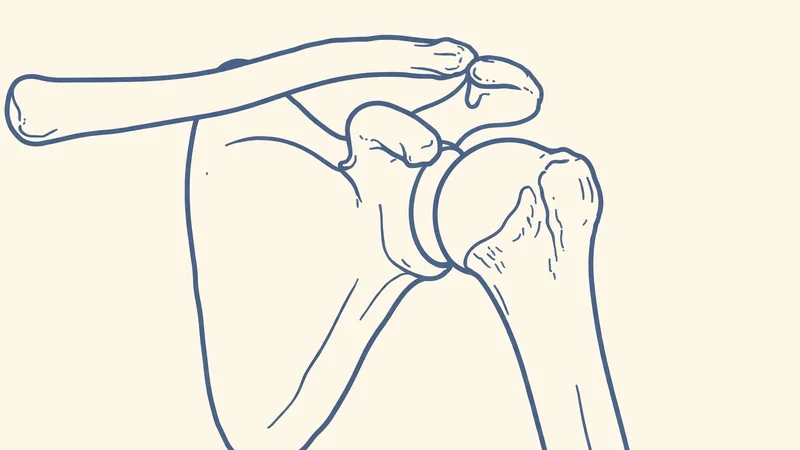
A bursa is a thin, fluid-filled sac. Your body has many of them, placed where skin, muscle, tendon or bone would otherwise rub. Think of it as a small cushion that helps moving parts slide.
In the shoulder, a bursa sits near the top of the joint, under the bony tip of the shoulder blade (the acromion). Clinicians often consider this area when pain sits on the top or outside of the shoulder. This article is part of our shoulder anatomy guide.
Why it can get irritated
Several structures sit close together in the shoulder, so pain can come from more than one place. That is why the label alone does not settle much.
Researchers group many shoulder problems under rotator-cuff-related pain. This group includes subacromial pain, tendinopathy and symptomatic tears [R03]. Subacromial pain is pain felt in the space under the acromion, where the bursa sits. The point is that similar symptoms can have different causes.
What the research says
A 2025 review found that rotator-cuff-related shoulder pain is the most common cause of shoulder pain [R03]. It also found that specific exercise types helped function and pain in these conditions, including scapular stabilization work [R03].
Primary care clinicians usually manage most shoulder pain with advice and exercise. Scans are not routinely needed unless a treatment pathway depends on them [R30]. That makes an exam the key first step.
What you can do
- Note your pattern. Write down where it hurts, what movement causes pain, and whether it wakes you at night.
- Book a clinician visit. A doctor or physiotherapist can examine the shoulder and tell you what is likely.
- Rest the sore movement for now. Avoid the overhead or reaching motion that flares it, and use a seated, supported position while you wait.
- Keep gentle, pain-free movement. Move within a comfortable range, and stop if pain sharpens.
- Re-check if it doesn't improve. Pain that hasn't improved after a couple of weeks of sensible self-care needs review.
Where ShoulderBack Pro fits, and where it doesn't
The better first step is a clinician, who can tell you whether a bursa, a tendon or something else is involved. A pocket movement trainer is at most a general conditioning option for later, and only if your clinician agrees. It is not a treatment for bursitis and has no clinical trials. If you are cleared, the SeeSaw lesson shows a gentle starting movement, and the trainer is there if you want it.
When to see a professional
See a doctor or physiotherapist promptly if you have: pain after a fall or injury with sudden weakness or loss of movement; a shoulder that looks deformed, very swollen or bruised; fever or feeling unwell alongside the pain; chest pain or breathlessness (call emergency services); constant pain that doesn't change with rest or activity; pain that wakes you most nights; numbness, tingling or weakness into the arm or hand; pain in several joints at once; or pain that hasn't improved after a couple of weeks of sensible self-care.
Try this movement
SeeSaw (the muscles around the shoulder blade) →Frequently asked questions
What does a shoulder bursa do?
It is a small fluid-filled sac that reduces friction between moving structures. It helps tendons and muscles glide over bone smoothly.
Can I treat a bursa problem with exercise alone?
Exercise matters for shoulder pain in general [R03]. But a clinician should first confirm what is going on, because similar pain can come from several sources.
Who diagnoses shoulder bursitis?
A doctor or physiotherapist does, usually after a hands-on exam. Scans are not always needed unless there is a clear treatment pathway.
Sources
- Frontiers in Bioengineering & Biotechnology (2025). Specific modes of exercise to improve rotator cuff-related shoulder pain: systematic review and meta-analysis. PROSPERO CRD42024550602. https://pmc.ncbi.nlm.nih.gov/articles/PMC12011739/
- NHS Greater Glasgow & Clyde, Shoulder red flags; NHS MPFT self-help, Shoulder pain; BESS/BOA pathway summary (2021). https://pmc.ncbi.nlm.nih.gov/articles/PMC7905504