Coordination, control & how ShoulderBack Pro works
ShoulderBack Pro for Beginners: Your First Week, Day by Day
5-minute read · Published December 16, 2025 · Updated December 16, 2025
Why this happens / What this is
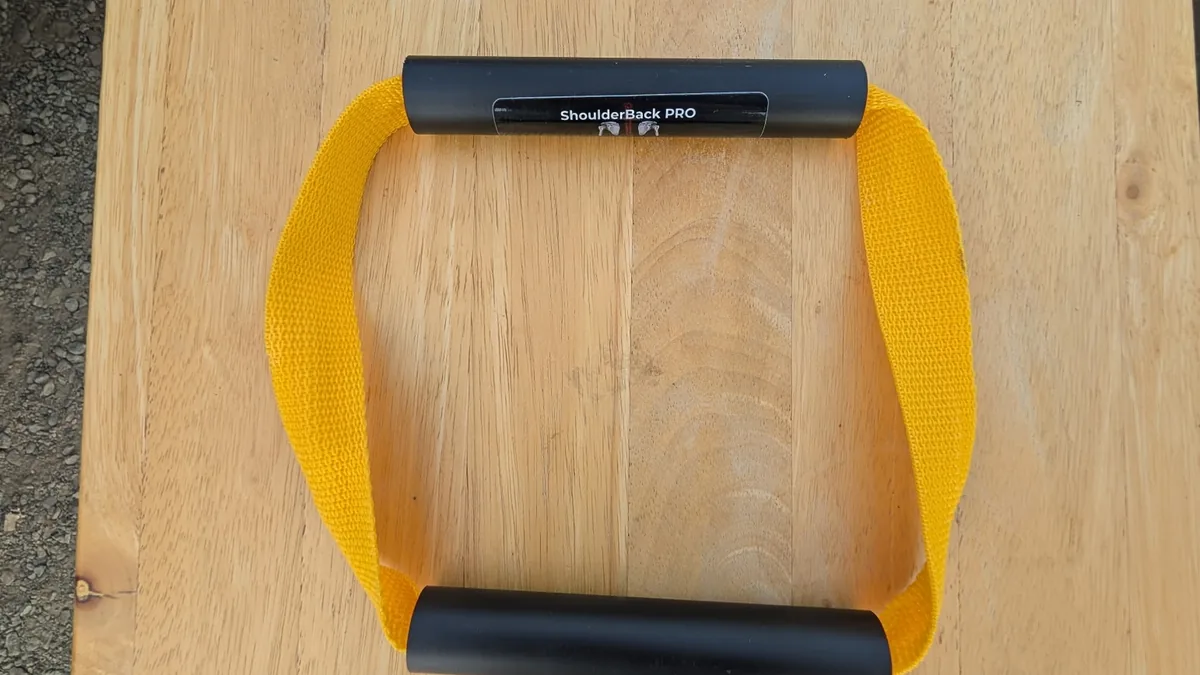
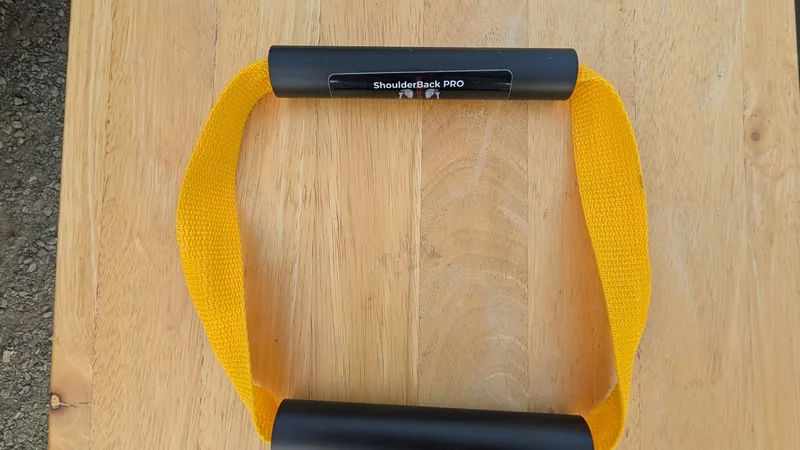
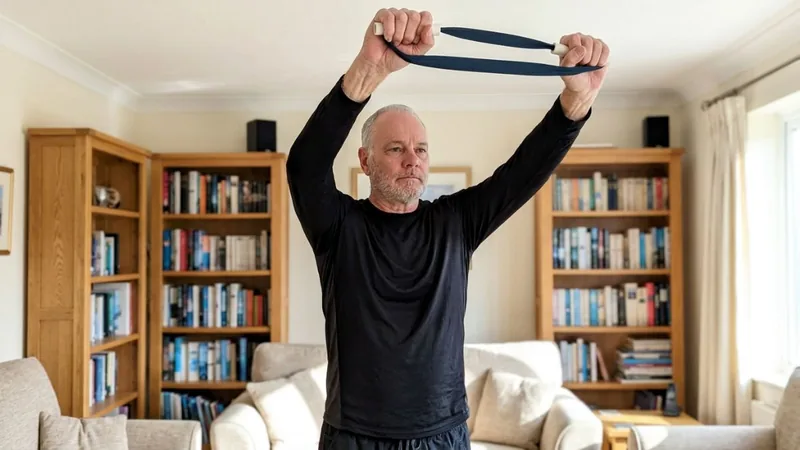
Most shoulder trainers push or pull against a fixed point, such as a door or a band. ShoulderBack Pro works differently. The two handles are joined by a strap that does not stretch. One arm provides the resistance while the other moves, and then the roles switch. This is called body-controlled resistance.
Because both arms work together, the trainer asks for coordination as well as movement. Many people find it easier to notice what the shoulder is doing when the other arm is guiding it. To understand the idea, read about assist and resist.
Nothing stretches, snaps or drops, and you do not need to anchor it to anything. You can use it seated in an armchair or standing up. That makes a first week easy to start at home.
What the research says
- Exercise that adds resistance and progresses over time probably helps shoulder pain. Gentle, unloaded movement alone probably does not change pain much [R01]. This is why a plan that slowly adds effort makes more sense than staying at the lowest setting forever.
- Programs that teach control and coordination may do slightly better than generic exercise in the short and medium term, though we do not fully know why [R02].
- Public guidance says that every move counts. The WHO recommends muscle-strengthening activity on at least two days a week for adults, and it asks adults 65 and older to add balance and functional strength work [R07]. A short daily session is a reasonable way to start building that habit.
What you can do
- Choose one ritual. Start with Refreshing Awareness, which uses SeeSaw, Open The Door and Windshield Wipers. Do it seated.
- Set a low effort. Pick a resistance level you can talk through without strain. Small, smooth movement beats a big, rushed one.
- Keep pace slow. Move as if you have all the time in the world. Pause at the end of each movement.
- Keep range comfortable. Stop short of pain. You can increase range over days, not minutes.
- Write one line each day. Note how your shoulders felt the next morning. That note is more useful than any single session.
Your first week, day by day:
- Day 1: Watch the first lessons and do one slow round of Refreshing Awareness, seated, at low effort.
- Day 2: Repeat the same ritual. Keep the effort exactly the same.
- Day 3: Repeat again and notice whether the movements feel smoother.
- Day 4: Rest or take a gentle walk. Movement counts on rest days too.
- Day 5: Try the Greet the Morning ritual, which uses Around the World, Steering and Bear Hugs Me. Keep it small.
- Day 6: Repeat Greet the Morning, slower or with a smaller range.
- Day 7: Review your notes. Keep going at the same level, adjust the effort, or ask a clinician if anything worries you.
Where ShoulderBack Pro fits — and where it doesn't
For a first week, SeeSaw and Open The Door are a sensible pair: both are gentle and easy to control seated, and you can follow along with the 16 free video lessons taught by the inventor, Van Hill. It's a wellness tool, not a treatment, and there are no clinical trials of it yet. If you have been told to avoid certain movements, follow that advice first. ShoulderBack Pro is $29 CAD with a 30-day Living Room Guarantee.
When to see a professional
See a doctor or physiotherapist promptly if you have: pain after a fall or injury with sudden weakness or loss of movement; a shoulder that looks deformed, very swollen or bruised; fever or feeling unwell alongside the pain; chest pain or breathlessness (call emergency services); constant pain that doesn't change with rest or activity; pain that wakes you most nights; numbness, tingling or weakness into the arm or hand; pain in several joints at once; or pain that hasn't improved after a couple of weeks of sensible self-care.
If you are recovering from surgery, follow your surgeon or physiotherapist's protocol. Use the trainer only if they approve it.
Try this movement
All 16 video lessons →Frequently asked questions
Do I need to be fit before I start?
No. Beginners can start seated with a low effort level. The point of the first week is to learn the movements and notice how your shoulders respond.
How hard should I push in week one?
Not hard. Pick an effort you can talk through comfortably. Later, once the movements feel steady, progress by resisting a little harder with the other arm, moving through more range, or doing longer sets.
What if one shoulder feels sore the next day?
Take a rest day and go gentler next time, with less range or effort. Pain that lingers or gets worse means you should see a clinician.
Is ShoulderBack Pro a treatment?
No. It is a 160-gram movement trainer, not a medical device, and it does not treat any diagnosed condition. It is one simple way to do gentle, controlled movement at home if you have been cleared for it.
Sources
- Naunton J et al. (2020). Effectiveness of progressive and resisted and non-progressive or non-resisted exercise in rotator cuff related shoulder pain: systematic review and meta-analysis of RCTs. Clinical Rehabilitation. https://search.pedro.org.au/search-results/record-detail/61404
- Dubé M-O et al. (2024). The Efficacy of Exercise Therapy for Rotator Cuff-Related Shoulder Pain According to the FITT Principle: Systematic Review With Meta-analyses. JOSPT. https://pubmed.ncbi.nlm.nih.gov/38848304/
- WHO (2020). Guidelines on physical activity and sedentary behaviour. https://www.sydney.edu.au/news-opinion/news/2020/11/26/new-global-guidelines-on-physical-activity-and-sedentary-behavio.html
More in this topic
 Essential guide: How ShoulderBack Pro Works: One Device, Two Connected Handles, Your Own Resistance
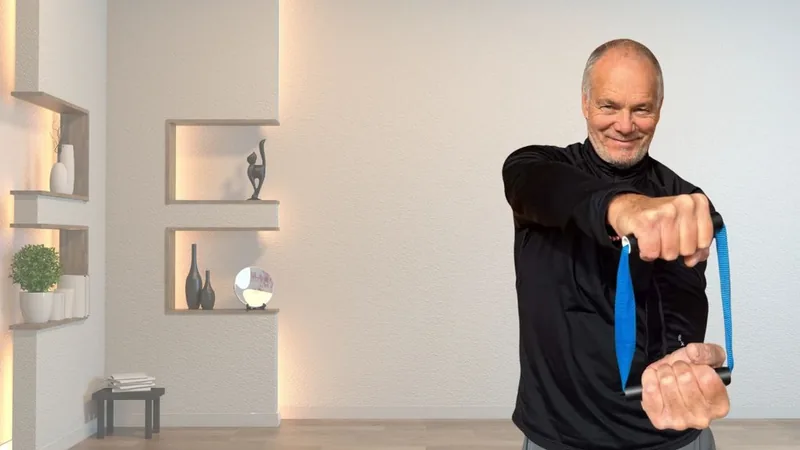 Pairing SBP With Walking: The Simplest Whole-Body Routine for Active Aging
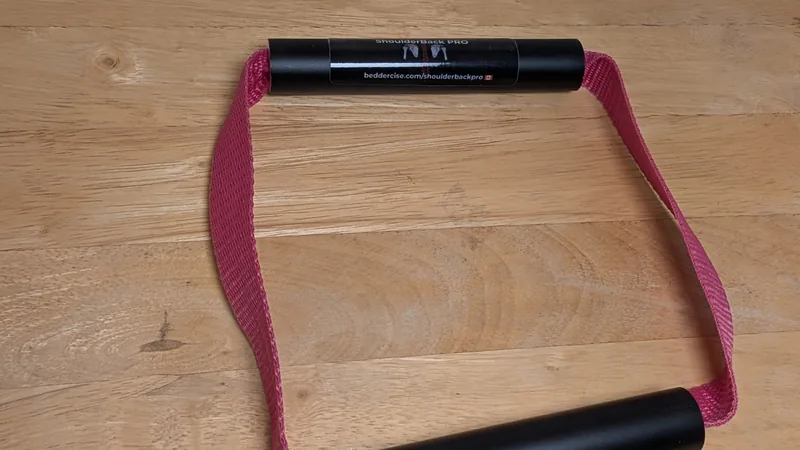 Locomotive: Rolling Circles for the Upper Back and Rear Cuff
 Overhead Press (High Shelf Reach): Trapezius and Deltoids Without a Weight