Coordination, control & how ShoulderBack Pro works
SeeSaw: The Master Glide That Wakes Up All 17 Shoulder-Blade Muscles
6-minute read · Published April 11, 2025 · Updated April 11, 2025
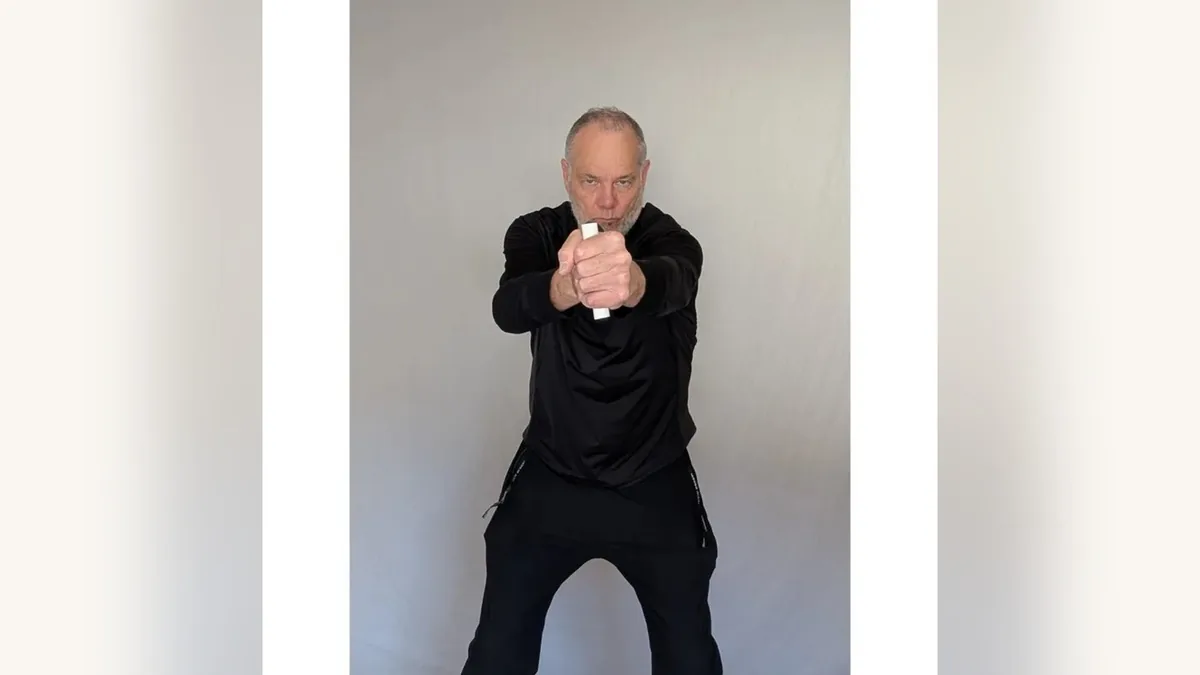
SeeSaw looks simple, but it asks the muscles that hold your shoulder blade steady to work with both sides of your body at once. For the wider picture, start with how ShoulderBack Pro works.
Why this happens: what SeeSaw is asking your shoulder to do
Your shoulder blade is not fixed to your ribs. It glides on the back of the ribcage and is held in place by a set of muscles. These muscles keep the shoulder blade in a good position while your arm moves. People often call them scapular stabilizers.
SeeSaw asks these muscles to do two jobs at once. They must keep the shoulder blade steady on one side while the arm moves through a reach. Then they must move the shoulder blade smoothly when the reach changes direction. Textbooks list many muscles that attach to the shoulder blade, and the exact count varies by source. What matters is that they work together.
How ShoulderBack Pro is aimed at this
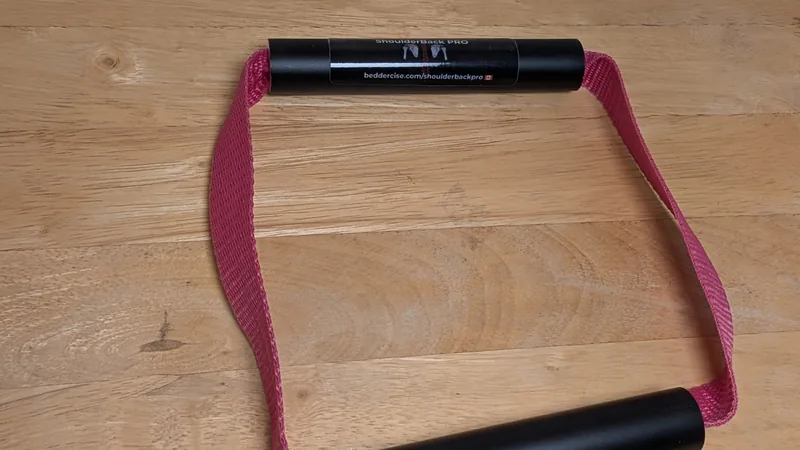
ShoulderBack Pro is a 160-gram, pocket-size movement trainer made in Canada. Two handles are joined by a fixed-length, non-elastic strap. Nothing stretches, snaps or drops. One arm assists while the other resists, and you set the effort, the pace and the range.
What the research says
SeeSaw itself has not been tested in a trial. The research below covers the types of movement it shares.
- Resisted exercise that builds over time probably helps. A review of trials in rotator-cuff-related shoulder pain found that progressive, resisted exercise showed a benefit of uncertain clinical importance. Unloaded movement alone did not show a clear benefit on pain [R01].
- Control-focused programs may help a little more than generic exercise. Moderate-certainty evidence suggests that motor-control programs reduce disability slightly more than non-specific exercise in the short and medium term. The effect on pain is uncertain, and it is not clear why [R02].
- Shoulder blade exercise has some support. A 2025 review found that scapular stabilization exercise improved pain and function in people with rotator-cuff-related pain [R03].
- Two-arm training has a track record in rehabilitation. Studies in stroke rehabilitation found that bilateral, or both-arm, training improved shoulder movement more than single-arm training [R14]. These results come from stroke patients, not healthy adults. They are a reason the idea is interesting, not proof that SeeSaw works for you.
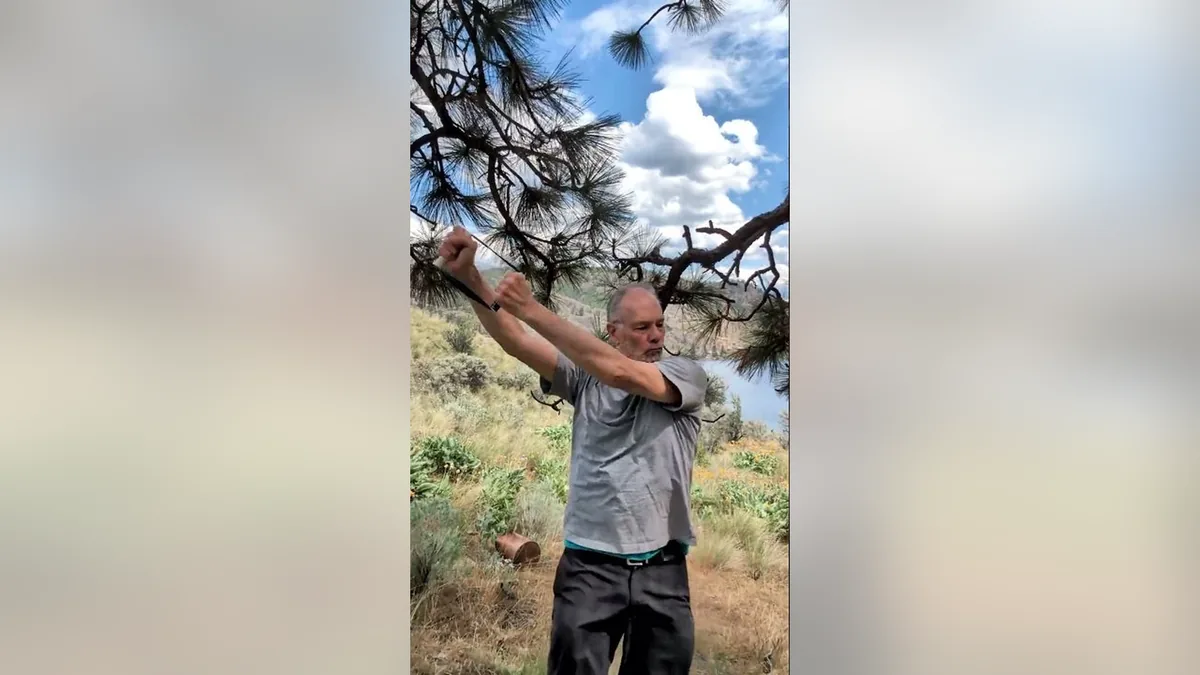
What you can do
Start with the seated version, even if you plan to stand later. Stop if you feel sharp pain, numbness or tingling.
- Set up. Sit in an armchair with your back supported and your feet flat on the floor. Hold the trainer with both hands and let your arms rest.
- Choose a light effort. Set the device to the lowest level that still lets you feel the movement. The resistance comes from your other arm, so you progress by resisting harder, moving through more range or doing longer sets.
- Start the glide. Reach one arm gently forward and slightly out, while the other arm guides the movement. Move slowly enough that you can feel your shoulder blade working.
- Alternate sides. Switch the guiding role to the other arm. Keep the movement even and unhurried.
- Keep breathing. Breathe out as you reach and in as you return. Holding your breath tends to make the movement stiffer.
- Finish softly. Let your arms rest in your lap and notice how your shoulder blades feel.
- Standing option. When you feel steady, stand with your feet hip-width apart and repeat the glide. Keep a hand near a sturdy surface if you need it.
Where ShoulderBack Pro fits — and where it doesn't
SeeSaw is among the most specific ways to use ShoulderBack Pro, and Around the World is a natural next lesson for the serratus anterior and lower trapezius. Neither needs a gym or a door frame.
It is a wellness tool, not a treatment, and there are no clinical trials of it. Frozen shoulder is a separate matter: research does not support waiting it out [R19], and a clinician should assess it. If your shoulder has a diagnosis, follow your clinician's plan first.
All 16 free video lessons, taught by the inventor, are in the video library. ShoulderBack Pro is $29 CAD with a 30-day guarantee, and you can order it online.
When to see a professional
See a doctor or physiotherapist promptly if you have: pain after a fall or injury with sudden weakness or loss of movement; a shoulder that looks deformed, very swollen or bruised; fever or feeling unwell alongside the pain; chest pain or breathlessness (call emergency services); constant pain that doesn't change with rest or activity; pain that wakes you most nights; numbness, tingling or weakness into the arm or hand; pain in several joints at once; or pain that hasn't improved after a couple of weeks of sensible self-care.
Only a doctor or physiotherapist can diagnose the cause of shoulder pain. Stop any new movement and get assessed if you have numbness, tingling, sudden weakness, or pain after an injury.
Try this movement
All 16 video lessons →Frequently asked questions
Does SeeSaw strengthen the shoulder blade muscles?
It may help build control, and some strength once you resist harder with the other arm. Scapular stabilization exercise has shown benefit in research on shoulder pain [R03], but that research is about exercise in general, not SeeSaw specifically.
Can I do SeeSaw sitting down?
Yes. SeeSaw can be done seated in an armchair with a tall, supported back. Standing is an option only if you feel steady and can move without strain.
How hard should SeeSaw feel?
Light to moderate effort is a good target. You should feel movement and mild work in the shoulder blade area, without sharp pain or strain. You set the effort on the device.
Is SeeSaw a treatment for a sore shoulder?
No. SeeSaw is not a treatment for a diagnosed condition. If you have been cleared to do gentle, controlled shoulder movement, it is one simple option to practise at home.
Sources
- Naunton J et al. (2020). Effectiveness of progressive and resisted and non-progressive or non-resisted exercise in rotator cuff related shoulder pain: systematic review and meta-analysis of RCTs. Clinical Rehabilitation. https://search.pedro.org.au/search-results/record-detail/61404
- Dubé M-O et al. (2024). The Efficacy of Exercise Therapy for Rotator Cuff-Related Shoulder Pain According to the FITT Principle: Systematic Review With Meta-analyses. JOSPT. https://pubmed.ncbi.nlm.nih.gov/38848304/
- Frontiers in Bioengineering & Biotechnology (2025). Specific modes of exercise to improve rotator cuff-related shoulder pain: systematic review and meta-analysis. https://pmc.ncbi.nlm.nih.gov/articles/PMC12011739/
- Journal of Physical Therapy Science (2016). The effects of bilateral movement training on upper limb function in chronic stroke patients. https://pmc.ncbi.nlm.nih.gov/articles/PMC5011582
- Wong CK et al. (2017). Natural history of frozen shoulder: fact or fiction? A systematic review. Physiotherapy 103(1):40-47. https://pubmed.ncbi.nlm.nih.gov/27641499/
More in this topic
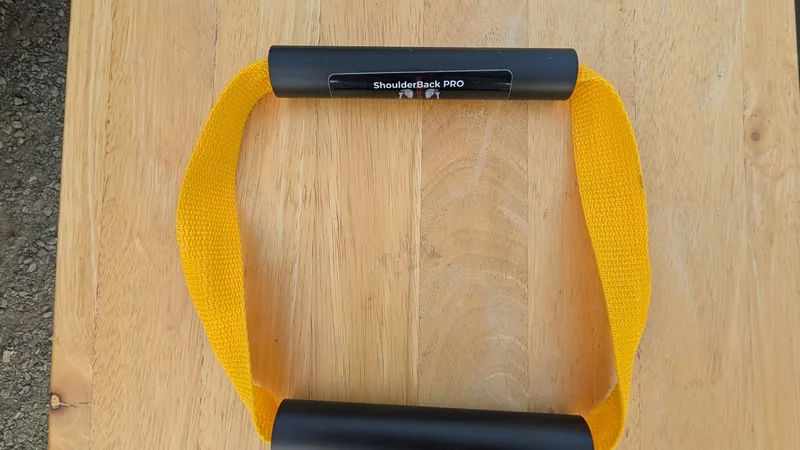 Essential guide: How ShoulderBack Pro Works: One Device, Two Connected Handles, Your Own Resistance
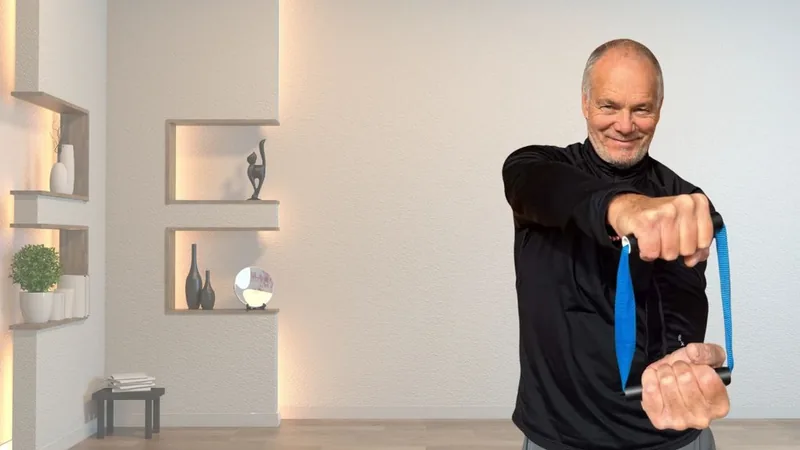 Pairing SBP With Walking: The Simplest Whole-Body Routine for Active Aging
 Locomotive: Rolling Circles for the Upper Back and Rear Cuff
 Overhead Press (High Shelf Reach): Trapezius and Deltoids Without a Weight