Shoulder anatomy & how it works
Scapula 101: Why Your Shoulder Blade 'Floats' and What That Means for Movement
5-minute read · Published July 6, 2026 · Updated July 6, 2026

What the scapula is
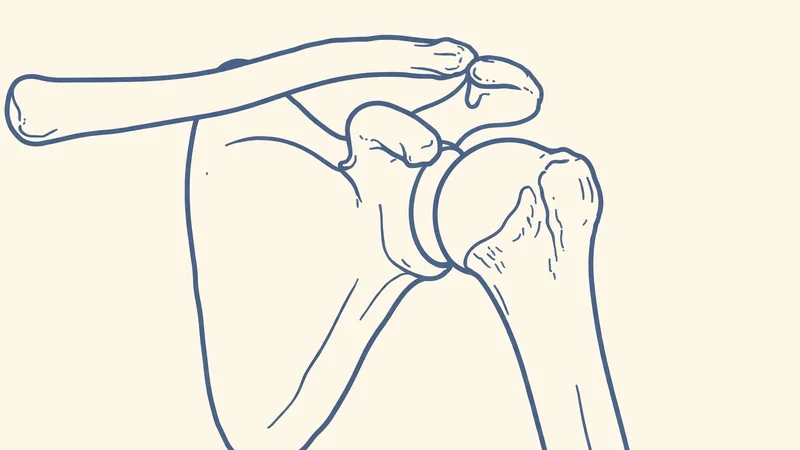
The scapula is a flat, triangular bone on the back of the upper body. Most of its connections are to muscles rather than to other bones. That is why it appears to float. It is held in place by muscle, and it slides over the back of the ribs as you move.
The scapula also has a shallow socket, called the glenoid, where the arm bone (the humerus) sits to form the shoulder joint. Because that socket is shallow, the arm depends heavily on the muscles around it for stability. The collarbone connects the shoulder blade to the front of the body at the top of the shoulder.
Why the floating matters
Because the scapula moves, your arm can reach up, out and behind you. The shoulder blade and the arm move together in a pattern often called scapulohumeral rhythm, which simply means the two work as a team.
When the muscles that steady the shoulder blade are slow or weak, the arm may not get the stable base it needs. Proprioception, your sense of where a joint is without looking at it, helps guide movement. [R16] reports that shoulder disorders are linked with reduced proprioception, and that proprioception influences how accurately we move.
What the research says
[R16] describes shoulder rehabilitation as moving from range of motion, to strength, to control and proprioception, and then to coordination. That sequence suggests the shoulder blade's control is part of the recovery story, not a side issue.
[R03] is a 2025 review of exercise types for rotator cuff-related shoulder pain. It found that scapular stabilization exercise, which trains the muscles that steady the shoulder blade, improved pain and function. The review is about exercise in general, not about any single device.
[R28] is a 2026 review of older adults. It found that strength, mobility, body composition and posture are each associated with shoulder pain and disability, and it describes them as modifiable targets. Modifiable means they can be changed with practice.
What you can do
- Find your shoulder blade. Sit tall and place one hand on your upper back. Reach the arm forward slowly, and feel the blade slide under your hand.
- Try gentle seated reaches. Alternate reaching across your body, one arm guiding the other, as in SeeSaw. Keep it slow and comfortable.
- Draw one big circle. Make one large, unhurried circle with the arm, seated or standing. Keep the shoulder relaxed.
- Keep the shoulders down. Avoid lifting the shoulders into a shrug while you move. Let the blade move without forcing it.
- Take movement breaks. Short, regular movement often works better than long, static holds.
Where ShoulderBack Pro fits, and where it doesn't
Two of the 16 guided lessons suit this topic. SeeSaw is designed to work the shoulder-blade stabilizers, with one arm guiding the other through alternating reaches. Around the World, one large unhurried circle, is listed as working the serratus anterior and lower trapezius. Both can be done in an armchair, and the other arm supplies the resistance, so you progress by resisting harder or moving through more range.
It is a wellness tool rather than a treatment, and it has not been tested in clinical trials. Start with the SeeSaw lesson; the trainer is $29 CAD with a 30-day guarantee in the shop.
See a doctor or physiotherapist promptly if you have: pain after a fall or injury with sudden weakness or loss of movement; a shoulder that looks deformed, very swollen or bruised; fever or feeling unwell alongside the pain; chest pain or breathlessness (call emergency services); constant pain that doesn't change with rest or activity; pain that wakes you most nights; numbness, tingling or weakness into the arm or hand; pain in several joints at once; or pain that hasn't improved after a couple of weeks of sensible self-care.
When to see a professional
If the shoulder blade looks out of place, or if movement has suddenly become painful or weak, get assessed. A doctor or physiotherapist diagnoses shoulder blade problems and decides on a plan.
Learn more
Try this movement
SeeSaw (the muscles around the shoulder blade) →Frequently asked questions
Why does my shoulder blade stick out?
A shoulder blade that sticks out at the edge can have many causes. Let a clinician assess it rather than guess, especially if it is new or painful.
Is a shoulder blade that moves a problem?
Movement of the shoulder blade is normal and necessary. Trouble tends to come when the muscles that steady it are not working well, and that needs assessment.
Can I train the shoulder blade while seated?
Yes. Several seated options work the muscles that steady it, and they are a good starting point if standing is hard.
Who diagnoses shoulder blade problems?
A doctor or physiotherapist diagnoses them and decides on a plan.
Sources
- Frontiers in Bioengineering & Biotechnology (2025). Specific modes of exercise to improve rotator cuff-related shoulder pain: systematic review and meta-analysis. https://pmc.ncbi.nlm.nih.gov/articles/PMC12011739/
- Mureşan et al. (2022). Effects of a novel proprioceptive rehabilitation device on shoulder joint position sense, pain and function. Medicina. https://www.ncbi.nlm.nih.gov/pmc/articles/PMC9505091/
- PMC narrative review (2026). Body composition, strength, mobility and posture associated with shoulder pain and disability in community-dwelling older adults. https://www.ncbi.nlm.nih.gov/pmc/articles/PMC13513864/