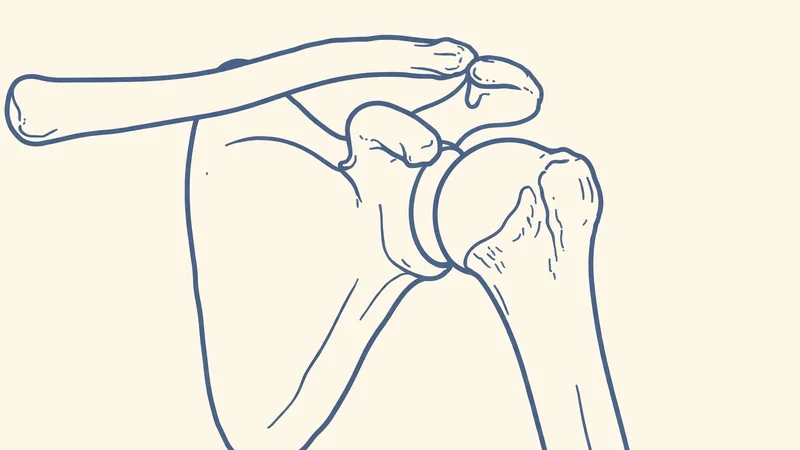
Shoulder anatomy & how it works
Infraspinatus Explained: Why Your Shoulder Needs External Rotation
5-minute read · Published July 28, 2025 · Updated July 28, 2025
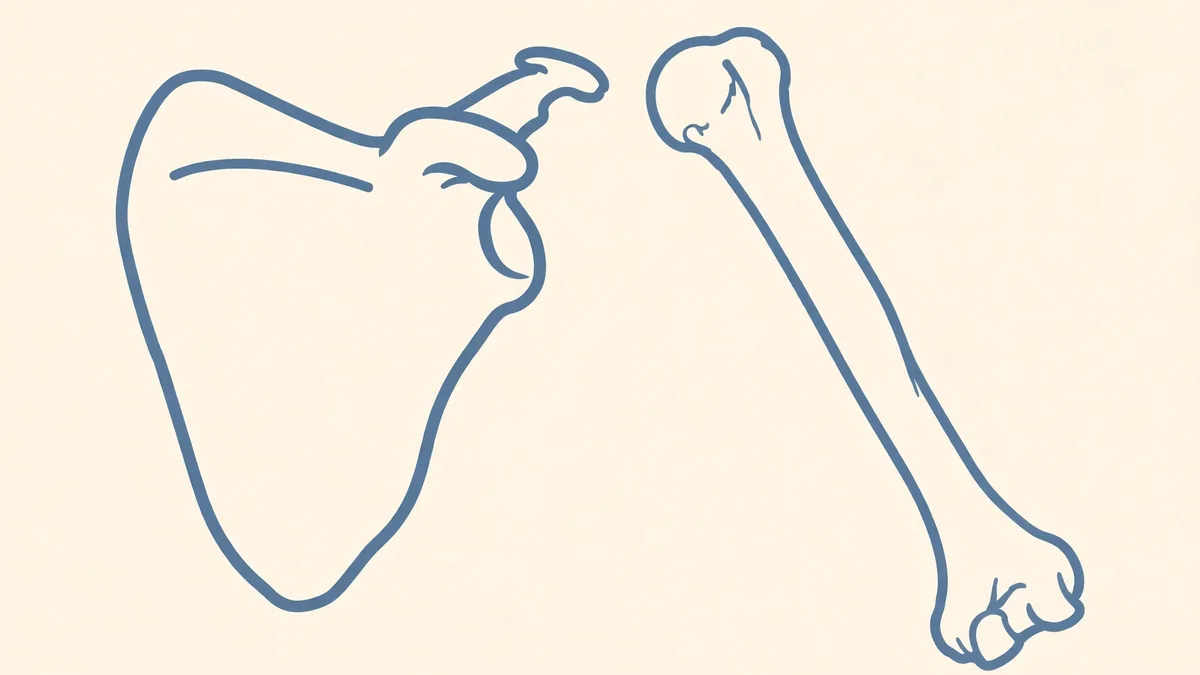
Why this happens
Your shoulder is a ball that sits in a shallow socket, held in place by muscles and tendons. The rotator cuff is a group of four muscles that wraps around the front, top and back of the joint. The infraspinatus covers the back.
Its main job is to rotate the arm outward. It also helps keep the ball gently centred in the socket as you reach, lift and carry. When it is weak, tired or poorly coordinated, the shoulder can feel less steady, and some people notice pain or clicking during reaching.
That is a pattern, not a diagnosis. Many things can cause those symptoms, and only a clinician can tell which one applies to you.
What the research says
- Exercise is the main studied approach for rotator cuff-related shoulder pain, and resisted exercise that progresses over time probably helps [R01].
- A 2025 review found that scapular stabilization and other specific exercise types improved pain and function [R03]. Stability around the shoulder blade supports how the arm moves.
- Programs that teach control and coordination may edge out generic exercise, though we do not fully know why [R02].
- Proprioception, your sense of where the joint is in space, is reduced in many shoulder disorders [R16]. Slow, controlled movement is thought to be one way to rebuild that sense.
What you can do
- Start seated. Sit tall in a chair with your back supported. Keep your elbows at your sides and bend them to ninety degrees.
- Swing the forearms outward slowly. Move only as far as is comfortable. Hold for a breath, then return.
- Repeat a few times, then rest. Build up gradually across weeks, not days. Unresisted swinging mainly trains control; to add strength, press gently against your other hand or a light band, and progress by resisting harder, moving through more range, or doing longer sets.
- Add the other side. Working both arms helps you notice differences and keeps the routine balanced.
- Stop if pain rises sharply. Mild effort is fine. Pain that climbs or lingers is a reason to check in with a clinician.
If you want a fuller picture of the shoulder, our shoulder anatomy guide is a good place to start. You may also like the pages on teres minor and supraspinatus.
Where ShoulderBack Pro fits — and where it doesn't
Open the Door is the lesson that matches this muscle: elbows at your sides, forearms swinging outward. The site lists the infraspinatus and rhomboid major as its targets, and because the other arm resists, you control the effort and can progress by resisting harder or moving through more range. It works seated, and you can order online once you are cleared for gentle movement.
It is a wellness tool, not a treatment, and there are no clinical trials of it yet. It does not address a tear or diagnosed tendon damage; if pain or weakness is new, or the shoulder feels unstable, see a clinician first.
When to see a professional
See a doctor or physiotherapist promptly if you have: pain after a fall or injury with sudden weakness or loss of movement; a shoulder that looks deformed, very swollen or bruised; fever or feeling unwell alongside the pain; chest pain or breathlessness (call emergency services); constant pain that doesn't change with rest or activity; pain that wakes you most nights; numbness, tingling or weakness into the arm or hand; pain in several joints at once; or pain that hasn't improved after a couple of weeks of sensible self-care.
A doctor or physiotherapist diagnoses any shoulder condition, including rotator cuff problems. Use this page to understand the muscle, not to name your problem.
Try this movement
Open the Door (infraspinatus, rhomboid major) →Frequently asked questions
What is external rotation?
External rotation means turning the upper arm outward, away from the body, with the elbow bent at the side. It is one of the everyday movements that the infraspinatus helps control.
Is infraspinatus pain a sign of a torn tendon?
It can be, but only a clinician can tell. Pain at the back or top of the shoulder has many possible causes, so get an assessment rather than guessing from a single symptom.
Can I work the infraspinatus while seated?
Yes. Keep your elbows at your sides and move your forearms slowly outward, within a comfortable range. Stop before pain rises.
Sources
- Naunton J et al. (2020). Effectiveness of progressive and resisted and non-progressive or non-resisted exercise in rotator cuff related shoulder pain: systematic review and meta-analysis of RCTs. Clinical Rehabilitation. https://search.pedro.org.au/search-results/record-detail/61404
- Dubé M-O et al. (2024). The Efficacy of Exercise Therapy for Rotator Cuff-Related Shoulder Pain According to the FITT Principle: Systematic Review With Meta-analyses. JOSPT. https://pubmed.ncbi.nlm.nih.gov/38848304/
- Frontiers in Bioengineering & Biotechnology (2025). Specific modes of exercise to improve rotator cuff-related shoulder pain: systematic review and meta-analysis. https://pmc.ncbi.nlm.nih.gov/articles/PMC12011739/
- Mureşan et al. (2022). Effects of a novel proprioceptive rehabilitation device on shoulder joint position sense, pain and function. Medicina. https://www.ncbi.nlm.nih.gov/pmc/articles/PMC9505091/