Coordination, control & how ShoulderBack Pro works
Around the World: Big Circles for Serratus Anterior and Lower Traps
4-minute read · Published April 16, 2025 · Updated April 16, 2025
What the muscles do
The serratus anterior is a fan-shaped muscle along the side of the ribs. It holds the shoulder blade against the back of the rib cage and helps you lift the arm overhead.
The lower trapezius is the lower part of the large muscle across your upper back. It helps draw the shoulder blade down and steady it while the arm moves.
The shoulder blade, or scapula, is the flat bone the arm connects to.
What the research says
- Shoulder-blade exercise has shown benefit. A 2025 review found that scapular stabilization exercise improved pain and function in rotator-cuff-related shoulder pain [R03].
- Progress in stages. Shoulder rehabilitation commonly moves from range of motion to strength, then control and proprioception, then coordination [R16]. A slow, controlled circle like this sits on the control side of that sequence.
- Control may edge out generic exercise. Programs that teach control reduced disability slightly more than non-specific exercise in the short and medium term [R02].
What you can do
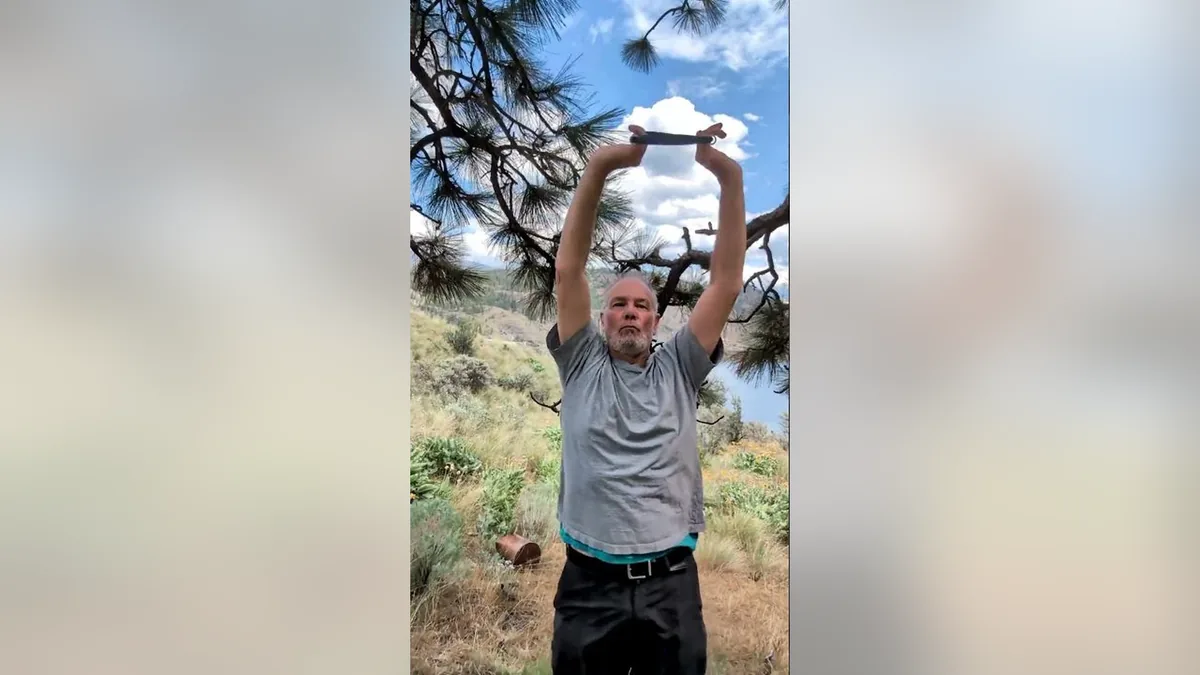
- Sit tall or stand. Keep your feet flat and your shoulders relaxed. Seated option: Sit in a sturdy chair with your back supported.
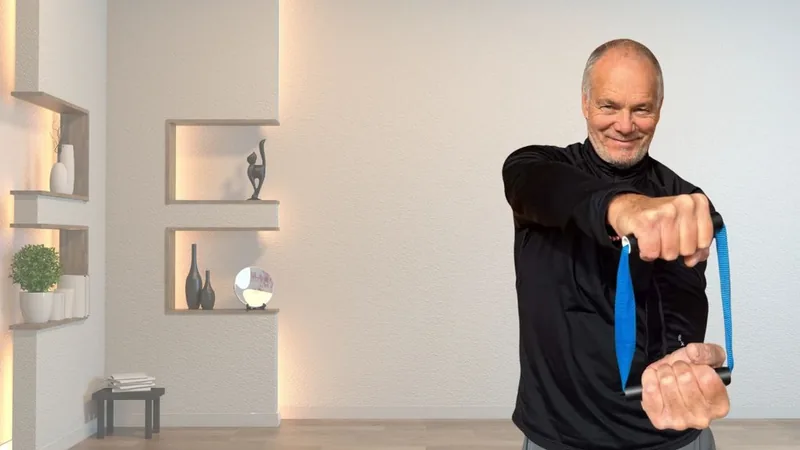
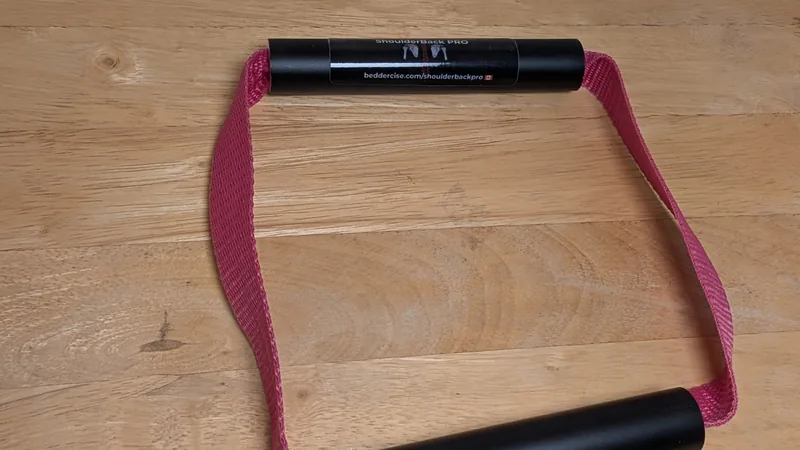
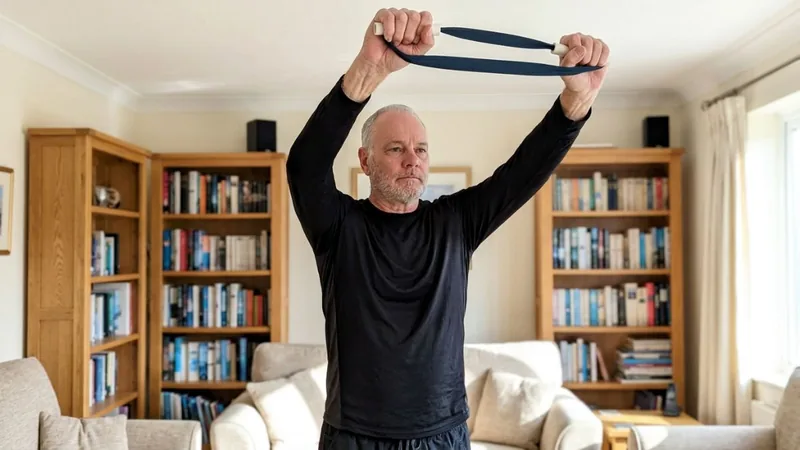
- Start with arms in front of you. Hold the trainer at about chest height, with your elbows soft and your forearms relaxed.
- Draw one large, unhurried circle. Move the arms slowly in front of your body, as if tracing a big circle in the air. Keep it small enough to feel easy, and let one arm resist the other a little. To progress, resist harder, make the circle larger or do longer sets. Seated option: Make the same circle from your chair, keeping your back against the chair.
- Reverse the direction. Circle the other way, slowly.
- Stop if sharp pain starts. A mild working feeling is normal. Sharp pain, or pain that lingers after you finish, means you should stop and check with a clinician.
Where ShoulderBack Pro fits, and where it doesn't
This lesson is designed for large, controlled shoulder-blade movement: one arm guides while the other resists, and you set the effort, pace and range. The site lists the serratus anterior and lower trapezius as its target muscles. It is one of the 16 video lessons, taught seated or standing.
It's a wellness tool with no clinical trials, not a treatment for a diagnosed shoulder problem. The trainer is available here for $29 CAD, with a 30-day guarantee.
For more on how the trainer works, read How ShoulderBack Pro works. For a slow rotation lesson, see Windshield Wipers: slow rotation for the rotator cuff.
When to see a professional
See a doctor or physiotherapist promptly if you have: pain after a fall or injury with sudden weakness or loss of movement; a shoulder that looks deformed, very swollen or bruised; fever or feeling unwell alongside the pain; chest pain or breathlessness (call emergency services); constant pain that doesn't change with rest or activity; pain that wakes you most nights; numbness, tingling or weakness into the arm or hand; pain in several joints at once; or pain that hasn't improved after a couple of weeks of sensible self-care.
If the shoulder is newly painful, weak or stiff, a clinician should assess it before you start.
Try this movement
All 16 video lessons →Frequently asked questions
Is Around the World safe with a sore shoulder?
Start with a small, comfortable circle and move slowly. Stop if you feel sharp pain. If the shoulder is newly painful or weak, see a clinician before you start.
Can I do Around the World seated?
Yes. Sit tall in a sturdy chair with your feet flat and your back supported. Keep the circle small.
How often should I practise it?
Start gently and keep the movement comfortable.
Sources
- Frontiers in Bioengineering & Biotechnology (2025). Specific modes of exercise to improve rotator cuff-related shoulder pain: systematic review and meta-analysis. PROSPERO CRD42024550602. https://pmc.ncbi.nlm.nih.gov/articles/PMC12011739/
- Mureşan et al. (2022). Effects of a novel proprioceptive rehabilitation device on shoulder joint position sense, pain and function. Medicina. https://www.ncbi.nlm.nih.gov/pmc/articles/PMC9505091/
- Dubé M-O et al. (2024). The Efficacy of Exercise Therapy for Rotator Cuff-Related Shoulder Pain According to the FITT Principle: Systematic Review With Meta-analyses. JOSPT. https://pubmed.ncbi.nlm.nih.gov/38848304/
More in this topic
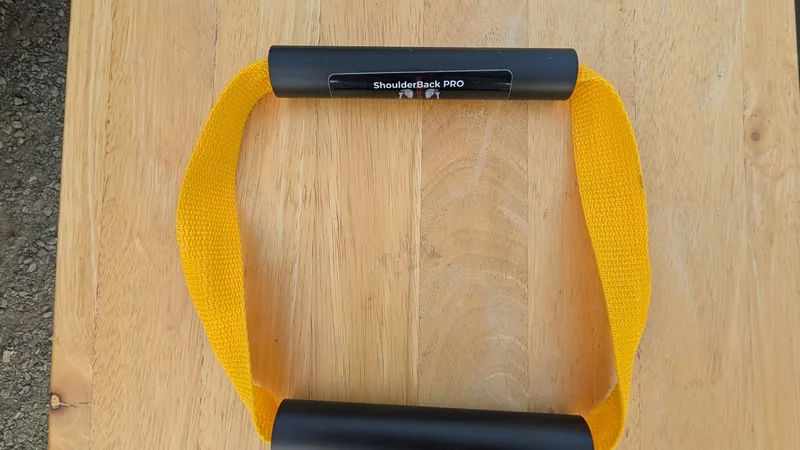 Essential guide: How ShoulderBack Pro Works: One Device, Two Connected Handles, Your Own Resistance
 Pairing SBP With Walking: The Simplest Whole-Body Routine for Active Aging
 Locomotive: Rolling Circles for the Upper Back and Rear Cuff
 Overhead Press (High Shelf Reach): Trapezius and Deltoids Without a Weight