Coordination, control & how ShoulderBack Pro works
Grinders: Small Circles That Massage Between the Shoulder Blades
4-minute read · Published June 17, 2026 · Updated June 17, 2026
Why this happens
The site lists the levator scapulae and rhomboid minor as the muscles Grinders is designed to work. Several muscles sit in the zone between your shoulder blades. The rhomboids pull your shoulder blades toward your spine. The middle trapezius helps keep them steady. The levator scapulae runs from the shoulder blade up to the side of the neck, and the rhomboid minor helps with the small movements in this area.
When these muscles stay in one position for hours, the area can feel tight or heavy. That is a common pattern, not a diagnosis.
What the research says
There isn't research on Grinders specifically. Here is the closest evidence, about related exercise.
- A 2025 review of specific exercise types found that scapular stabilization exercise, which trains the muscles around the shoulder blade, improved pain and function in people with rotator cuff-related shoulder pain [R03].
- Strength, mobility, body composition and posture are each associated with shoulder pain and disability in adults 60 and over [R28].
- Association is not cause. Gentle movement in this area may be a reasonable part of a plan, but it is not a proven stand-alone solution.
What you can do
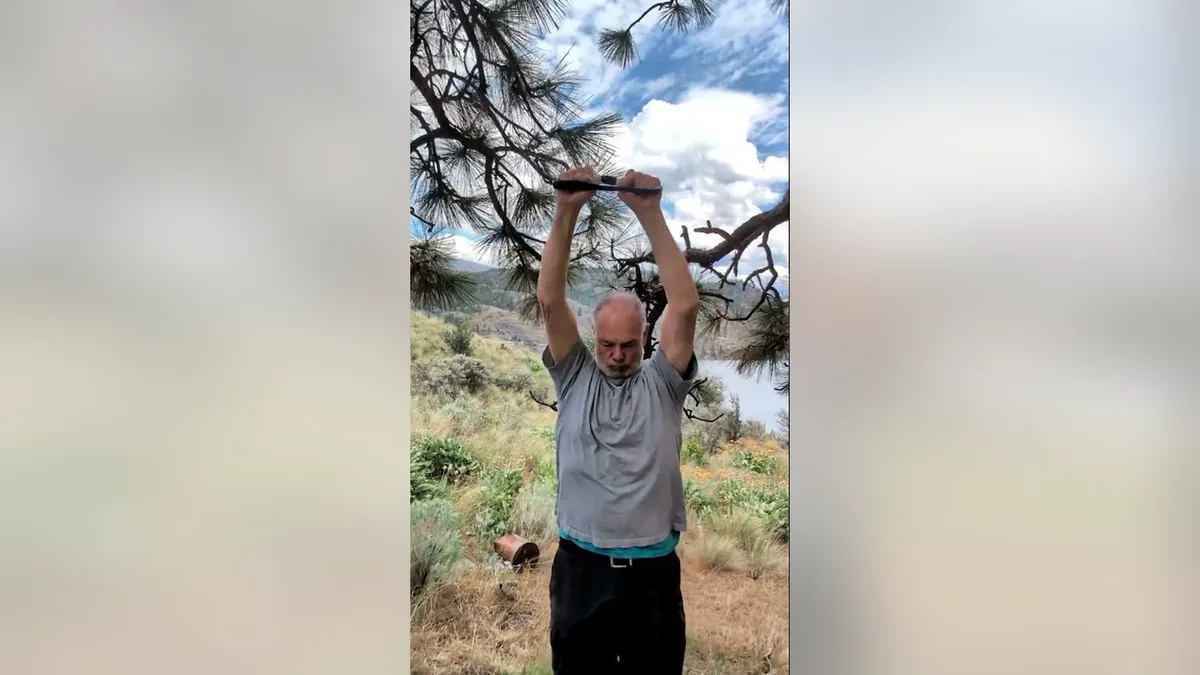
- Sit tall with support. Sit in a chair with your back supported and your feet flat. Let your arms rest. Take two slow breaths before you start.
- Make small circles. Let your shoulder blades move in small, slow circles. Keep each circle small enough to stay comfortable.
- Reverse direction. Repeat the circles in the other direction, at the same gentle size.
- Rest and check in. Pause and notice how the area feels. Mild effort is fine. Sharp, pinching or lasting pain is a signal to stop.
- Stand if you prefer. Repeat the same small circles standing, holding a counter for support if you like.
Where ShoulderBack Pro fits — and where it doesn't
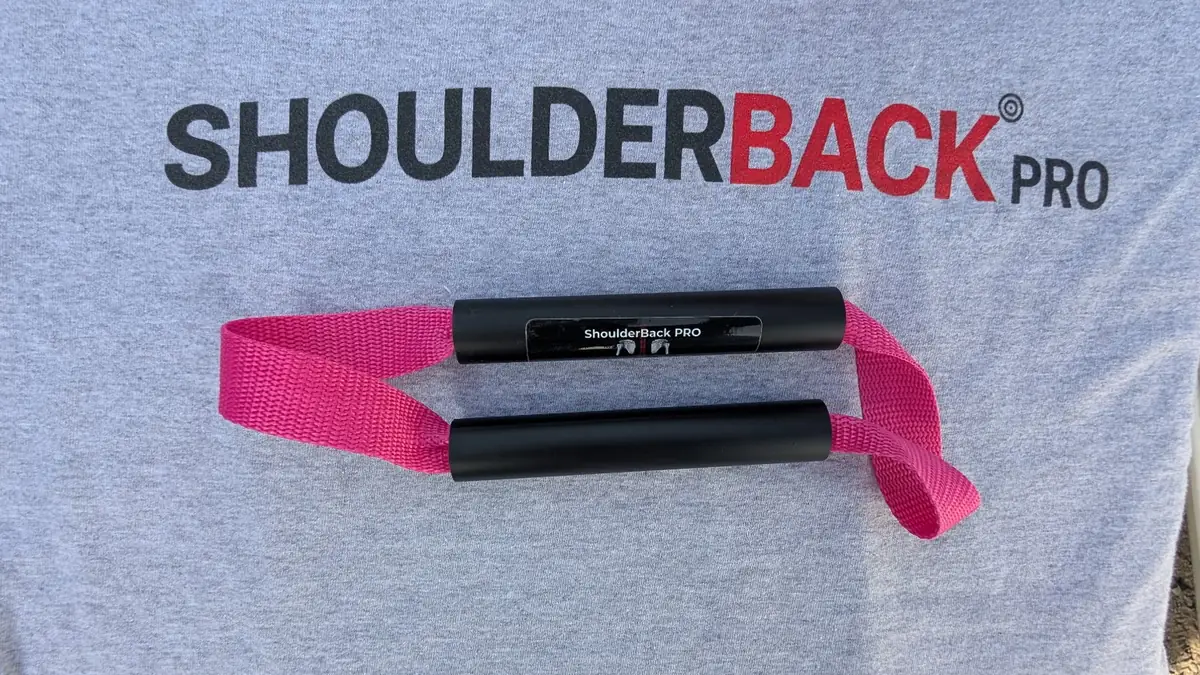
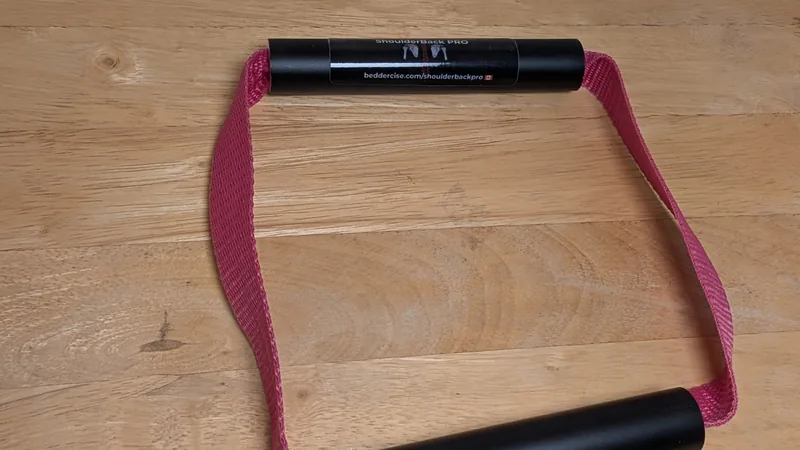
Grinders is the lesson built for this spot. With the trainer, the other arm supplies the resistance, so you can keep each circle small and slow, and press a little harder or add a few circles as it gets easier. It works seated or standing. The rest of the 16 video lessons are free.
It is a wellness tool with no clinical trials behind it, so it is not a treatment for any condition. It does not address neck symptoms, arm numbness or pain that wakes you at night. If you want one, the trainer is $29 CAD with a 30-day guarantee.
When to see a professional
The red flags below follow standard shoulder-care guidance [R30]. If any of them apply, get assessed before you keep moving through the area.
See a doctor or physiotherapist promptly if you have: pain after a fall or injury with sudden weakness or loss of movement; a shoulder that looks deformed, very swollen or bruised; fever or feeling unwell alongside the pain; chest pain or breathlessness (call emergency services); constant pain that doesn't change with rest or activity; pain that wakes you most nights; numbness, tingling or weakness into the arm or hand; pain in several joints at once; or pain that hasn't improved after a couple of weeks of sensible self-care.
Pain between the shoulder blades can come from the neck, chest or upper back, so a clinician is the right person to find the cause. Only a doctor or physiotherapist can diagnose it.
Try this movement
All 16 video lessons →Frequently asked questions
Can small circles between the shoulder blades help posture?
Posture and shoulder pain are linked in some research, but that link is an association, not proof that posture causes pain [R28]. Gentle movement may feel good, but it does not guarantee a posture change.
Is Grinders safe with a sore shoulder?
Keep the circles small and comfortable. Stop if the movement brings on sharp, pinching or lasting pain. If the pain is new, get it checked before you continue.
Can I do Grinders seated?
Yes. Sitting tall in a chair with back support is a good place to start. Standing is an option once the seated version feels comfortable.
Sources
- Frontiers in Bioengineering & Biotechnology (2025). Specific modes of exercise to improve rotator cuff-related shoulder pain: systematic review and meta-analysis. https://pmc.ncbi.nlm.nih.gov/articles/PMC12011739/
- PMC narrative review (2026). Body composition, strength, mobility and posture associated with shoulder pain and disability in community-dwelling older adults. https://www.ncbi.nlm.nih.gov/pmc/articles/PMC13513864/
- NHS Greater Glasgow & Clyde, Shoulder red flags; NHS MPFT self-help, Shoulder pain; BESS/BOA pathway summary (2021). https://www.nhsggc.scot/page_category/services/page/33
More in this topic
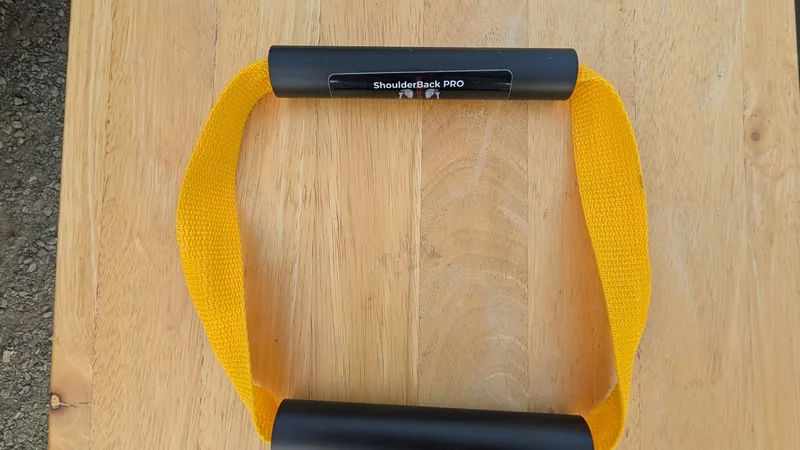 Essential guide: How ShoulderBack Pro Works: One Device, Two Connected Handles, Your Own Resistance
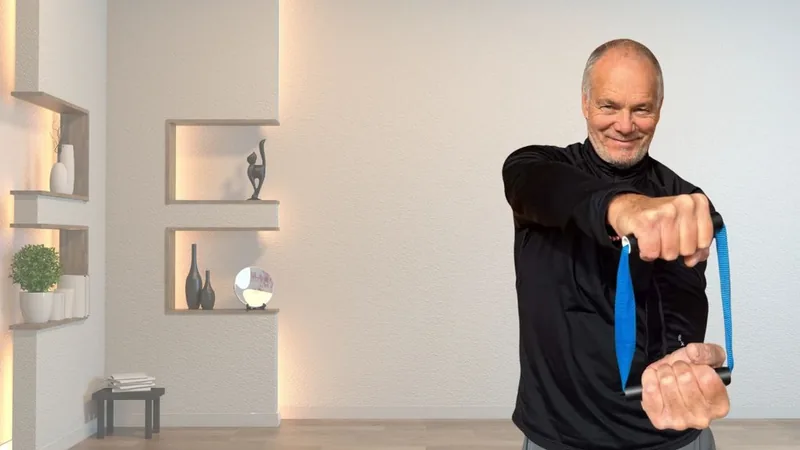 Pairing SBP With Walking: The Simplest Whole-Body Routine for Active Aging
 Locomotive: Rolling Circles for the Upper Back and Rear Cuff
 Overhead Press (High Shelf Reach): Trapezius and Deltoids Without a Weight