Shoulder anatomy & how it works
Rhomboids Explained: Where They Are, What They Do, and Why They Ache
4-minute read · Published August 5, 2026 · Updated August 5, 2026
Why this happens / What this is
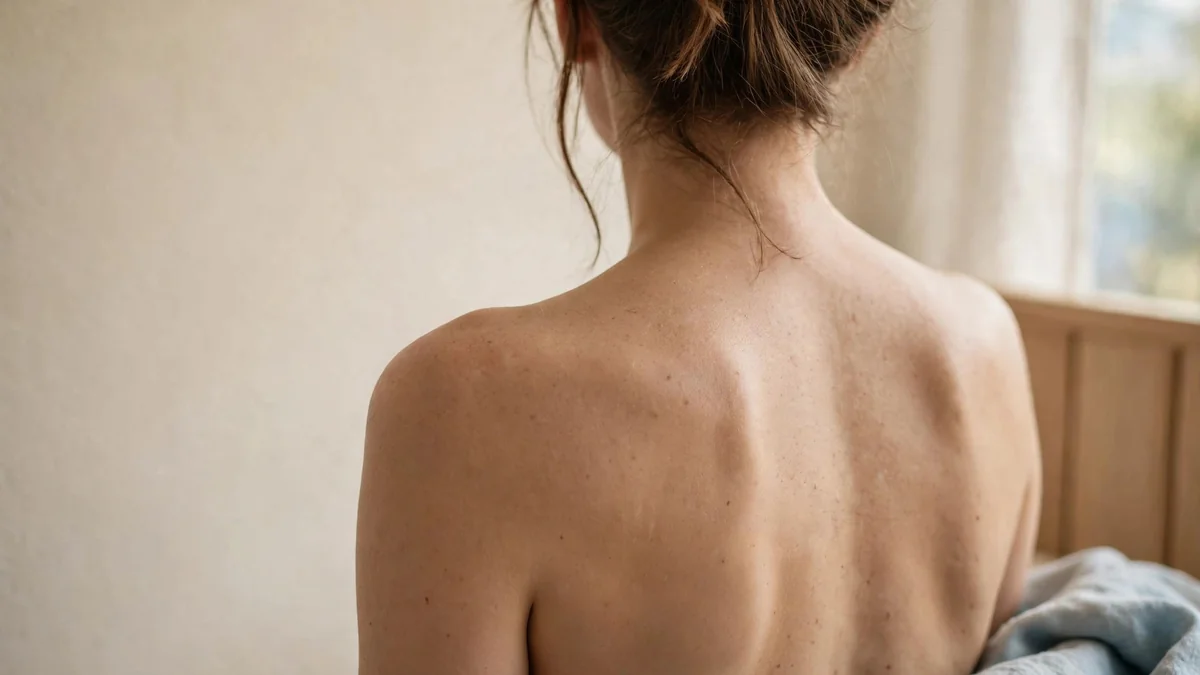
Your rhomboids are the rhomboid major and rhomboid minor. They sit under the trapezius, the large muscle across your upper back. Their main job is to draw the shoulder blade toward the spine and keep it steady while your arm moves.
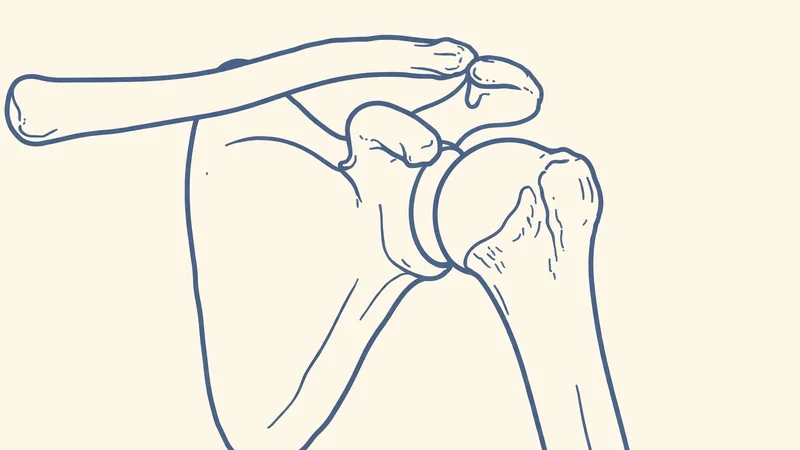
Long sitting is thought to keep them in a stretched, working position. Sudden reaching or lifting can overload them. Upper-back ache has other sources, so a pattern is a clue, not a diagnosis. For the bigger picture, see how the shoulder works. Its neighbour, the middle trapezius, is often involved too.
What the research says
- Strength, mobility, body composition and posture are each associated with shoulder pain and disability in adults over 60 [R28].
- A 2025 review found that scapular stabilization exercise, which trains the muscles that hold the shoulder blade steady, improved pain and function in rotator-cuff-related pain [R03].
- Progressive, resisted exercise probably makes a modest difference. Gentle movement without load probably does not move pain much on its own [R01].
What you can do
- Break up long sitting. Every 30 to 60 minutes, stand up, or sit tall and let your shoulders drift down.
- Try a seated shoulder-blade squeeze. Sit tall and gently draw your shoulder blades together. Hold for three seconds, then release. Stop if it sharpens the ache.
- Keep frequent items close. Reaching far adds strain.
- Add gentle, progressive resistance. Start with movements you can do without pain, seated or standing, and build slowly over weeks.
Where ShoulderBack Pro fits — and where it doesn't
Two ShoulderBack Pro movements are listed by the site as working the rhomboids: Open The Door (elbows at your sides, forearms swing outward) and Grinders (small circles between the shoulder blades). Both can be done seated, with the other arm providing the resistance, and the free lessons show them. It will not help an ache that comes from the neck, a disc, a joint or an injury, and it is a wellness tool with no clinical trials. If your pain is new, follows a fall, or spreads into the arm, get it checked first. The trainer is at ShoulderBack Pro.
When to see a professional
See a doctor or physiotherapist promptly if you have: pain after a fall or injury with sudden weakness or loss of movement; a shoulder that looks deformed, very swollen or bruised; fever or feeling unwell alongside the pain; chest pain or breathlessness (call emergency services); constant pain that doesn't change with rest or activity; pain that wakes you most nights; numbness, tingling or weakness into the arm or hand; pain in several joints at once; or pain that hasn't improved after a couple of weeks of sensible self-care.
Only a clinician can diagnose the cause of rhomboid pain. Any red flag above means a proper assessment comes first [R30].
Try this movement
SeeSaw (the muscles around the shoulder blade) →Frequently asked questions
Can rhomboids be strained?
Yes. A sudden lift or a sharp reach can strain them. Any sudden injury should be assessed by a clinician.
Is an ache after a desk day normal?
Many people feel sore after long sitting. If the ache is new or severe, or lasts past a couple of weeks of sensible self-care, see a clinician.
Should I stretch or strengthen the area?
Both have some support [R03]. A clinician can help you choose the right mix for you.
Sources
- Frontiers in Bioengineering & Biotechnology (2025). Specific modes of exercise to improve rotator cuff-related shoulder pain: systematic review and meta-analysis. https://pmc.ncbi.nlm.nih.gov/articles/PMC12011739/
- PMC narrative review (2026). Body composition, strength, mobility and posture associated with shoulder pain and disability in community-dwelling older adults. https://www.ncbi.nlm.nih.gov/pmc/articles/PMC13513864/
- Naunton J et al. (2020). Effectiveness of progressive and resisted and non-progressive or non-resisted exercise in rotator cuff related shoulder pain: systematic review and meta-analysis of RCTs. Clinical Rehabilitation. https://search.pedro.org.au/search-results/record-detail/61404
- NHS Greater Glasgow & Clyde, NHS MPFT self-help and BESS/BOA pathway summary (2021). Shoulder red flags and self-help guidance. https://www.nhsggc.scot/page_category/services/page/33