Coordination, control & how ShoulderBack Pro works
Open the Door: External Rotation for Infraspinatus and Rhomboids
4-minute read · Published April 14, 2025 · Updated April 14, 2025
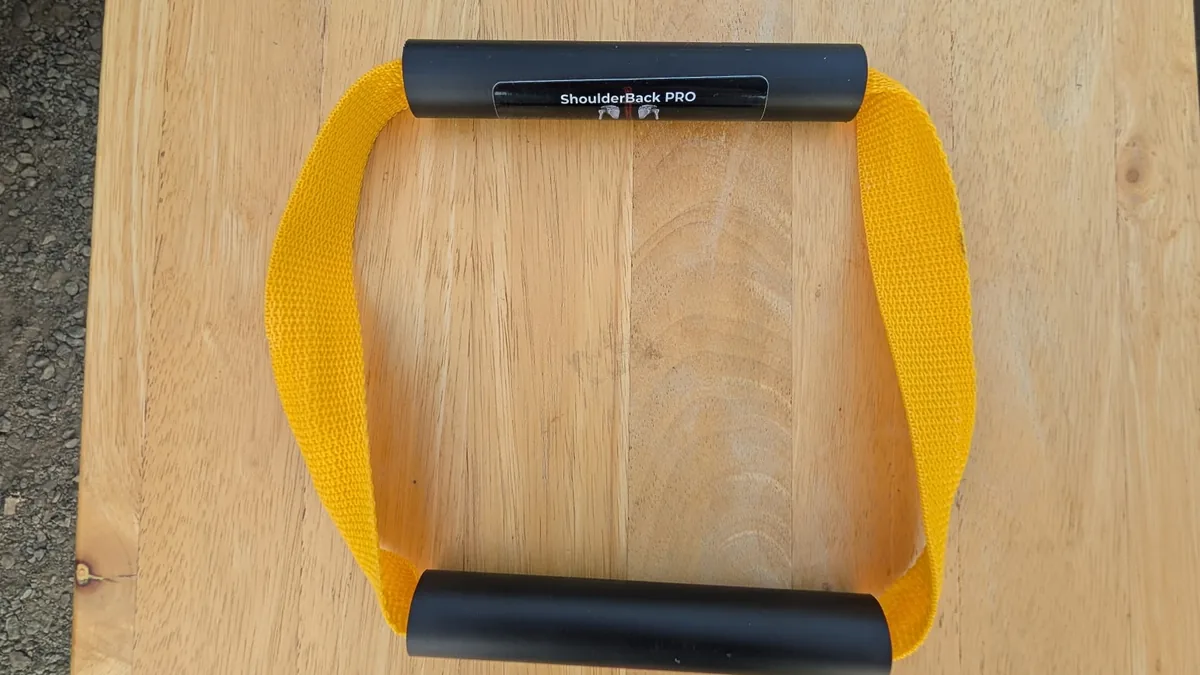
What this movement works
The shoulder blade (scapula) is a flat bone on your upper back.
The infraspinatus is one of the four rotator cuff muscles. It helps turn the arm outward, a motion called external rotation.
The rhomboid major sits between the shoulder blade and the spine. It helps pull the shoulder blade back toward the ribs.
Open the Door works both areas. To learn more, see the 17 muscles of the shoulder blade.
What the research says
- Exercise with resistance that builds gradually is the type most likely to help rotator-cuff-related shoulder pain. Gentle movement alone probably does little for pain [R01].
- A 2025 review found that scapular stabilization exercise improved pain and function [R03].
- Programs that teach control may work a little better than generic exercise, though we do not fully know why [R02].
- Two-arm training research comes mostly from stroke rehabilitation. It is an interesting idea, but it does not prove that any device works [R14].
What you can do
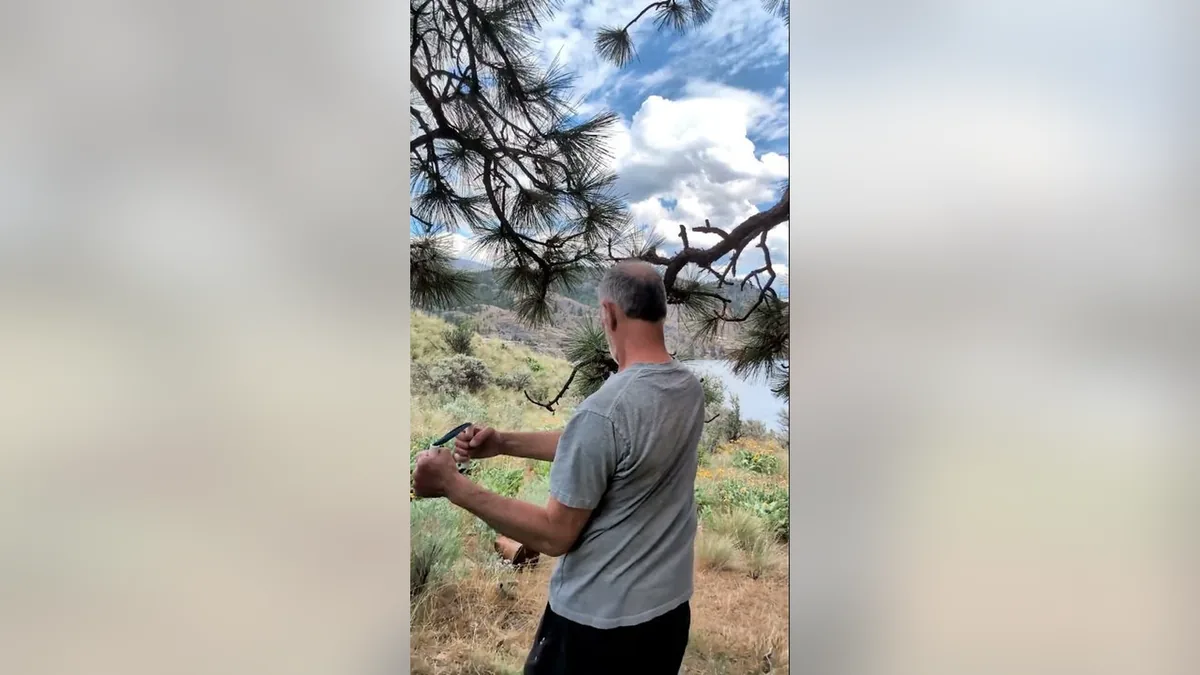
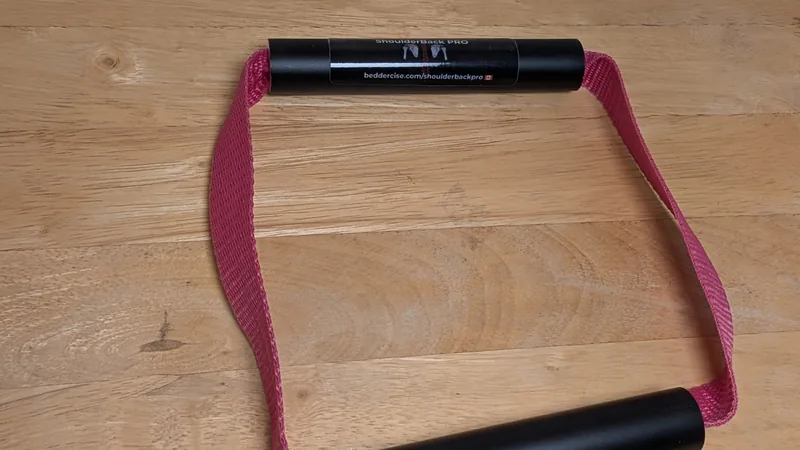
- Sit tall in an armchair with back support and both feet flat. Hold the trainer with both hands, elbows close to your sides.
- Let one arm guide the other. Swing the working forearm outward slowly, only as far as feels comfortable.
- Pause, then return slowly. Repeat a few slow times, then rest.
- Stop if you feel sharp pain, numbness, or pain that lingers after you finish.
For a gentler warm-up that works the same general area, try SeeSaw.
Where ShoulderBack Pro fits — and where it doesn't
Open the Door is the lesson built for this job: the infraspinatus turns the arm outward while the rhomboid major draws the blade back. Windshield Wipers is a natural next step, since it uses slow side-to-side arcs for the rotator cuff muscles at the front and back of the joint.
The resistance comes from your other arm, so you progress by resisting harder, moving through more range or doing longer sets. Follow the video in the lessons on the routines page, or read how ShoulderBack Pro works. It is a wellness tool, not a treatment, and it has no clinical trials. If your shoulder is painful, see a clinician first. Product details are on the shop page.
When to see a professional
See a doctor or physiotherapist promptly if you have: pain after a fall or injury with sudden weakness or loss of movement; a shoulder that looks deformed, very swollen or bruised; fever or feeling unwell alongside the pain; chest pain or breathlessness (call emergency services); constant pain that doesn't change with rest or activity; pain that wakes you most nights; numbness, tingling or weakness into the arm or hand; pain in several joints at once; or pain that hasn't improved after a couple of weeks of sensible self-care.
Red-flag list adapted from [R30].
Try this movement
All 16 video lessons →Frequently asked questions
Is Open the Door safe to do every day?
For many people, short, gentle sessions are fine. Check with a clinician if pain rises or lingers into the next day.
Do I have to stand up to do it?
No. Sit in an armchair with back support. Standing is optional if you feel steady.
What if one side feels weaker?
Set a lighter effort on the weaker side, and tell your clinician if it persists.
Sources
- Naunton J et al. (2020). Effectiveness of progressive and resisted and non-progressive or non-resisted exercise in rotator cuff related shoulder pain: systematic review and meta-analysis of RCTs. Clinical Rehabilitation. https://search.pedro.org.au/search-results/record-detail/61404
- Dubé M-O et al. (2024). The Efficacy of Exercise Therapy for Rotator Cuff-Related Shoulder Pain According to the FITT Principle: Systematic Review With Meta-analyses. JOSPT. https://pubmed.ncbi.nlm.nih.gov/38848304/
- Frontiers in Bioengineering & Biotechnology (2025). Specific modes of exercise to improve rotator cuff-related shoulder pain: systematic review and meta-analysis. https://pmc.ncbi.nlm.nih.gov/articles/PMC12011739/
- Journal of Physical Therapy Science (2016). The effects of bilateral movement training on upper limb function in chronic stroke patients. https://pmc.ncbi.nlm.nih.gov/articles/PMC5011582
- NHS Greater Glasgow & Clyde — Shoulder red flags; NHS MPFT self-help — Shoulder pain; BESS/BOA pathway summary (2021). https://pmc.ncbi.nlm.nih.gov/articles/PMC7905504
More in this topic
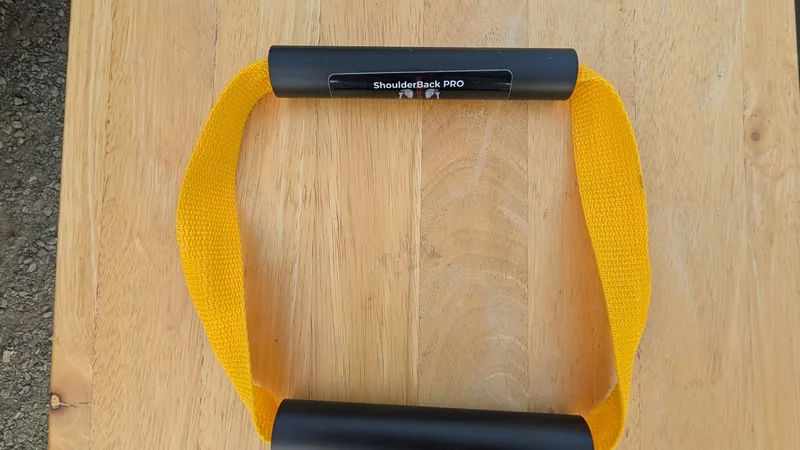 Essential guide: How ShoulderBack Pro Works: One Device, Two Connected Handles, Your Own Resistance
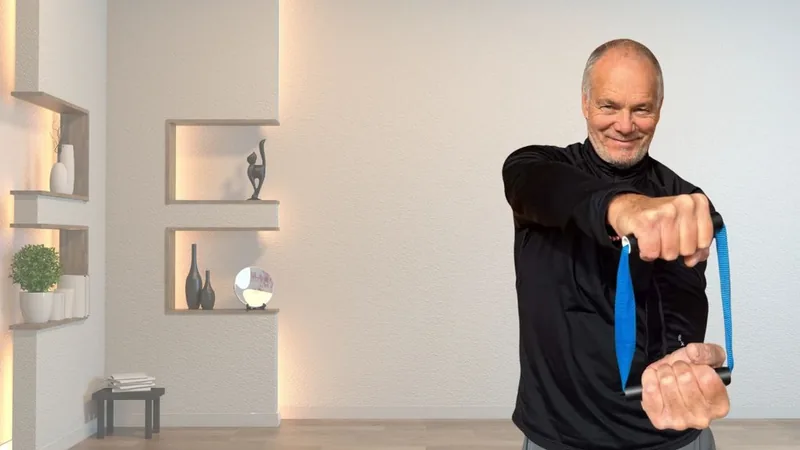 Pairing SBP With Walking: The Simplest Whole-Body Routine for Active Aging
 Locomotive: Rolling Circles for the Upper Back and Rear Cuff
 Overhead Press (High Shelf Reach): Trapezius and Deltoids Without a Weight