Shoulder anatomy & how it works
Latissimus Dorsi: How Your Biggest Back Muscle Affects Shoulder Reach
4-minute read · Published August 12, 2026 · Updated August 12, 2026
What this is
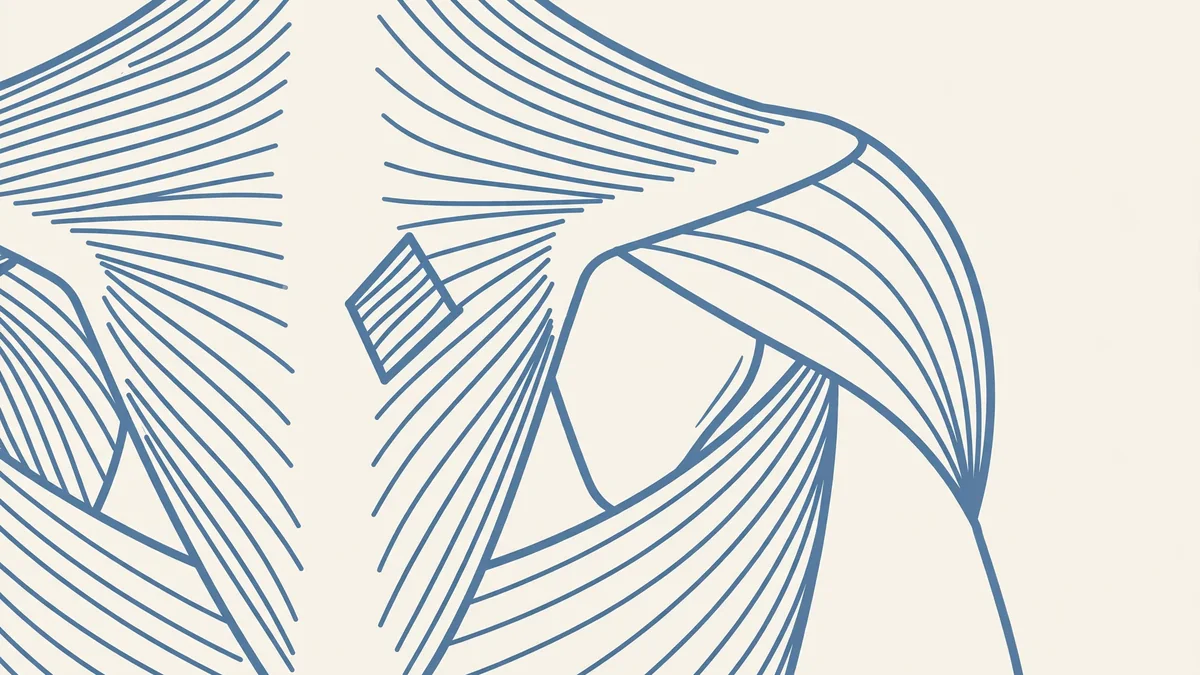
The name means "widest" in Latin, which fits. The lats start across the lower spine and pelvis and the lower ribs, then sweep up and attach to the upper arm. Because they cover such a large area, they are easy to feel when you pull, reach or lift.
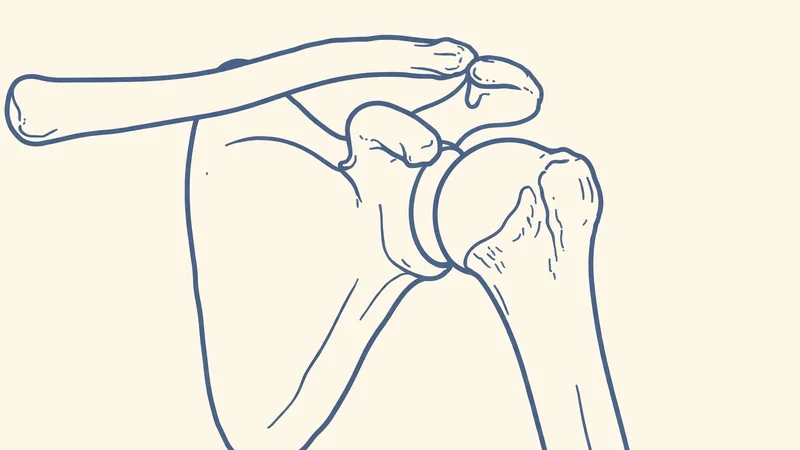
When you reach overhead, pull yourself up, or swing your arm back, the lats help. The shoulder blade (scapula) must move in step with the arm so the reach feels smooth. Think of the lats and the shoulder blade as a team rather than two separate parts.
What the research says
- Strength, mobility, body composition and posture are each linked to shoulder pain and disability in adults over 60. Those are reasonable targets, but the evidence for each one is indirect [R28].
- A 2025 review found that scapular stabilization exercise improved pain and function in rotator-cuff-related shoulder pain [R03]. That supports training the shoulder blade, which works with the lats.
- Shoulder disorders are linked with reduced proprioception, which is your sense of joint position. Rehabilitation usually moves from range of motion, to strength, to control, to coordination [R16].
- Our sources do not test lat tightness as a cause of shoulder pain. Evidence varies, so ask a clinician before blaming any single muscle.
What you can do
- Notice the reach. Watch how your arm moves overhead. Does it feel smooth? Note any pinch or catch and where it happens.
- Try a seated lat stretch. Sit tall, reach one arm overhead, and gently lean to the opposite side. Keep the movement small. Stop if pain increases.
- Glide the shoulder blades. Sit tall, draw your shoulder blades down and back, then let them release. This works with the lats rather than against them.
- Vary your reaching. Include both arms, and include gentle reaches in different directions across the week.
- Get help for pain that persists. Track it and bring your notes to a clinician.
To learn more about the parts that work together here, read how the shoulder works and the 17 muscles that attach to your shoulder blade.
Where ShoulderBack Pro fits — and where it doesn't
The site lists Crosscuts (a diagonal glide from high shoulder to opposite hip) and Resisting Arrest (hands behind the back, gliding apart) as moves designed to work the lats, with one arm resisting the other through a range you choose. The SeeSaw lesson is a gentler warm-up. None of this targets the lats alone, and it's a wellness tool, not a treatment, with no clinical trials yet. The shop has details.
When to see a professional
See a doctor or physiotherapist promptly if you have: pain after a fall or injury with sudden weakness or loss of movement; a shoulder that looks deformed, very swollen or bruised; fever or feeling unwell alongside the pain; chest pain or breathlessness (call emergency services); constant pain that doesn't change with rest or activity; pain that wakes you most nights; numbness, tingling or weakness into the arm or hand; pain in several joints at once; or pain that hasn't improved after a couple of weeks of sensible self-care.
Try this movement
SeeSaw (the muscles around the shoulder blade) →Frequently asked questions
Are tight lats the cause of my shoulder pain?
Our sources do not show that. Ask a clinician to assess the joint before blaming one muscle.
Can I stretch my lats seated?
Yes, gently. Keep the range small and stop at any sharp pain.
Why does reaching overhead feel stuck?
Stiffness can come from many places, including the shoulder blade, the joint and the muscles around it. A clinician can help sort it out.
Sources
- Frontiers in Bioengineering & Biotechnology (2025). Specific modes of exercise to improve rotator cuff-related shoulder pain: systematic review and meta-analysis. https://pmc.ncbi.nlm.nih.gov/articles/PMC12011739/
- Mureşan et al. (2022). Effects of a novel proprioceptive rehabilitation device on shoulder joint position sense, pain and function. Medicina. https://www.ncbi.nlm.nih.gov/pmc/articles/PMC9505091/
- PMC narrative review (2026). Body composition, strength, mobility and posture associated with shoulder pain and disability in community-dwelling older adults. https://www.ncbi.nlm.nih.gov/pmc/articles/PMC13513864/