Ancient wisdom & traditional movement practices
Greek Gymnasia and the Idea of Daily Movement
5-minute read · Published November 13, 2025 · Updated November 13, 2025

Why this happens / What this is
In ancient Greece, the gymnasium was more than a place for sport. It was where people trained their bodies, often alongside learning and music. Young people trained there, and adults did too.
The idea behind it is simple. A body that moves regularly tends to stay capable for longer. Shoulders are a good example. They depend on many small muscles working as a team, and those muscles respond best to regular, varied use.
If you want to read more about the whole system, start with how the shoulder works. It is part of the ancient wisdom cluster.
What the research says
Modern studies do not test ancient gymnasia. They test specific exercises in specific groups of people. Some of what they show fits the old idea of regular, varied movement.
- Progressive, resisted exercise probably makes a modest difference people with rotator-cuff-related shoulder pain. Gentle movement with no added load probably does not change pain much [R01].
- The World Health Organization advises adults to do muscle-strengthening activity at least two days a week. Adults 65 and older should also do balance and strength work at least three days a week. Its summary phrase is "every move counts" [R07].
History is a good reason to take movement seriously. It is not proof that any particular practice works.
What you can do
- Pick one movement you will repeat. Short and frequent usually beats long and rare.
- Try slow, controlled circles. Standing, make small, relaxed circles with your arms. Seated, sit tall with your back supported and keep the circles within a comfortable range.
- Add a little effort over weeks. Gentle push-and-hold work, seated or standing, can be progressed slowly. Stop before sharp pain.
- Check the next morning. Mild tiredness is common. Sharp pain, or pain that lasts well beyond a day, is a reason to talk to a clinician.
- Keep a simple log. Mark the days you moved. Missing one day is not a failure.
Where ShoulderBack Pro fits, and where it doesn't
A gymnasium needed a building. This trainer is a pocket-size strap with two handles, so the habit can happen in an armchair. Around the World is a good daily pick: one large, unhurried circle in front of you, with one arm guiding and the other resisting. Resist harder, or draw a bigger circle, as it gets easier.
It is a wellness tool, not a treatment for a diagnosed condition. If you are curious, the shop page has the details.
When to see a professional
See a doctor or physiotherapist promptly if you have: pain after a fall or injury with sudden weakness or loss of movement; a shoulder that looks deformed, very swollen or bruised; fever or feeling unwell alongside the pain; chest pain or breathlessness (call emergency services); constant pain that doesn't change with rest or activity; pain that wakes you most nights; numbness, tingling or weakness into the arm or hand; pain in several joints at once; or pain that hasn't improved after a couple of weeks of sensible self-care.
A doctor or physiotherapist is the right person to assess your shoulder and decide what it needs [R30].
Keep reading: Cluster guide · Radio Taiso · Indian clubs
Try this movement
Around the World (circles, both arms) →Frequently asked questions
Did the ancient Greeks prove that daily exercise works?
No. Ancient training shows what people valued, not what bodies responded to in controlled tests. Modern studies are what show whether a practice helps.
How often should adults move to build strength?
The WHO advises adults to do muscle-strengthening activity at least two days a week. Adults 65 and older should also do balance and strength work at least three days a week.
Is ShoulderBack Pro an ancient practice?
No. It is a modern, pocket-size movement trainer made in Canada. It is not a medical device and is not a treatment for a diagnosed condition.
Sources
- Naunton J et al. (2020). Effectiveness of progressive and resisted and non-progressive or non-resisted exercise in rotator cuff related shoulder pain: systematic review and meta-analysis of RCTs. Clinical Rehabilitation. https://search.pedro.org.au/search-results/record-detail/61404
- WHO (2020). Guidelines on physical activity and sedentary behaviour. https://www.sydney.edu.au/news-opinion/news/2020/11/26/new-global-guidelines-on-physical-activity-and-sedentary-behavio.html
- NHS Greater Glasgow & Clyde — Shoulder red flags; NHS MPFT self-help — Shoulder pain; BESS/BOA pathway summary (2021). https://www.nhsggc.scot/page_category/services/page/33
More in this topic
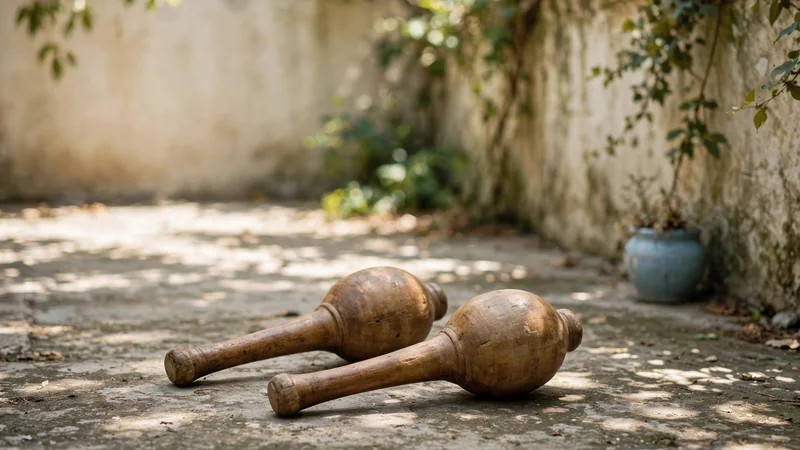 Essential guide: Ancient Wisdom for Strong Shoulders: What Traditional Movement Got Right (and What Science Adds)
 The Chinese Medicine Clock and Morning Movement: Fun Framing, Real Habit
 Cold Water and Shoulders: From Nordic Plunges to Modern Ice Baths
 Ancient Massage Traditions: Thai, Tui Na, Lomi Lomi — Comfort vs Proof