Ancient wisdom & traditional movement practices
Cold Water and Shoulders: From Nordic Plunges to Modern Ice Baths
5-minute read · Published September 24, 2026 · Updated September 24, 2026

What this is
Cold-water bathing has a long history in many cultures. People have used cold plunges in northern winters, and today many people use ice baths after exercise or for a sense of alertness. Some people say they feel less sore afterward.
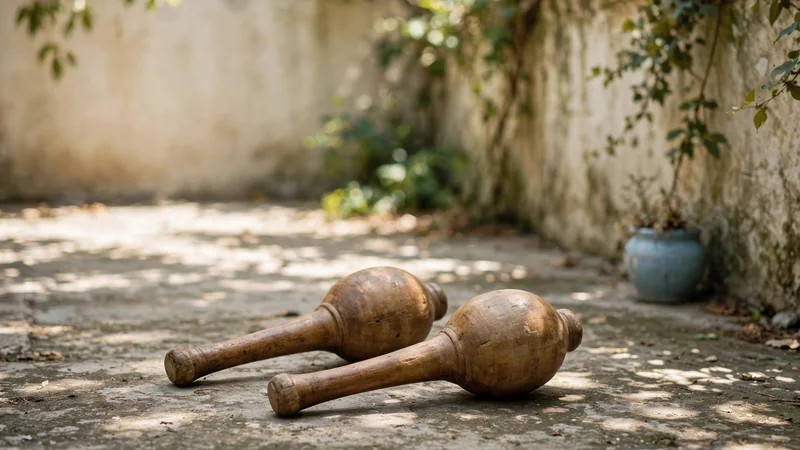
A long tradition is not the same as proof. Club swinging, a traditional shoulder-focused practice, is described in 12th- and 13th-century Indian texts and was an Olympic event in 1904 and 1932 [R35]. That history shows the practice lasted. It does not show the practice heals anything.
Why people think it helps
People often describe cold water as calming, energizing or good for soreness. Those experiences matter to the people who have them. They are not the same as controlled trials, and the sources here do not confirm them for shoulders.
What the research says
- There isn't strong research on cold-water immersion for shoulder pain specifically, so the evidence level is insufficient. Ask your clinician.
- Exercise is the better-studied approach. Exercise with resistance that builds gradually is the type most likely to help rotator-cuff-related shoulder pain, while gentle movement alone probably does not [R01].
- Traditional movement practices do have some modern trials. Tai Chi and Qigong have been studied in adults 55 and over, with possible benefits for physical function, fall risk and mood [R10]. Those trials are about movement, not cold water.
What you can do
- Treat cold as a personal choice, not a shoulder plan. If you enjoy cold water, keep it separate from your shoulder care.
- Start gently if you try it. Begin with cooler water rather than icy water, and keep the first sessions short and supervised if possible.
- Ask a doctor first if you have a heart or blood pressure condition. Cold exposure can be harder on some bodies, and it is worth checking before you start.
- Keep the movement you already know. Gentle, progressive shoulder work is the better-studied option [R01].
- Warm up with a calm, seated movement. Sit tall and make one large, slow arm circle in front of you. Repeat it a few times, stopping before any pinch or sharp pain.
- Get pain checked. Night pain, weakness or numbness are reasons to see a clinician [R30].
Where ShoulderBack Pro fits — and where it doesn't
ShoulderBack Pro is not a cold therapy product, so it does not fit this topic. For a shoulder problem, the next step is an assessment, then a movement plan a clinician is happy with. The routines can wait until then.
When to see a professional
See a doctor or physiotherapist promptly if you have: pain after a fall or injury with sudden weakness or loss of movement; a shoulder that looks deformed, very swollen or bruised; fever or feeling unwell alongside the pain; chest pain or breathlessness (call emergency services); constant pain that doesn't change with rest or activity; pain that wakes you most nights; numbness, tingling or weakness into the arm or hand; pain in several joints at once; or pain that hasn't improved after a couple of weeks of sensible self-care [R30].
A doctor or physiotherapist diagnoses shoulder problems. Cold therapy does not replace that assessment.
Try this movement
Around the World (circles, both arms) →Frequently asked questions
Does cold water help shoulders heal?
The sources we can cite do not show that. Evidence varies, so ask your clinician before relying on cold for a shoulder problem.
Is an ice bath safe?
It can be risky for some people, especially those with heart or blood pressure conditions. Ask your doctor first, and do not try a sudden plunge alone if you are unsure.
Are traditional practices proven?
Some have modern trials. Tai Chi and Qigong have been studied in older adults, with possible benefits for function and fall risk [R10]. A long history is not evidence on its own [R35].
What if I enjoy cold water anyway?
Enjoy it as a personal habit if it is safe for you. Keep your shoulder plan separate, and check any pain with a clinician [R30].
Sources
- Naunton J et al. (2020). Effectiveness of progressive and resisted and non-progressive or non-resisted exercise in rotator cuff related shoulder pain: systematic review and meta-analysis of RCTs. Clinical Rehabilitation. https://search.pedro.org.au/search-results/record-detail/61404
- Rogers CE, Larkey LK, Keller C (2009). A review of clinical trials of tai chi and qigong in older adults. West J Nurs Res 31(2):245-79. https://qigonginstitute.org/abstract-print/4690
- NHS Greater Glasgow & Clyde, Shoulder red flags; NHS MPFT self-help, Shoulder pain; BESS/BOA pathway summary (2021). https://www.nhsggc.scot/page_category/services/page/33
- Wikipedia, Indian club (history; secondary). https://en.wikipedia.org/wiki/Indian_club
More in this topic
 Essential guide: Ancient Wisdom for Strong Shoulders: What Traditional Movement Got Right (and What Science Adds)
 The Chinese Medicine Clock and Morning Movement: Fun Framing, Real Habit
 Ancient Massage Traditions: Thai, Tui Na, Lomi Lomi — Comfort vs Proof
 Hanging and Brachiation: Why Our Primate Shoulders Love to Reach