Ancient wisdom & traditional movement practices
Radio Taiso: Japan's 3-Minute Morning Routine Since 1928
6-minute read · Published October 22, 2025 · Updated October 22, 2025
What this is
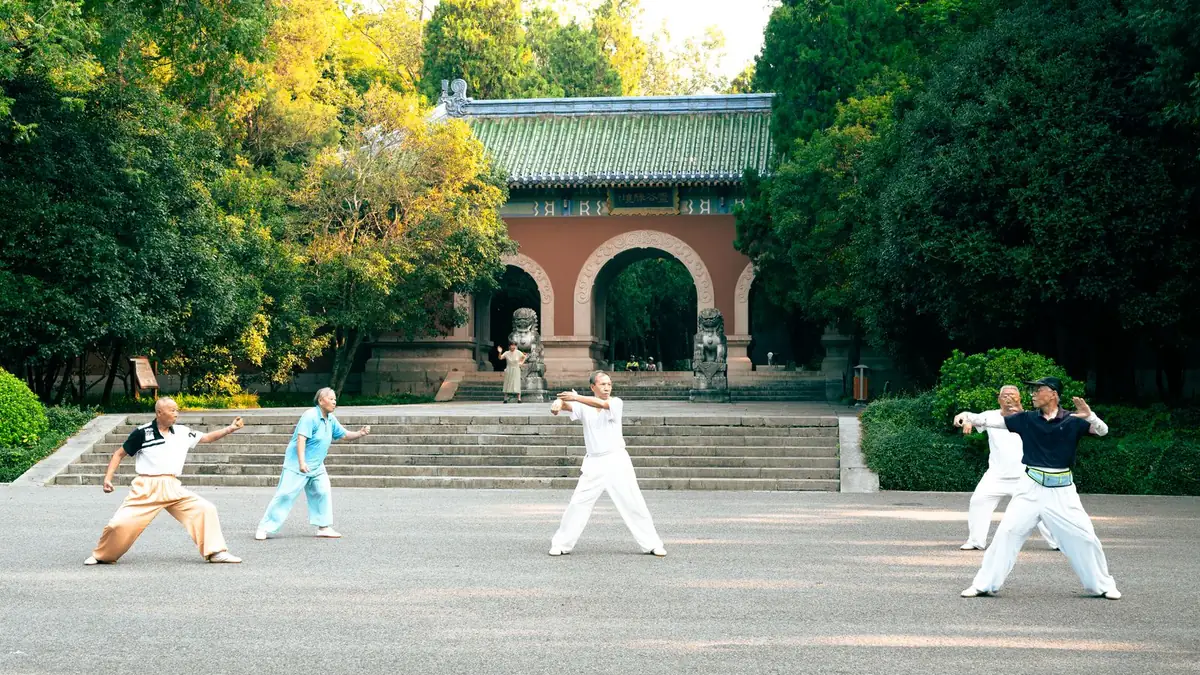
Radio taiso ("radio exercise") is a short routine of simple, repeated movements set to music. It was broadcast so that people across Japan could exercise together. The start date of 1928 is the commonly reported one. We have not checked it against a primary source, and our reference list does not cover the history.
The format is the useful part. The moves are easy to learn, they include arm and trunk movements, and they take only a few minutes. If you want more background on traditional shoulder movement, read ancient wisdom for strong shoulders.
What the research says
- Every move counts. The WHO advises adults to be active every day, and adults 65 and older should add balance and strength work at least three days a week [R07].
- Slow, flowing practices have trial support. Tai chi and qigong may help adults 55 and over with physical function, fall risk and mood [R10]. A 12-week Thai yoga program improved reach and arm strength in sedentary adults over 60 [R11].
- Shoulder mobility can improve with movement practice. A seven-week tai chi softball program improved upper-limb function, including shoulder mobility, in older adults. The study was of modest quality [R13].
- Unloaded movement has limits. Gentle movement alone did not show a pain benefit in one review. Progressive, resisted exercise probably makes a modest difference more [R01].
What you can do
- Pick a fixed three-minute slot. Choose a time you already have, like after your morning drink.
- Move slowly. Let the arms lead and keep the breath easy. Stop any move that causes sharp pain.
- Use the seated version. Sit tall in an armchair and do the same arm sequence, keeping the range comfortable. Seated: this is the whole routine.
- Add strength twice a week. Use light resistance for a few minutes on two days, in line with WHO guidance [R07].
- Make it social if you like. A local group class or a family member can help you keep going.
Where ShoulderBack Pro fits — and where it doesn't
If you like the idea of a short daily arm routine but want something you can do alone, the Around the World exercise is the closest match. It is one large, unhurried circle in front of you, with one arm guiding and the other resisting, much like the circling arm moves in radio taiso. The routine walks you through it, and the trainer is on the shop page. It is a wellness tool with no clinical trials yet, and it can't replace a group class or the company.
When to see a professional
See a doctor or physiotherapist promptly if you have: pain after a fall or injury with sudden weakness or loss of movement; a shoulder that looks deformed, very swollen or bruised; fever or feeling unwell alongside the pain; chest pain or breathlessness (call emergency services); constant pain that doesn't change with rest or activity; pain that wakes you most nights; numbness, tingling or weakness into the arm or hand; pain in several joints at once; or pain that hasn't improved after a couple of weeks of sensible self-care.
Only a doctor, physiotherapist or other qualified clinician can diagnose the cause of shoulder pain. Ask them before starting any new routine if you have a diagnosed condition.
Try this movement
Around the World (circles, both arms) →Frequently asked questions
Is radio taiso proven to help shoulders?
No. The sources we reviewed do not study radio taiso directly. Related practices like tai chi have some trial evidence for upper-limb function.
Can I do radio taiso seated?
Yes. Arm and trunk movements can be done in an armchair with the same rhythm.
Is it safe after 60?
Gentle movement suits many older adults, but check with your clinician first if you have a heart condition, a recent injury or a shoulder problem.
Sources
- Naunton J et al. (2020). Effectiveness of progressive and resisted and non-progressive or non-resisted exercise in rotator cuff related shoulder pain: systematic review and meta-analysis of RCTs. Clinical Rehabilitation. https://search.pedro.org.au/search-results/record-detail/61404
- WHO (2020). Guidelines on physical activity and sedentary behaviour. https://www.sydney.edu.au/news-opinion/news/2020/11/26/new-global-guidelines-on-physical-activity-and-sedentary-behavio.html
- Rogers CE, Larkey LK, Keller C (2009). A review of clinical trials of tai chi and qigong in older adults. West J Nurs Res 31(2):245-79. https://qigonginstitute.org/abstract-print/4690
- Noradechanunt C, Worsley A, Groeller H (2017). Thai Yoga improves physical function and well-being in older adults: a randomised controlled trial. J Sci Med Sport. https://ro.uow.edu.au/smhpapers/4599
- Lou L et al. (2017). Effect of Tai Chi softball on function-related outcomes in older adults: RCT. Evid Based Complement Alternat Med. https://search.pedro.org.au/search-results/record-detail/49889
More in this topic
 Essential guide: Ancient Wisdom for Strong Shoulders: What Traditional Movement Got Right (and What Science Adds)
 The Chinese Medicine Clock and Morning Movement: Fun Framing, Real Habit
 Cold Water and Shoulders: From Nordic Plunges to Modern Ice Baths
 Ancient Massage Traditions: Thai, Tui Na, Lomi Lomi — Comfort vs Proof