Coordination, control & how ShoulderBack Pro works
Crosscuts: The Diagonal Woodchop Glide for Lats and Obliques
4-minute read · Published April 30, 2025 · Updated April 30, 2025
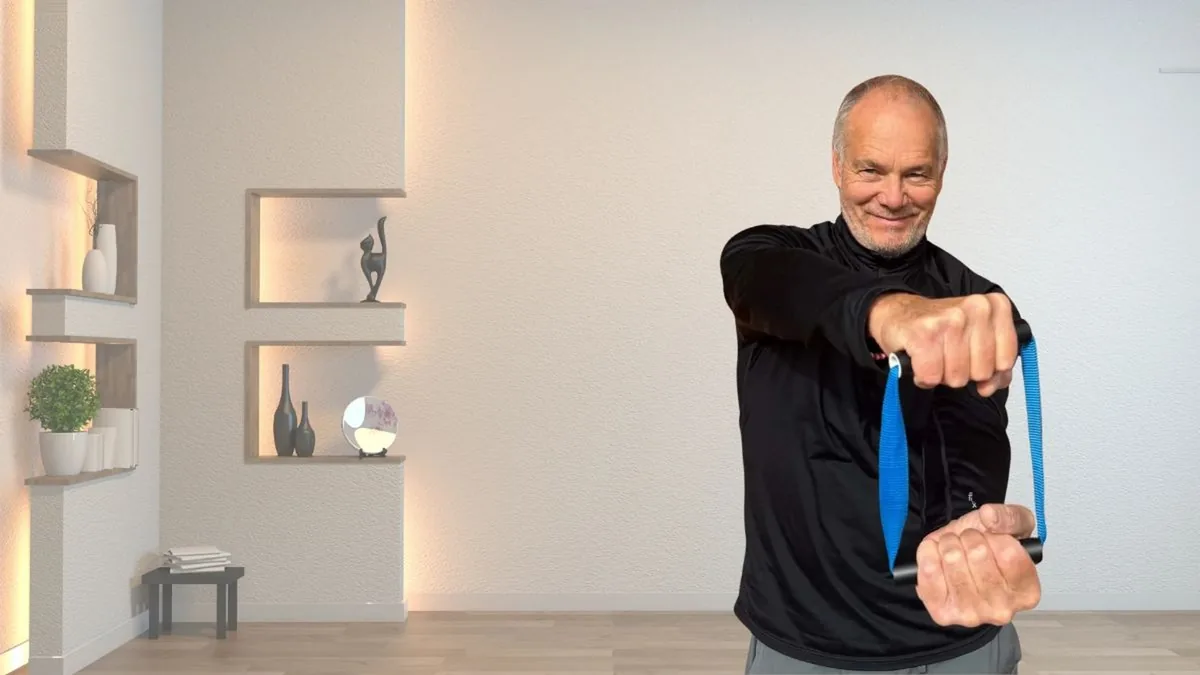
What this movement is
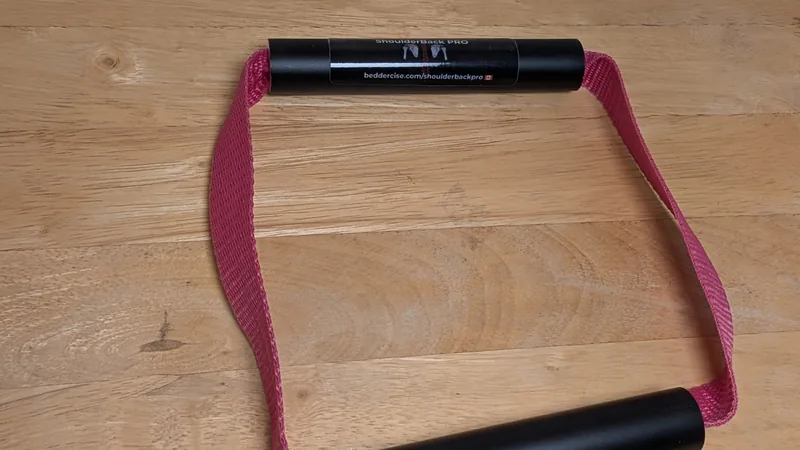
Crosscuts is one of the 16 guided movements in the ShoulderBack Pro video lessons. You hold the trainer by its two handles and glide one arm diagonally across your body while the other arm guides and resists.
The movement targets three groups. The lats (latissimus dorsi) are the large muscles of the mid and lower back. The external obliques are the side abdominal muscles. The scapular retractors draw your shoulder blades together and back.
What the research says
- Exercise that adds resistance and progresses over time probably helps shoulder pain and function. Unloaded movement alone probably does not [R01].
- A 2025 review found that scapular stabilisation exercise improved pain and function in people with rotator-cuff-related shoulder pain [R03]. Crosscuts asks your shoulder blade to stay controlled while your arm moves, which resembles that work. That is a resemblance, not proof.
- Resistance training supports strength, mobility and independence in older adults [R06].
What you can do
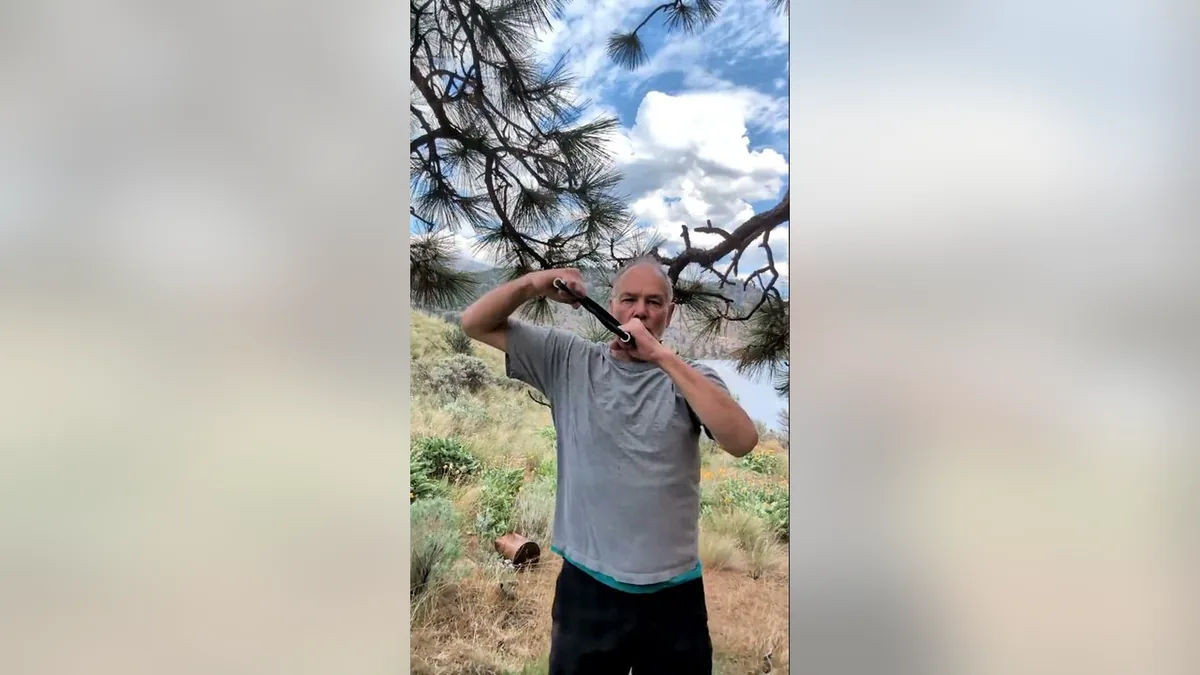
- Sit tall in an armchair, feet flat. Hold the trainer with one hand high on the opposite side of your body, near the shoulder.
- Let that arm lead a slow glide diagonally down toward the opposite hip. The other arm follows with light, steady resistance.
- Keep your ribs down and your chest tall. Let your torso turn only a little.
- Return slowly to the start, then switch sides.
If you feel a catch, a pinch or neck pain, reduce the range and slow down. Stand only when your balance feels steady.
Where ShoulderBack Pro fits — and where it doesn't
Crosscuts is the trainer's diagonal movement: the site lists the lats, external obliques and scapular retractors as its targets, and Resisting Arrest (hands gliding apart behind the back) is a related pick for the lats. It can be done seated, with the other arm providing the resistance. It's a wellness tool, not a treatment for a back or shoulder condition, and there are no clinical trials of it yet. All 16 lessons are free on the routines page, and the trainer is $29 CAD with a 30-day guarantee. For more, see how ShoulderBack Pro works, or start with SeeSaw for a gentler glide.
When to see a professional
See a doctor or physiotherapist promptly if you have: pain after a fall or injury with sudden weakness or loss of movement; a shoulder that looks deformed, very swollen or bruised; fever or feeling unwell alongside the pain; chest pain or breathlessness (call emergency services); constant pain that doesn't change with rest or activity; pain that wakes you most nights; numbness, tingling or weakness into the arm or hand; pain in several joints at once; or pain that hasn't improved after a couple of weeks of sensible self-care.
Only a doctor or physiotherapist can find out why your back or shoulder hurts.
Try this movement
All 16 video lessons →Frequently asked questions
Can I do Crosscuts seated?
Yes. Keep your back supported against the chair and use a smaller range. Standing is an option only when your balance feels steady.
Will Crosscuts build muscle?
Resistance training can build strength over time when the load is progressed [R06]. The resistance comes from your other arm and is light, so to progress, resist harder, move through more range or do longer sets, and treat Crosscuts as one part of a broader routine.
Is it safe with back pain?
Ask a clinician first. Back and shoulder pain can overlap, and a twisting movement should be checked before you add it.
Sources
- Naunton J et al. (2020). Effectiveness of progressive and resisted and non-progressive or non-resisted exercise in rotator cuff related shoulder pain: systematic review and meta-analysis of RCTs. Clinical Rehabilitation. https://search.pedro.org.au/search-results/record-detail/61404
- Frontiers in Bioengineering & Biotechnology (2025). Specific modes of exercise to improve rotator cuff-related shoulder pain: systematic review and meta-analysis. https://pmc.ncbi.nlm.nih.gov/articles/PMC12011739/
- Fragala MS, Cadore EL, Dorgo S et al. (2019). Resistance Training for Older Adults: Position Statement From the National Strength and Conditioning Association. Journal of Strength and Conditioning Research. https://pubmed.ncbi.nlm.nih.gov/31343601/
More in this topic
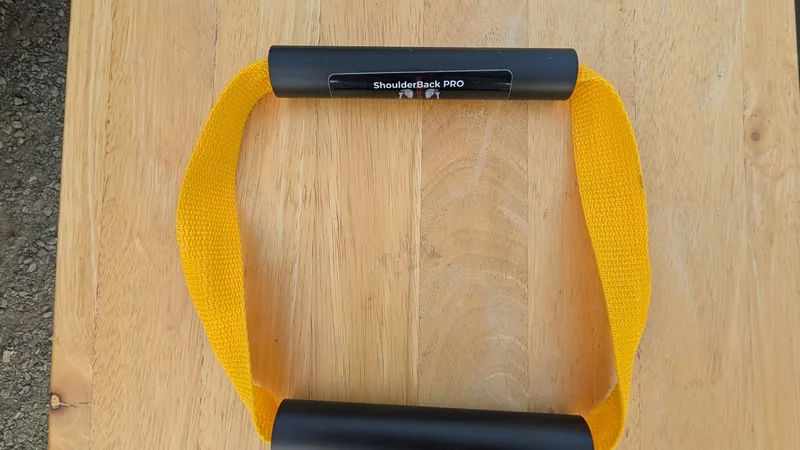 Essential guide: How ShoulderBack Pro Works: One Device, Two Connected Handles, Your Own Resistance
 Pairing SBP With Walking: The Simplest Whole-Body Routine for Active Aging
 Locomotive: Rolling Circles for the Upper Back and Rear Cuff
 Overhead Press (High Shelf Reach): Trapezius and Deltoids Without a Weight