Coordination, control & how ShoulderBack Pro works
Can Two People Share One ShoulderBack Pro? Couples, Caregivers and Housemates
4-minute read · Published May 28, 2026 · Updated May 28, 2026
What this is
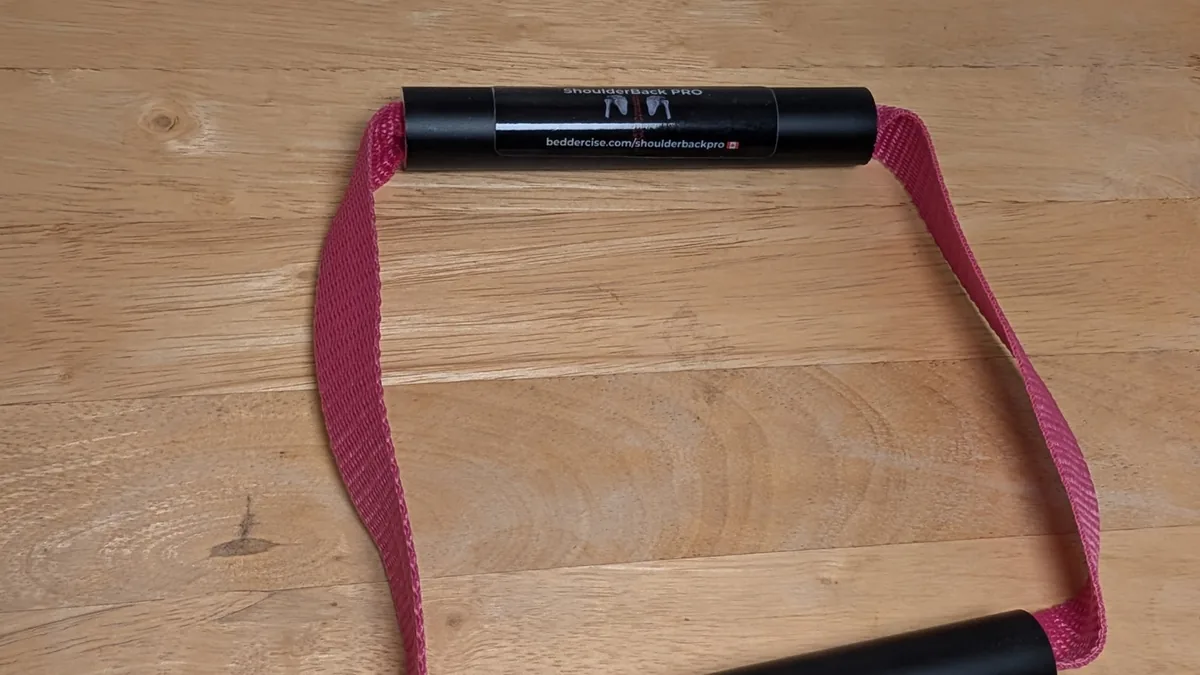
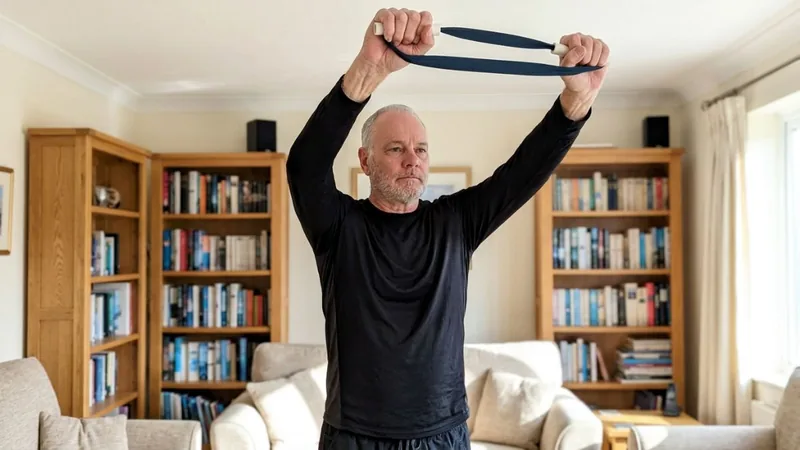
ShoulderBack Pro is a small, body-controlled movement trainer. It weighs 160 grams, is about 5 cm across, and is designed and assembled in British Columbia, Canada. Two handles are joined by a fixed-length, non-elastic strap. One arm assists while the other resists.
Because both handles serve one person's two arms, the device works best with one person at a time. For a plain explanation of the resistance, read what body-controlled resistance means.
What the research says
Resistance training supports strength, mobility and independence in older adults. Its position statement says the barriers and fears that stop people starting should be addressed [R06]. National guidance recommends muscle-strengthening activity at least two days a week, and says every move counts [R07].
None of these sources tested shared use of this device, so the sharing advice is practical, not proven.
What you can do
- Agree on turns. Decide who goes first and how long each session runs. Sessions are short, so a few turns a day is an easy target.
- Pick your position. Sit in an armchair for the seated lessons, or stand if that feels better.
- Set your own effort. Each person chooses their own effort, pace and range. Nobody should push a partner past comfort.
- Check in with your body. If you feel sharp pain, numbness or unusual weakness, stop and speak with a clinician.
Where ShoulderBack Pro fits — and where it doesn't
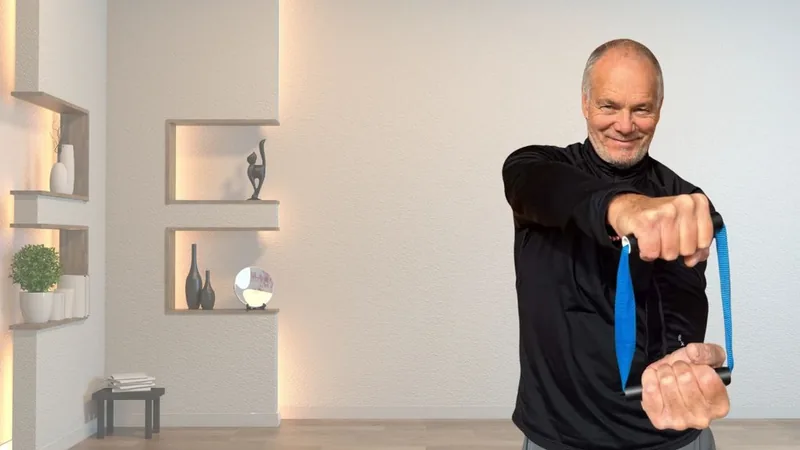
For couples and housemates who want one low-cost shared tool, ShoulderBack Pro is a reasonable fit. SeeSaw (alternating gentle reaches, one arm guiding the other) and Around the World (one large, unhurried circle) are easy first lessons for two people to learn together. Both are among the 16 free video lessons taught by the inventor, Van Hill. One unit is $29 CAD, and the shop has the details.
For a caregiver, it is a movement tool for the person doing the movement, not a way to lift or move someone. It's a wellness tool, not a treatment, there are no clinical trials of it yet, and it doesn't replace a clinician's advice.
When to see a professional
See a doctor or physiotherapist promptly if you have: pain after a fall or injury with sudden weakness or loss of movement; a shoulder that looks deformed, very swollen or bruised; fever or feeling unwell alongside the pain; chest pain or breathlessness (call emergency services); constant pain that doesn't change with rest or activity; pain that wakes you most nights; numbness, tingling or weakness into the arm or hand; pain in several joints at once; or pain that hasn't improved after a couple of weeks of sensible self-care.
Try this movement
All 16 video lessons →Frequently asked questions
Can two people use the ShoulderBack Pro at the same time?
It is designed for one person's two arms, so take turns rather than using it together. Each of you can start your own session once the other has finished.
Do we need two devices?
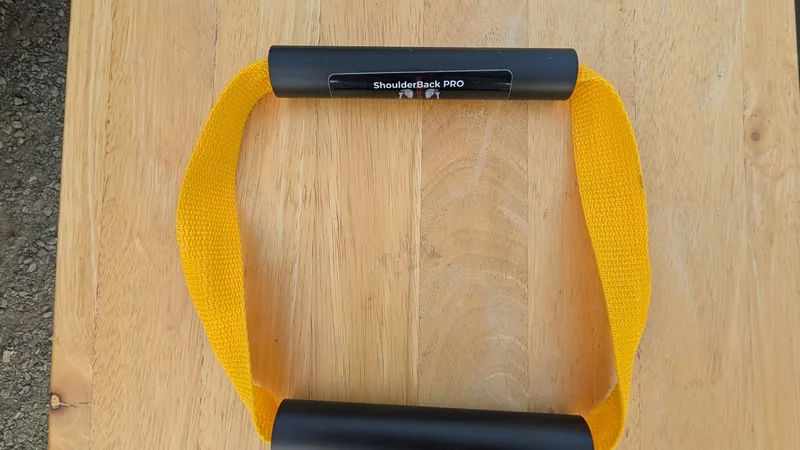
Not for resistance. All four strap colours have identical resistance, so colour only helps you tell devices apart. One unit costs $29 CAD.
Can a caregiver guide a parent through the lessons?
A caregiver can help with set-up and keep an eye on how the person feels. The person moving should set their own effort and range and stop when something feels wrong. If they have a shoulder condition, check with their clinician first.
Sources
- Fragala MS, Cadore EL, Dorgo S et al. (2019). Resistance Training for Older Adults: Position Statement From the National Strength and Conditioning Association. J Strength Cond Res. https://pubmed.ncbi.nlm.nih.gov/31343601/
- WHO (2020). Guidelines on physical activity and sedentary behaviour. https://www.sydney.edu.au/news-opinion/news/2020/11/26/new-global-guidelines-on-physical-activity-and-sedentary-behavio.html
More in this topic
 Essential guide: How ShoulderBack Pro Works: One Device, Two Connected Handles, Your Own Resistance
 Pairing SBP With Walking: The Simplest Whole-Body Routine for Active Aging
 Locomotive: Rolling Circles for the Upper Back and Rear Cuff
 Overhead Press (High Shelf Reach): Trapezius and Deltoids Without a Weight