Comparisons, buyer's guides & honest product answers
Best Shoulder Exercise Equipment for Seniors (Ranked Honestly, Including Ours)
10-minute read · Published July 14, 2025 · Updated July 14, 2025
Why this happens
Shoulder problems become more common with age, and so does the feeling that equipment should fix them. The shoulder is a ball and socket held by a group of muscles called the rotator cuff. There are four of these small muscles, and together they steady the ball of the arm bone in its socket while the bigger muscles move the arm.
Rotator-cuff-related shoulder pain is the most common cause of shoulder pain [R03]. It is most often managed with advice and exercise in primary care [R30]. The exercise part is where equipment comes in, because the tool sets how much load your shoulder meets and how well you can control it.
Gentle movement without load may help mobility, but the research on pain points to resistance that progresses over time [R01].
What the research says
- Progressive resistance helps. In rotator-cuff-related shoulder pain, progressive, resisted exercise showed a benefit of uncertain clinical importance, about 15 points on a 0 to 100 pain and function scale over six weeks to six months. Gentle, unloaded movement alone probably does not move the needle on pain [R01].
- Control-focused programs may edge out generic exercise. Moderate-certainty evidence suggests that motor-control programs reduce disability slightly more than non-specific exercise, in the short and medium term [R02]. Effects on pain are uncertain.
- Specific exercise types have different roles. A 2025 review found that scapular stabilisation exercise improved pain and function, and that mobilisation and stretching improved function over about two months [R03].
- Older adults need strength. A position statement from the National Strength and Conditioning Association says resistance training counters loss of strength and muscle mass, and supports function, mobility and quality of life. It also says that barriers and fears should be addressed [R06].
- Activity guidance is clear. The WHO recommends muscle-strengthening activity at least two days a week for adults [R07].
No head-to-head trials compare bands, dumbbells, pulleys and body-controlled trainers. Any ranking here is a judgement based on this evidence and on what each tool asks of your shoulder. We say so openly.
How we ranked these options
We did not score each tool out of ten. Instead, we asked three questions. Does the tool fit the job the reader actually has? Does it let the shoulder build load in a controlled way? Can a person start it safely, seated if needed, without special equipment or a gym?
By those questions, progressive resistance comes out ahead for general strength, because it has the clearest link to pain and function in the research [R01][R06]. Control-focused exercise comes next for shoulder-specific work, because the review evidence favours motor control slightly over generic movement [R02]. A body-controlled trainer such as ours belongs in the list for a different reason. It offers a simple, seated, two-arm option that many people find easy to start, which can matter when fear or low confidence keeps someone from exercising at all. Position statements say such barriers should be addressed [R06].
We are a company, and we have an obvious stake in this ranking. That is why the order is tied to the evidence and to the job, and why we name the options that may serve you better. If a cheaper tool or a clinician-guided plan fits your life more closely, that is a good result, not a lost sale.
What you can do
- Start with a clinician if you have pain. If you have a diagnosis, a recent injury or pain that won't settle, ask whether you need guided exercise before you buy anything.
- Pick the tool for the job. Use progressive resistance, such as bands or light weights, for general strength. Use a body-controlled tool for gentle, controlled, two-arm movement. Use a clinician-guided program for a diagnosed problem.
- Choose a load you can control. You should be able to complete each movement smoothly, with good form, and stop without strain.
- Progress one thing at a time. Change the load, the range or the number of repetitions, but not all three at once.
- Keep a seated option. Many tools work from a sturdy chair. Seated practice is a good default when you are starting out.
- Watch the next day. Mild, short-lived soreness is common with new activity. Sharp pain, weakness or pain that lasts is a sign to stop and check in with a clinician.

Where ShoulderBack Pro fits, and where it doesn't
Here is our honest ranking, by job rather than by a single score.
- For a diagnosed shoulder problem or recovery after surgery: a clinician-guided program. The equipment is secondary to the plan. Follow your physiotherapist's protocol first.
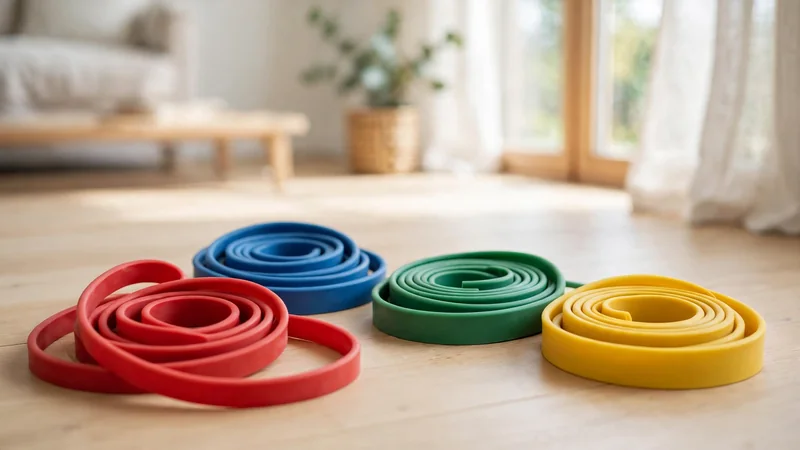
- For general strength: resistance bands or light dumbbells, progressed slowly. These give you a clear way to build load. Some older shoulders find bands irritating, so read why resistance bands can irritate aging shoulders before you buy.
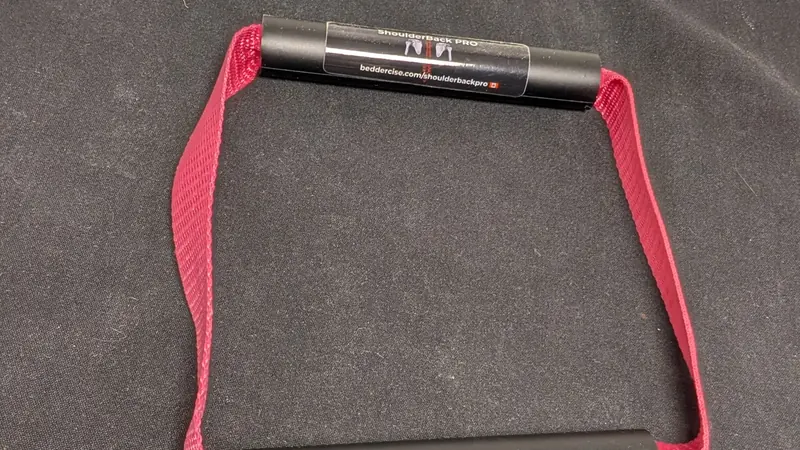
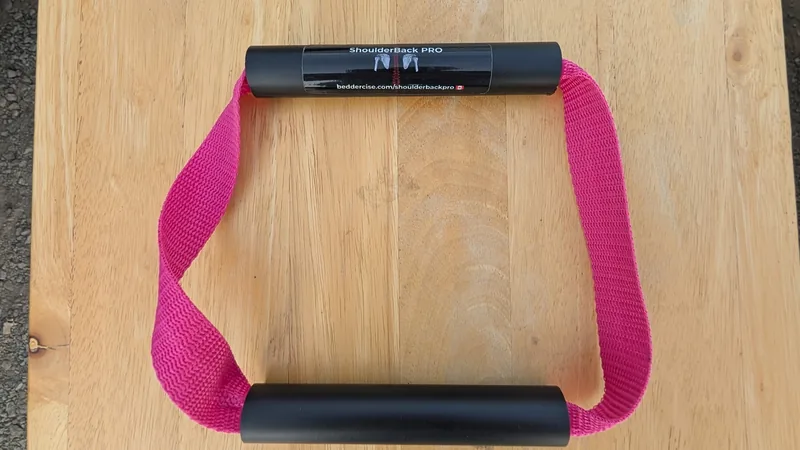
- For gentle, seated, two-arm control without weights or anchoring: ShoulderBack Pro. It ranks third for strength and first only for this specific job. SeeSaw and Windshield Wipers, two of the 16 movements in the video lessons, are designed to work the shoulder-blade stabilisers and rotator cuff muscles with one arm resisting the other. You set the effort, so progress means resisting harder, moving through more range, or doing longer sets.
Wall pulleys and cable machines can also build control, but they need an anchor or a gym, and no research compares them with SBP. It is a wellness tool, not a treatment, and there are no clinical trials of it yet. It weighs 160 g, costs $29 CAD at the shop, and comes with a 30-day guarantee. For the full comparison, read resistance bands vs ShoulderBack Pro.
Two more comparisons may help. See dumbbells vs body-controlled resistance for shoulder health and shoulder pulleys vs ShoulderBack Pro, different jobs, different tools.
When to see a professional
See a doctor or physiotherapist promptly if you have: pain after a fall or injury with sudden weakness or loss of movement; a shoulder that looks deformed, very swollen or bruised; fever or feeling unwell alongside the pain; chest pain or breathlessness (call emergency services); constant pain that doesn't change with rest or activity; pain that wakes you most nights; numbness, tingling or weakness into the arm or hand; pain in several joints at once; or pain that hasn't improved after a couple of weeks of sensible self-care.
The red-flag list follows NHS shoulder guidance [R30]. A physiotherapist or doctor diagnoses the cause of your shoulder pain, and that diagnosis should guide which tool you choose.
Try this movement
All 16 video lessons →Frequently asked questions
Which shoulder equipment is best for an older adult with arthritis?
The right choice depends on the cause and stage of the problem, so ask a clinician first. An inflammatory arthritis flare means checking with a clinician before any new routine.
Do I need equipment at all?
Not always. Body-weight and everyday movements can count. The WHO recommends muscle-strengthening activity on at least two days a week, and equipment is one way to meet that.
Are resistance bands safe for aging shoulders?
Many people use them safely. Some find they irritate their shoulders, so choose a light load, keep the movement smooth and stop if pain rises.
Is ShoulderBack Pro proven to work?
No clinical trials of ShoulderBack Pro exist. The research cited here is about exercise in general. SBP is a wellness product, not a medical device.
How do I start if I feel nervous about exercise?
Start seated with the lightest option, and ask a clinician if you have a diagnosis. Fear and barriers are common, and addressing them is part of starting safely.
Sources
- Naunton J et al. (2020). Effectiveness of progressive and resisted and non-progressive or non-resisted exercise in rotator cuff related shoulder pain: systematic review and meta-analysis of RCTs. Clinical Rehabilitation. https://search.pedro.org.au/search-results/record-detail/61404
- Dubé M-O et al. (2024). The Efficacy of Exercise Therapy for Rotator Cuff-Related Shoulder Pain According to the FITT Principle: Systematic Review With Meta-analyses. JOSPT. https://pubmed.ncbi.nlm.nih.gov/38848304/
- Frontiers in Bioengineering & Biotechnology (2025). Specific modes of exercise to improve rotator cuff-related shoulder pain: systematic review and meta-analysis. https://pmc.ncbi.nlm.nih.gov/articles/PMC12011739/
- Fragala MS, Cadore EL, Dorgo S et al. (2019). Resistance Training for Older Adults: Position Statement From the National Strength and Conditioning Association. Journal of Strength and Conditioning Research. https://pubmed.ncbi.nlm.nih.gov/31343601/
- WHO (2020). Guidelines on physical activity and sedentary behaviour (University of Sydney summary). https://www.sydney.edu.au/news-opinion/news/2020/11/26/new-global-guidelines-on-physical-activity-and-sedentary-behavio.html
- NHS Greater Glasgow & Clyde. Shoulder red flags. https://www.nhsggc.scot/page_category/services/page/33