Comparisons, buyer's guides & honest product answers
Group Classes vs Home Routine: What Keeps Older Adults Moving?
5-minute read · Published October 12, 2026 · Updated October 12, 2026
Why this happens
Staying active is less about the perfect program and more about routine. A class gives you a fixed time, a group, and someone who notices when you are missing. A home routine gives you control over timing, space and pace.
Both have trade-offs. A class can feel intimidating if you are new, or if you worry about your shoulder. A home routine can drift if nothing holds it in place.
For the bigger picture, read Resistance Bands vs ShoulderBack Pro: An Honest Comparison. Related reading: Why Resistance Bands Can Irritate Aging Shoulders (and What to Use Instead) and Dumbbells vs Body-Controlled Resistance for Shoulder Health.
What the research says
- Activity you enjoy is more likely to last. In a Cochrane review of exercise for chronic low back pain, the authors found no clear winner among exercise types. They suggested people choose exercise they enjoy and will keep doing [R05]. That review is about low back pain, not shoulders, so treat it as a general principle.
- Older adults benefit from varied activity. The WHO advises adults 65 and over to add multicomponent activity, with an emphasis on balance and strength, on at least three days a week [R07].
- Barriers and fears matter. A position statement on resistance training for older adults stresses that barriers and fears should be addressed [R06]. A good class or a clear home plan can help with both.
- Progress matters for strength. For rotator cuff-related pain, resisted exercise that gets harder over time probably helps more than unloaded movement [R01]. Classes often build in progression. Home routines need you to plan it.
What you can do
Start with what keeps you going, then choose a format.
- Name your barriers. Is it cost, travel, confidence, time or company? Your answer points to the better format.
- Try a class with a trained instructor. Ask whether exercises are adapted for shoulders and whether seated options are offered. Try one or two sessions before deciding.
- Set a fixed home slot. Pick a time that already fits your day, such as after morning tea. Seated option: a short session in a chair works just as well.
- Combine the two. Many people do well with one class a week and a few short home sessions. This gives coaching and daily habit together.
- Check with a clinician first if you have a shoulder condition, recent surgery, or pain that is not settling.
Where ShoulderBack Pro fits — and where it doesn't
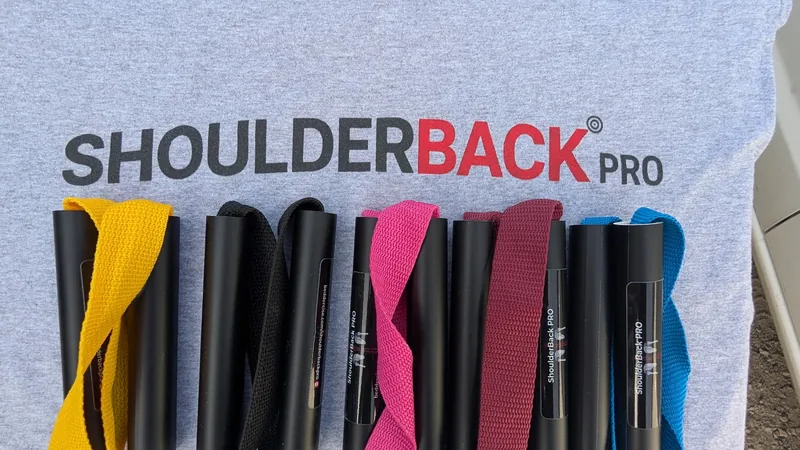
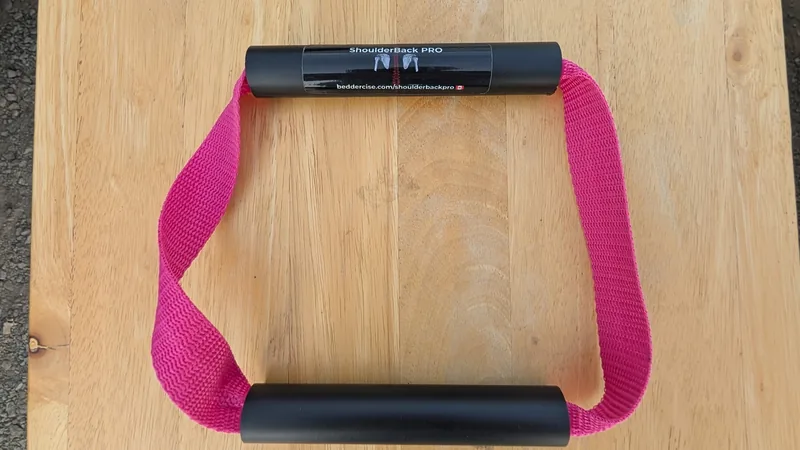
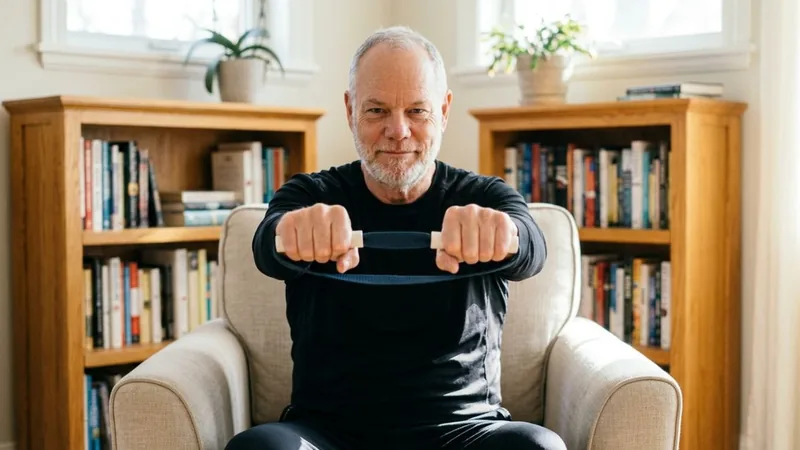
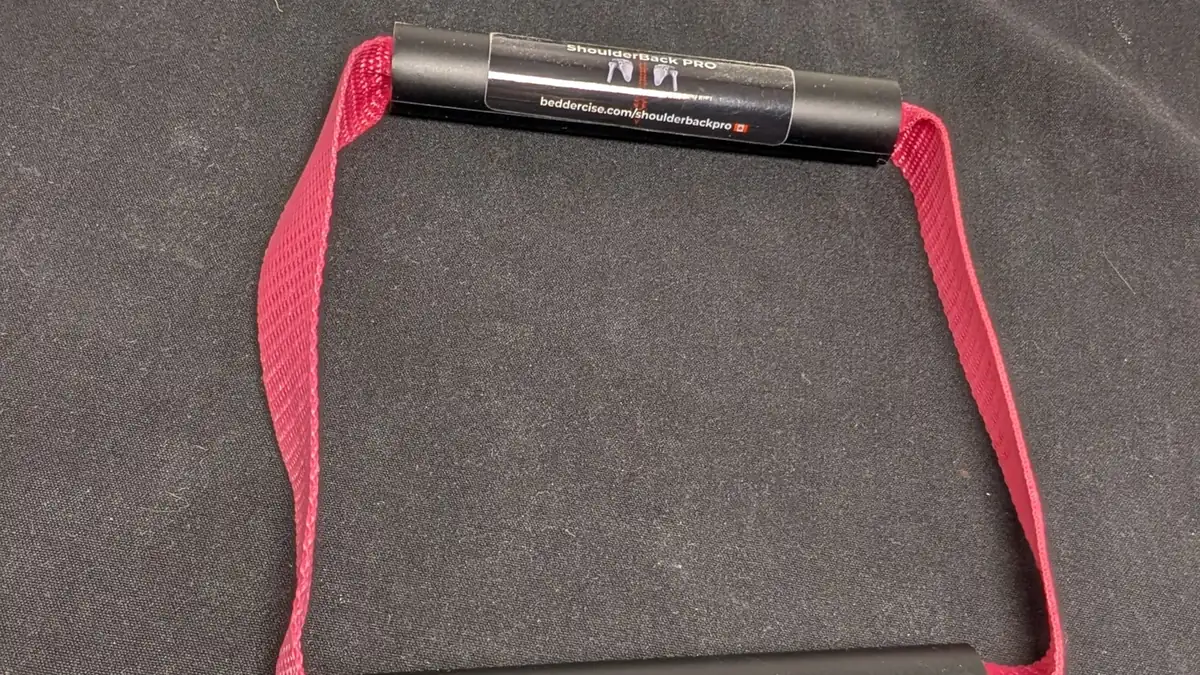
If you lean towards a home routine, the part a trainer can supply is structure. The 16 free video lessons are taught by the inventor, and the short rituals start with gentle moves such as SeeSaw, where one arm guides the other. Your other arm provides the resistance, so progressing means resisting harder, moving through more range, or doing longer sets. The video lessons show how.
What it cannot give you is a live coach, company, or someone watching your form. It is a wellness tool with no clinical trials. For guidance on a sore shoulder, a clinician or qualified instructor comes first, and the trainer can wait.
When to see a professional
If joining a class or starting a home routine brings on sharp or lasting shoulder pain, stop and get assessed. A doctor or physiotherapist can advise what movement is safe for you. This article describes general patterns only.
See a doctor or physiotherapist promptly if you have: pain after a fall or injury with sudden weakness or loss of movement; a shoulder that looks deformed, very swollen or bruised; fever or feeling unwell alongside the pain; chest pain or breathlessness (call emergency services); constant pain that doesn't change with rest or activity; pain that wakes you most nights; numbness, tingling or weakness into the arm or hand; pain in several joints at once; or pain that hasn't improved after a couple of weeks of sensible self-care.
Try this movement
All 16 video lessons →Frequently asked questions
Is a group class better than a home routine?
Neither is better for everyone. Classes add coaching and company. Home routines add flexibility and privacy. Many people do best with a mix.
What if I feel nervous about joining a class?
That is common. Ask whether the instructor adapts exercises for shoulders, and whether seated options are available. Try a trial session first.
Can SBP replace a class?
No. SBP can add to a home routine. It does not provide live coaching, group support or the progression a good class can offer.
Should I check with a clinician first?
Yes, if you have a shoulder condition, recent surgery, or pain that is not settling. Ask what movement is safe for you.
Sources
- WHO (2020). Guidelines on physical activity and sedentary behaviour. https://www.sydney.edu.au/news-opinion/news/2020/11/26/new-global-guidelines-on-physical-activity-and-sedentary-behavio.html
- Fragala MS, Cadore EL, Dorgo S et al. (2019). Resistance Training for Older Adults: Position Statement From the National Strength and Conditioning Association. J Strength Cond Res. https://pubmed.ncbi.nlm.nih.gov/31343601/
- Hayden JA et al. (2021). Exercise therapy for chronic low back pain. Cochrane Database of Systematic Reviews, Issue 9, CD009790. https://pmc.ncbi.nlm.nih.gov/articles/PMC8477273
- Naunton J et al. (2020). Effectiveness of progressive and resisted and non-progressive or non-resisted exercise in rotator cuff related shoulder pain: systematic review and meta-analysis of RCTs. Clinical Rehabilitation. https://search.pedro.org.au/search-results/record-detail/61404