Comparisons, buyer's guides & honest product answers
Theraband Colours Explained (and Why Band Resistance Changes Mid-Rep)
4-minute read · Published August 31, 2026 · Updated August 31, 2026
Why this happens / What this is
An elastic band stores force when you stretch it. The further you pull, the more it pushes back. That means a band's resistance changes through the movement. It can feel light at the start of a reach and firm at the end.
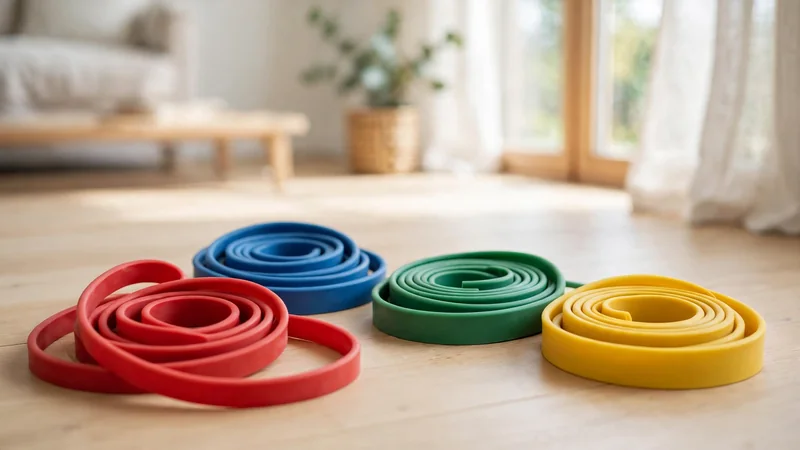
Colour codes tell you the maker's rated level. They are not a universal scale across all brands, so a colour from one company may feel different from the same colour from another. Compare bands using the maker's chart, and by how they feel in your hands.
What the research says
- Exercise with resistance that builds gradually is the type most likely to help rotator-cuff-related shoulder pain. Gentle, unloaded movement alone probably does not move pain much [R01]. That supports choosing a resistance you can progress, whether it comes from a band or from something else.
- In chronic stroke rehab, two-arm (bilateral) training improved shoulder movement more than single-arm training. That is stroke evidence, not proof for healthy adults. It is a reason the two-arm idea is interesting [R14].
- Rehabilitation often moves from range to strength to control [R16].
What you can do
- Choose by feel. Pick a band where your last few reps are controlled, not strained.
- Start light. Begin at a lower resistance and confirm the level on the maker's chart.
- Watch the change. If the band suddenly feels much harder partway through a reach, shorten the range or step down.
- Anchor it securely. Check the anchor and the band before every session. A slipping band is a hazard.
- Keep the strength plan simple. Add a little resistance or range only when the last set felt controlled.
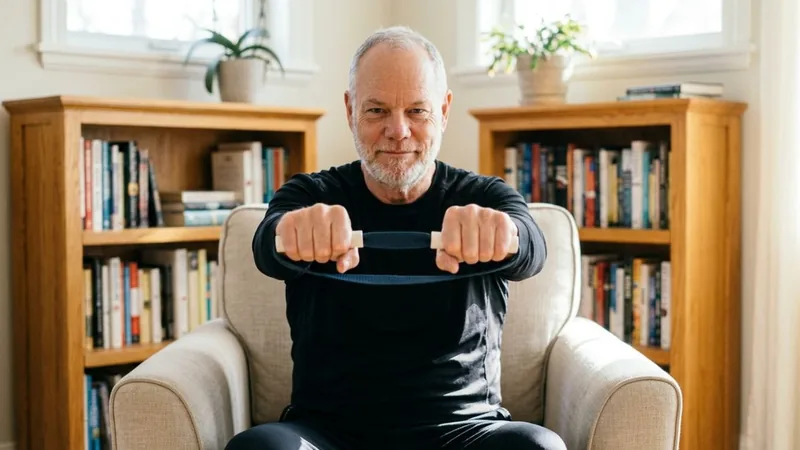
- Use a seated set-up. Many band exercises, including seated rows and presses, work well from a sturdy chair.
Where ShoulderBack Pro fits — and where it doesn't
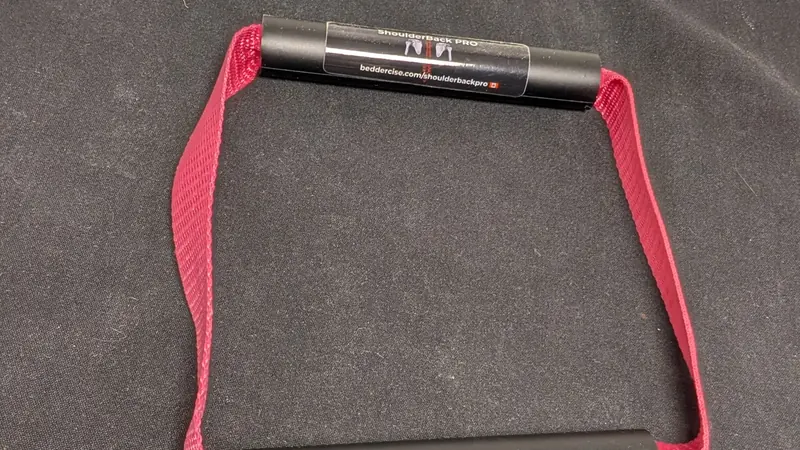
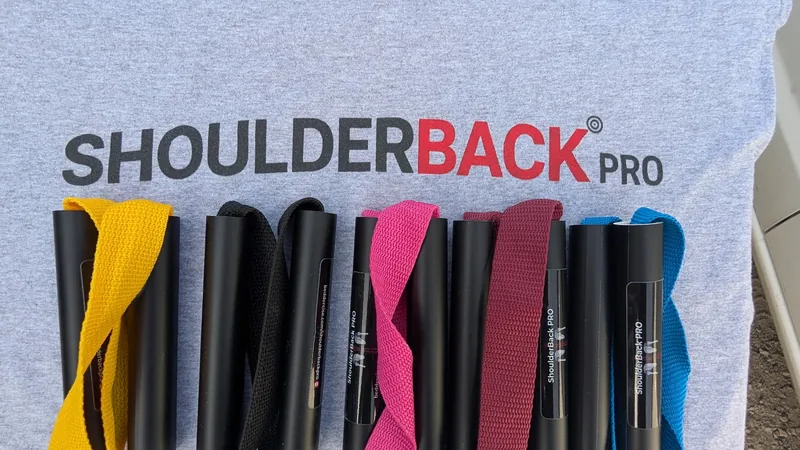
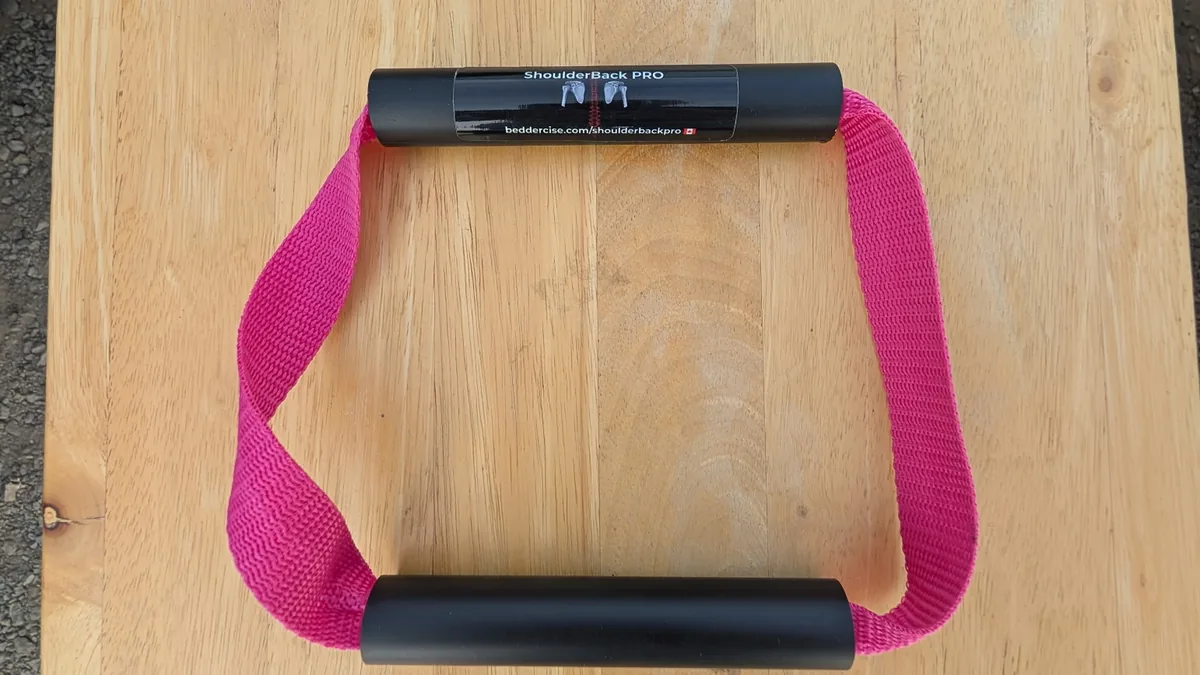
The ShoulderBack Pro strap does not stretch, so the load does not climb as you reach. One arm assists while the other resists, and you set the effort, pace and range. Progression means resisting harder, moving through more range or doing longer sets, so a band is still the better tool for adding load.
To see the difference, try SeeSaw (alternating reaches, one arm guiding the other) or Windshield Wipers (slow side-to-side arcs). Both are among the 16 guided lessons on the routines page. It is a wellness tool, not a treatment, and there are no clinical trials of it yet. It costs $29 CAD, with a 30-day guarantee, on the product page.
When to see a professional
See a doctor or physiotherapist promptly if you have: pain after a fall or injury with sudden weakness or loss of movement; a shoulder that looks deformed, very swollen or bruised; fever or feeling unwell alongside the pain; chest pain or breathlessness (call emergency services); constant pain that doesn't change with rest or activity; pain that wakes you most nights; numbness, tingling or weakness into the arm or hand; pain in several joints at once; or pain that hasn't improved after a couple of weeks of sensible self-care.
Try this movement
All 16 video lessons →Frequently asked questions
What do the Theraband colours mean?
Each colour is the brand's label for a resistance level. Colour names and strengths can differ between brands, so compare bands by the maker's chart and by how they feel.
Why does a band feel harder at the end of a reach?
Elastic material stores more force the further it is stretched. The resistance rises through the movement, which is normal for a band.
Which is better, a band or ShoulderBack Pro?
They solve different problems. Bands suit progressive load. ShoulderBack Pro suits controlled, body-driven movement and coordination. A clinician can help you decide what suits your shoulder.
Sources
- Naunton J et al. (2020). Effectiveness of progressive and resisted and non-progressive or non-resisted exercise in rotator cuff related shoulder pain: systematic review and meta-analysis of RCTs. Clinical Rehabilitation. https://search.pedro.org.au/search-results/record-detail/61404
- Journal of Physical Therapy Science (2016). The effects of bilateral movement training on upper limb function in chronic stroke patients. https://pmc.ncbi.nlm.nih.gov/articles/PMC5011582
- Mureşan et al. (2022). Effects of a novel proprioceptive rehabilitation device on shoulder joint position sense, pain and function. Medicina. https://www.ncbi.nlm.nih.gov/pmc/articles/PMC9505091/