Comparisons, buyer's guides & honest product answers
Shoulder Pulleys vs ShoulderBack Pro: Different Jobs, Different Tools
5-minute read · Published September 22, 2025 · Updated September 22, 2025
Why this happens / What this is
A shoulder pulley is a rope or strap that runs over a pulley mounted to a door, wall or frame. Your stronger arm pulls the other arm up and over in a set path. It is a common tool for helping the arm reach through range.
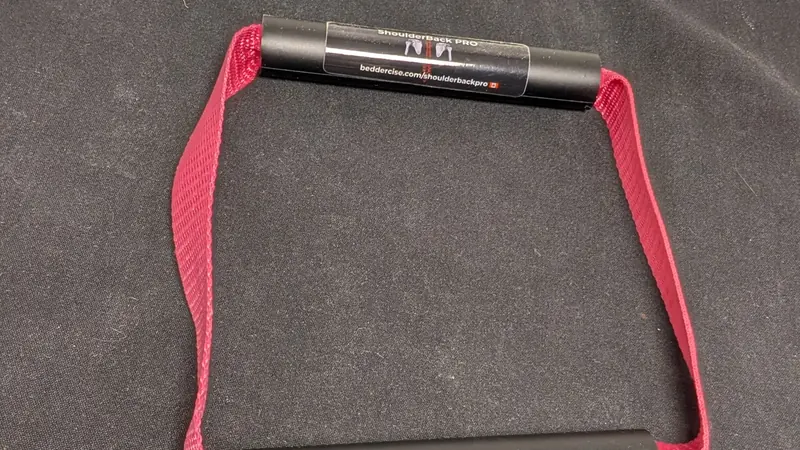
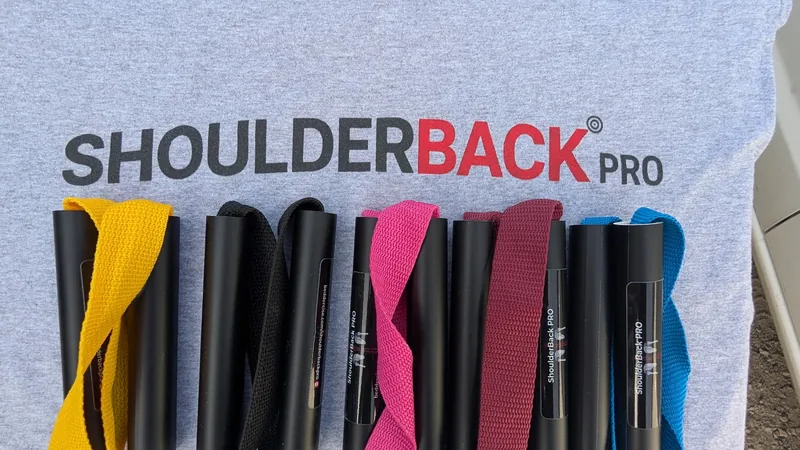
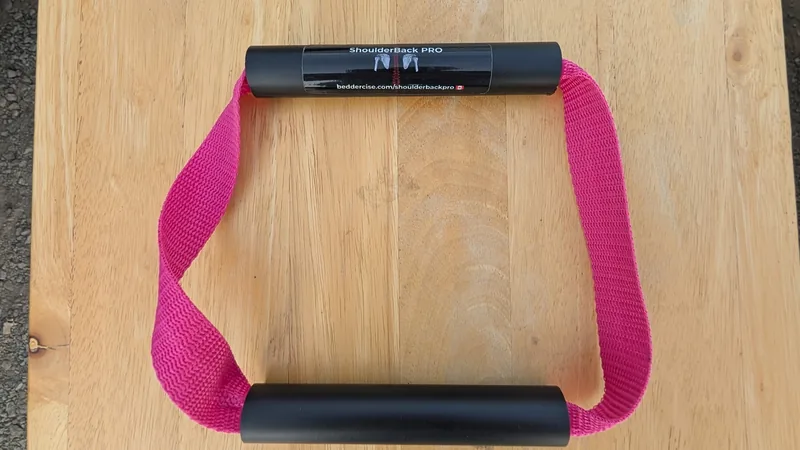
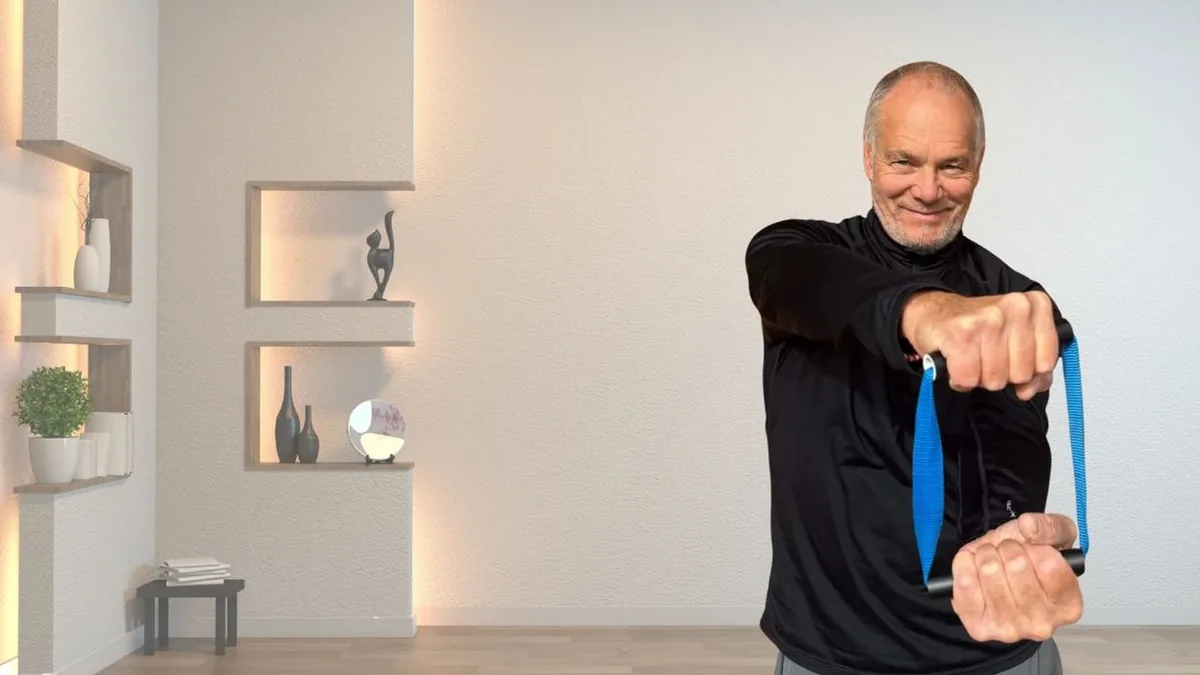
ShoulderBack Pro is a 160-gram trainer, roughly 5 cm in size. It has two handles joined by a fixed-length, non-elastic strap. One arm assists while the other resists. You set the effort, pace and range. Nothing stretches, snaps or drops, and it can be used seated or standing.
Both are movement tools. Neither is a medical device for shoulder conditions.
What the research says
- Progressive resisted exercise probably helps rotator-cuff-related shoulder pain. Unloaded, gentle movement alone probably does not [R01].
- Motor-control exercise programs may reduce disability slightly more than non-specific exercise in the short and medium term, though it is unclear whether the gain comes from motor control itself [R02].
- Rehabilitation usually moves from range of motion to strength, then to control and proprioception [R16]. In that sequence, range tools tend to sit early and controlled, resisted tools can sit later. This is our reading of the sequence, not a finding from a head-to-head study.
- Two-arm training improved shoulder movement more than single-arm training in one stroke rehabilitation study. That evidence comes from stroke patients, not healthy adults, so treat it as a reason for interest, not proof [R14].
What you can do
- Start with your clinician if you have an injury. If a clinician has prescribed a pulley or a specific exercise, follow that plan.
- Choose a pulley if you want anchored range work at home. Pulleys suit people who have a sturdy door or wall, and who want a fixed path to practise range.
- Choose ShoulderBack Pro if you want portable, controlled work. It needs no anchor, works seated or standing, and fits in a bag.
- Choose dumbbells, bands or coached gym work for heavier strength. Neither tool above is aimed at that.
- Pick one and be consistent. Track how your shoulder feels across the week, and bring the notes to your clinician.
Where ShoulderBack Pro fits — and where it doesn't
If you want portable work with no door or wall, ShoulderBack Pro is a reasonable pick. Around the World is one large, unhurried circle that asks both arms to cooperate, and Overhead Press (High Shelf Reach) rehearses reaching up with no weight. Both work well seated, and the resistance comes from your other arm.
It is a wellness tool with no clinical trials, not a treatment, and it does not replace a pulley a clinician has prescribed. At $29 CAD with a 30-day guarantee, it is on the shop page.
When to see a professional
See a doctor or physiotherapist promptly if you have: pain after a fall or injury with sudden weakness or loss of movement; a shoulder that looks deformed, very swollen or bruised; fever or feeling unwell alongside the pain; chest pain or breathlessness (call emergency services); constant pain that doesn't change with rest or activity; pain that wakes you most nights; numbness, tingling or weakness into the arm or hand; pain in several joints at once; or pain that hasn't improved after a couple of weeks of sensible self-care.
Try this movement
All 16 video lessons →Frequently asked questions
Is a shoulder pulley better than ShoulderBack Pro?
Neither is better in general. They do different jobs, and the right one depends on your goal, your space and any advice from your clinician.
Do I need a door anchor for ShoulderBack Pro?
No. ShoulderBack Pro has no door anchors, weights or elastic. It can be used seated in an armchair or standing.
Can either tool treat a rotator cuff tear?
No. Neither is a treatment for a tear. A clinician is the right person to advise on a tear.
Which should a beginner start with?
If you have pain, start with a clinician's advice. Then choose the tool that fits your space and your goal.
Sources
- Naunton J et al. (2020). Effectiveness of progressive and resisted and non-progressive or non-resisted exercise in rotator cuff related shoulder pain: systematic review and meta-analysis of RCTs. Clinical Rehabilitation. https://search.pedro.org.au/search-results/record-detail/61404
- Dubé M-O et al. (2024). The Efficacy of Exercise Therapy for Rotator Cuff-Related Shoulder Pain According to the FITT Principle: Systematic Review With Meta-analyses. JOSPT. https://pubmed.ncbi.nlm.nih.gov/38848304/
- Journal of Physical Therapy Science (2016). The effects of bilateral movement training on upper limb function in chronic stroke patients. https://pmc.ncbi.nlm.nih.gov/articles/PMC5011582
- Mureşan et al. (2022). Effects of a novel proprioceptive rehabilitation device on shoulder joint position sense, pain and function. Medicina. https://www.ncbi.nlm.nih.gov/pmc/articles/PMC9505091/