Comparisons, buyer's guides & honest product answers
Smart Fitness Devices vs Simple Tools for Seniors
4-minute read · Published September 21, 2026 · Updated September 21, 2026
What this is
"Smart" fitness devices use sensors, screens or apps. They can count reps, log sessions and send reminders. Simple tools are low-tech: a light band, a dumbbell, a chair, a walk, or a hand-held trainer.
Neither kind is automatically better. The useful question is which one you will use regularly, in a way that suits your body and your day.
What the research says
- Resistance training helps older adults keep muscle strength and mass, and it supports function, mobility and independence [R06]. The research is about the training itself, not the gadget.
- Guidelines suggest muscle-strengthening activity on at least two days a week for adults. For adults 65 and over, they also suggest multicomponent activity that builds balance and strength on at least three days a week [R07].
- A large review of exercise for chronic low back pain found no clear winner among exercise types. It suggested people choose exercise they enjoy and will keep doing [R05]. That review was about back pain, not shoulders.
- There isn't strong research comparing smart devices with simple tools for shoulder outcomes.
What you can do
- Start with the goal. Are you building strength, keeping range, or simply reminding yourself to move? Pick the tool that fits that goal.
- Check it fits your space. Look for seated options: an armchair, a kitchen table, or the edge of a bed.
- Make it easy to reach. A tool in a drawer does nothing. Keep it on the sofa or beside the kettle, where you will see it.
- Try it for a few weeks. Note how it feels afterward. Light, controlled movement is a fair starting point.
- Check first if you have pain or numbness. If you have shoulder pain, a diagnosed condition, or any numbness or weakness, talk to a clinician before you start a new tool.
- Count everyday movement too. Walking, carrying groceries and reaching for shelves all add up. Every move counts [R07].
Where ShoulderBack Pro fits — and where it doesn't
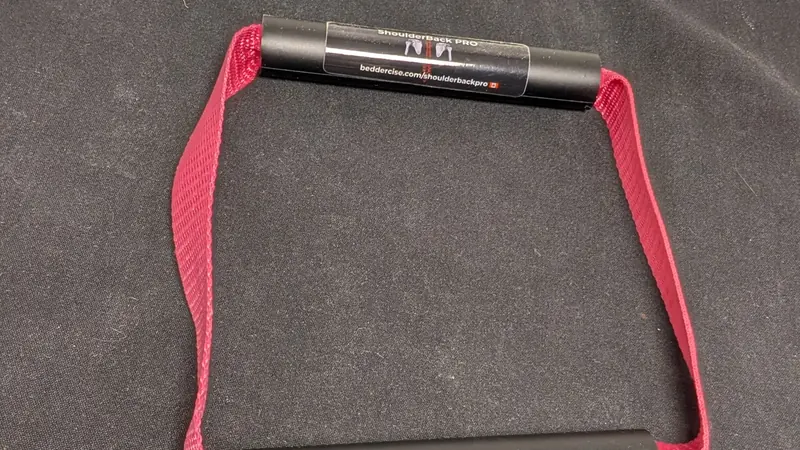
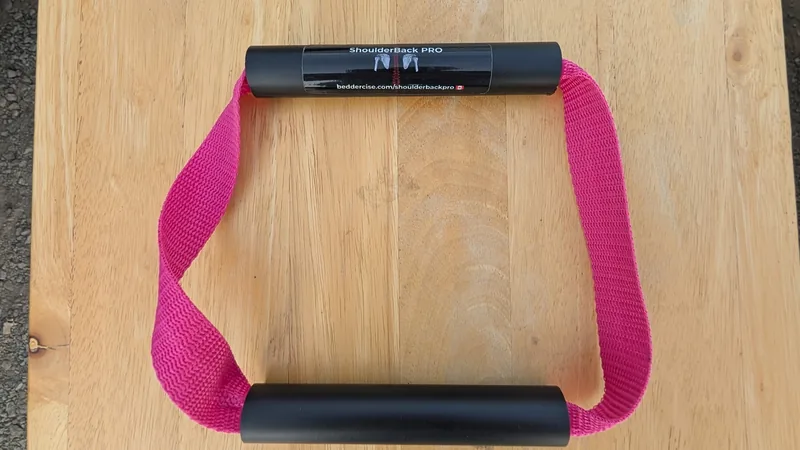
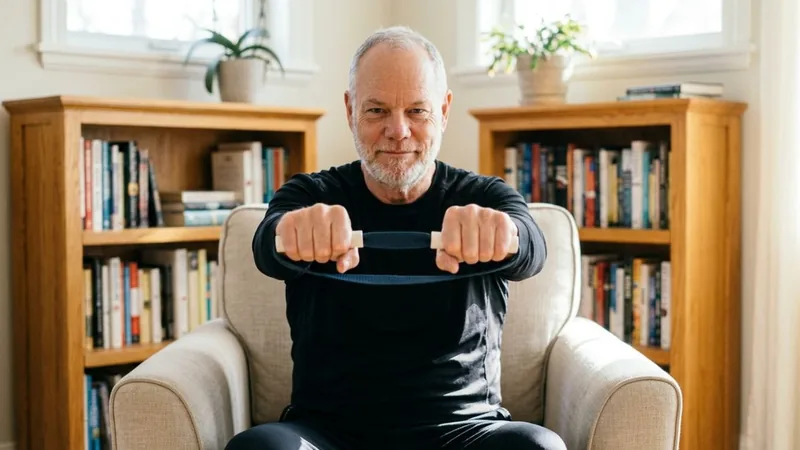
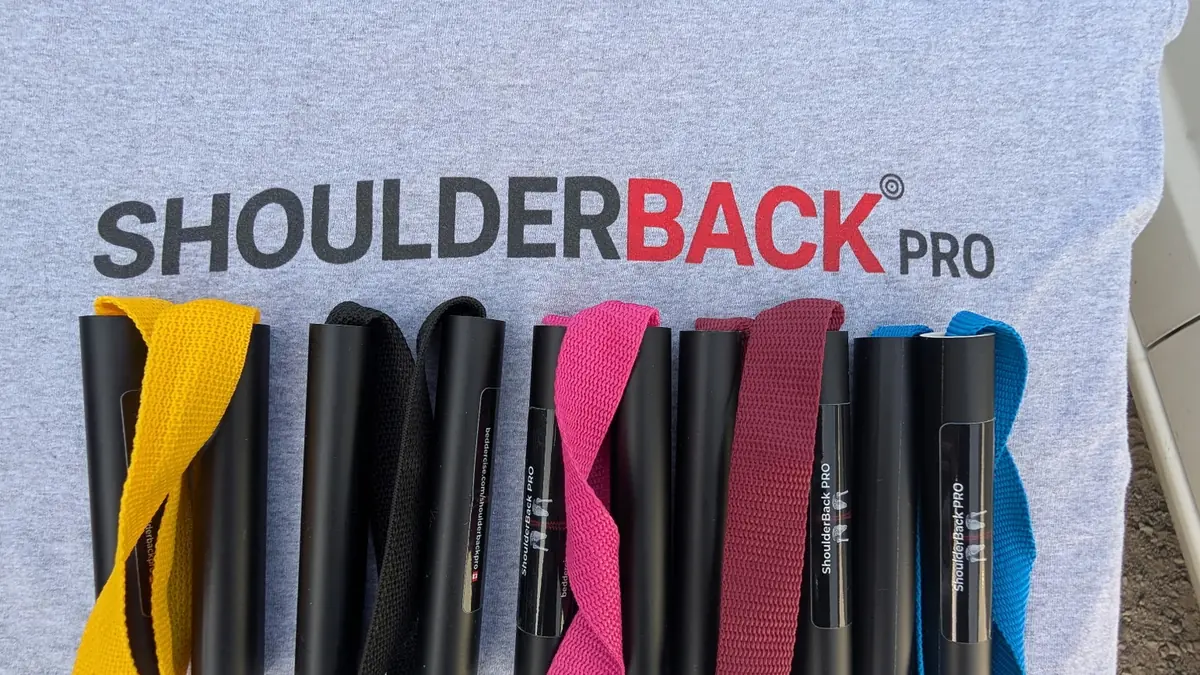
ShoulderBack Pro sits at the simple end: 160 grams, no screen, no charging, no setup, two handles joined by a fixed, non-elastic strap, used seated or standing. SeeSaw has one arm guide the other through gentle reaches, and Bear Hugs Me draws the trainer to your chest.
The other arm provides the resistance. Progress by resisting harder, moving through more range, or doing longer sets. It tracks nothing, so if you want reminders and charts a smart device may suit you better. It's a wellness tool with no clinical trials. The trainer is $29 CAD with a 30-day guarantee: see the options, or browse the 16 free video lessons.
Related reading: why resistance bands can irritate aging shoulders and the 3-minute morning armchair routine.
When to see a professional
See a doctor or physiotherapist promptly if you have: pain after a fall or injury with sudden weakness or loss of movement; a shoulder that looks deformed, very swollen or bruised; fever or feeling unwell alongside the pain; chest pain or breathlessness (call emergency services); constant pain that doesn't change with rest or activity; pain that wakes you most nights; numbness, tingling or weakness into the arm or hand; pain in several joints at once; or pain that hasn't improved after a couple of weeks of sensible self-care [R30].
A doctor or physiotherapist diagnoses shoulder conditions. A device or a trainer does not.
Try this movement
All 16 video lessons →Frequently asked questions
Are smart fitness devices worth it for seniors?
They can help some people stay on track by counting and reminding. There isn't strong research on their shoulder benefits, so the best device is the one you will actually use [R05].
Is a simple tool enough?
For many people, yes, when the movement is controlled and regular. Resistance training supports strength, function and independence in older adults [R06].
Should I check with my doctor before starting?
Yes, if you have shoulder pain, a diagnosed condition, or recent surgery. It is also a good idea after a long break from exercise.
Sources
- Hayden JA et al. (2021). Exercise therapy for chronic low back pain. Cochrane Database of Systematic Reviews, Issue 9, CD009790. https://pmc.ncbi.nlm.nih.gov/articles/PMC8477273
- Fragala MS, Cadore EL, Dorgo S et al. (2019). Resistance Training for Older Adults: Position Statement From the National Strength and Conditioning Association. J Strength Cond Res. https://pubmed.ncbi.nlm.nih.gov/31343601/
- WHO (2020). Guidelines on physical activity and sedentary behaviour. https://www.sydney.edu.au/news-opinion/news/2020/11/26/new-global-guidelines-on-physical-activity-and-sedentary-behavio.html
- NHS Greater Glasgow & Clyde, Shoulder red flags; NHS MPFT self-help, Shoulder pain; BESS/BOA pathway summary (2021). https://www.nhsggc.scot/page_category/services/page/33