Coordination, control & how ShoulderBack Pro works
Why We Built It in Canada: The ShoulderBack Pro Story
6-minute read · Published December 18, 2025 · Updated December 18, 2025
Where it started
Van Hill is the founder and inventor of ShoulderBack Pro. He says he nursed back two rotator cuff issues on his own, with persistence and patience. That experience is the reason the product exists. It is his story, not a clinical study.
He is also direct about what that means. In his words, "I won't make medical promises; everyone's situation is different." He can only tell you how it worked for him.
Why Canada
ShoulderBack Pro is designed and assembled in British Columbia. Keeping design and assembly in one place keeps its origin easy to trace.
What the product is
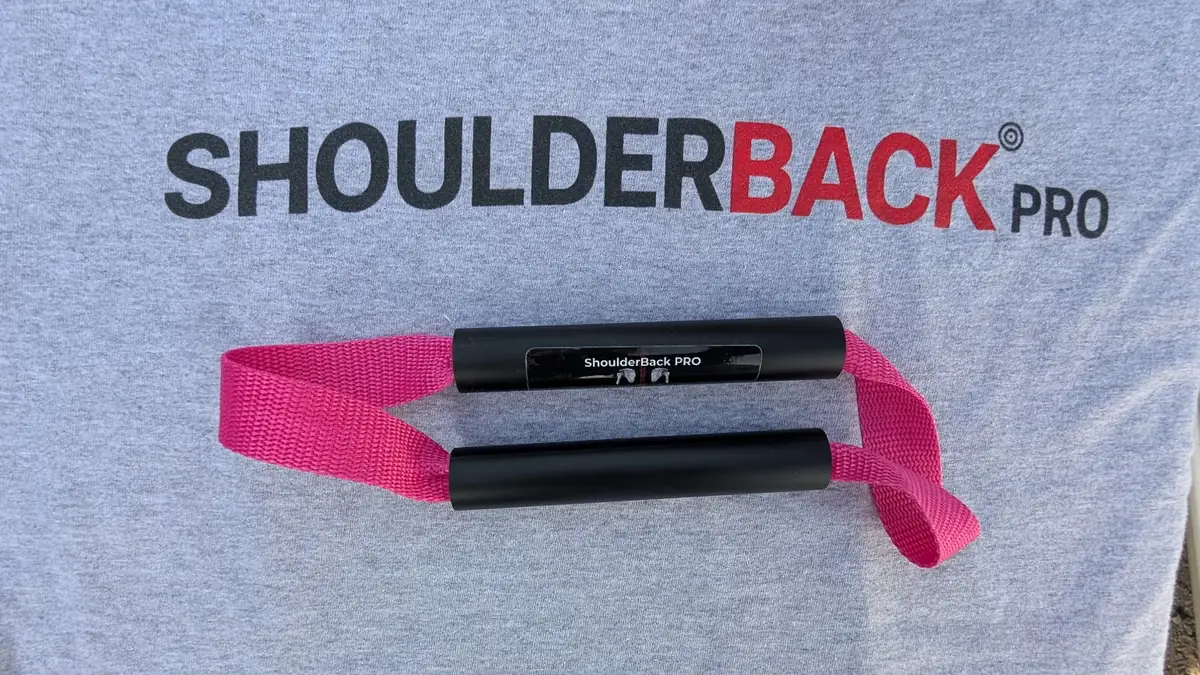
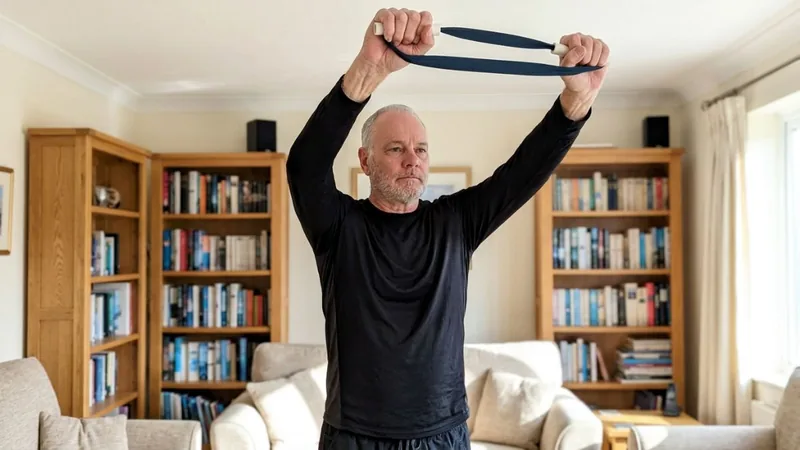
ShoulderBack Pro has two handles joined by a fixed-length, non-elastic strap. It weighs 160 grams and is roughly 5 cm in size, so it fits in a pocket. Nothing stretches, snaps or drops, and you do not need a door anchor, a wall or weights.
One arm assists while the other resists. You set the effort, pace and range. You can use it seated in an armchair or standing up. There are 16 free guided video lessons taught by Van Hill, and four strap colours with identical resistance.
What the research says
ShoulderBack Pro has no clinical trials. The research below is about exercise in general, not about this product specifically.
Exercise that adds resistance and progresses over time probably helps rotator cuff-related shoulder pain, though the size of the benefit is uncertain [R01]. The WHO recommends that adults include muscle-strengthening activity on at least two days each week, and that older adults add balance and strength work [R07].
A small, controlled trainer may fit into that picture, but it cannot replace a plan built with a clinician.
What you can do
- Start with a clear goal. Decide whether you want more comfort, more control or simply a habit that keeps your shoulders moving.
- Begin seated. Choose one movement from the lessons and do it in a chair with a supportive back.
- Set a gentle effort. Use the least effort that still gives you a clear movement. Increase it slowly over several weeks.
- Watch your body. Mild effort is fine. Sharp pain or pain that lingers past the next day means you should stop.
- Check in with a clinician if you have an injury, a diagnosed condition, or a question about your plan.
Where ShoulderBack Pro fits — and where it doesn't
If you want a simple, portable way to practise controlled shoulder movement, this is what we made it for. A good first pair is Around the World, one large unhurried circle for the shoulder blade muscles, and Bear Hugs Me, which draws the trainer to your chest while you breathe wide. The free lessons on the routines page walk through all 16.
It is a simple movement tool, not a treatment; nobody has run a clinical trial on it. It costs $29 CAD, with a 30-day full-refund guarantee, and you can order it online when you are ready.
When to see a professional
The red-flag list below follows NHS shoulder guidance [R30].
See a doctor or physiotherapist promptly if you have: pain after a fall or injury with sudden weakness or loss of movement; a shoulder that looks deformed, very swollen or bruised; fever or feeling unwell alongside the pain; chest pain or breathlessness (call emergency services); constant pain that doesn't change with rest or activity; pain that wakes you most nights; numbness, tingling or weakness into the arm or hand; pain in several joints at once; or pain that hasn't improved after a couple of weeks of sensible self-care.
No product story replaces an assessment. If any item above applies, see a clinician first.
Try this movement
All 16 video lessons →Frequently asked questions
Where is ShoulderBack Pro made?
It is designed and assembled in British Columbia, Canada.
Is ShoulderBack Pro a medical device?
No. It is a wellness product, not a medical device, and it is not intended to diagnose or treat any condition.
Has ShoulderBack Pro been tested in clinical trials?
No. There are no clinical trials of ShoulderBack Pro, so claims should be read as personal experience and general exercise principles.
Who made it?
Van Hill, the founder and inventor, designed it. You can read more on the about page.
Sources
- WHO (2020). Guidelines on physical activity and sedentary behaviour. University of Sydney summary of WHO 2020. https://www.sydney.edu.au/news-opinion/news/2020/11/26/new-global-guidelines-on-physical-activity-and-sedentary-behavio.html
- Naunton J et al. (2020). Effectiveness of progressive and resisted and non-progressive or non-resisted exercise in rotator cuff related shoulder pain: systematic review and meta-analysis of RCTs. Clinical Rehabilitation. https://search.pedro.org.au/search-results/record-detail/61404
- NHS Greater Glasgow & Clyde, Shoulder red flags; NHS MPFT, Shoulder pain self-help; BESS/BOA pathway summary (2021). https://www.nhsggc.scot/page_category/services/page/33
More in this topic
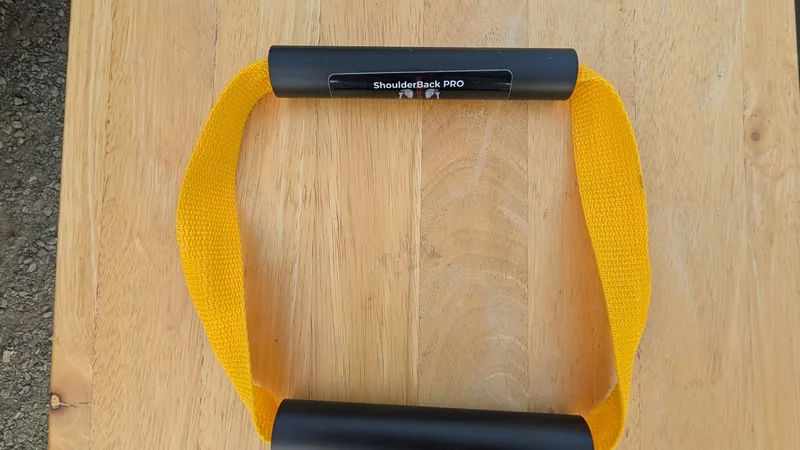 Essential guide: How ShoulderBack Pro Works: One Device, Two Connected Handles, Your Own Resistance
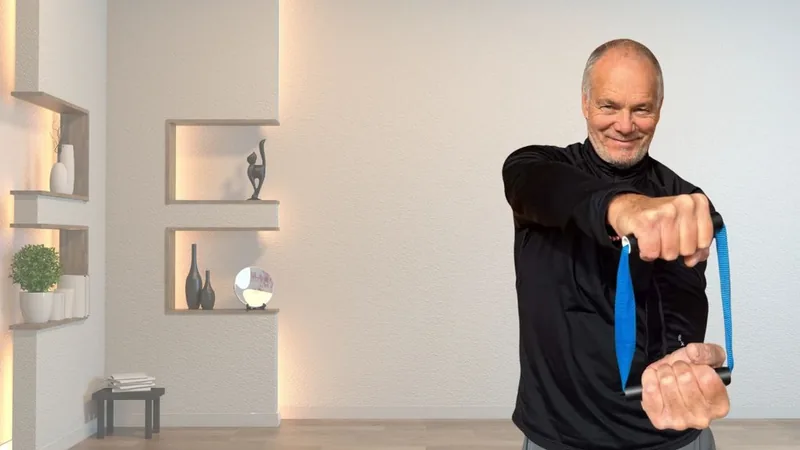 Pairing SBP With Walking: The Simplest Whole-Body Routine for Active Aging
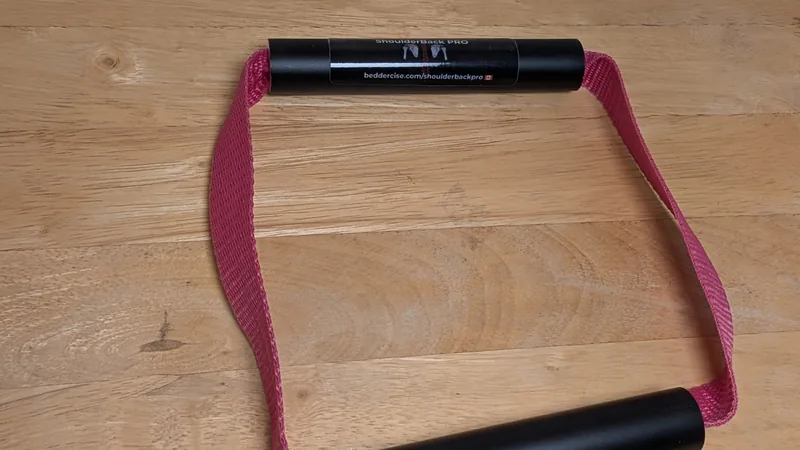 Locomotive: Rolling Circles for the Upper Back and Rear Cuff
 Overhead Press (High Shelf Reach): Trapezius and Deltoids Without a Weight