Coordination, control & how ShoulderBack Pro works
Why ShoulderBack Pro Isn't a Medical Device (and Why That Matters)
4-minute read · Published May 5, 2026 · Updated May 5, 2026
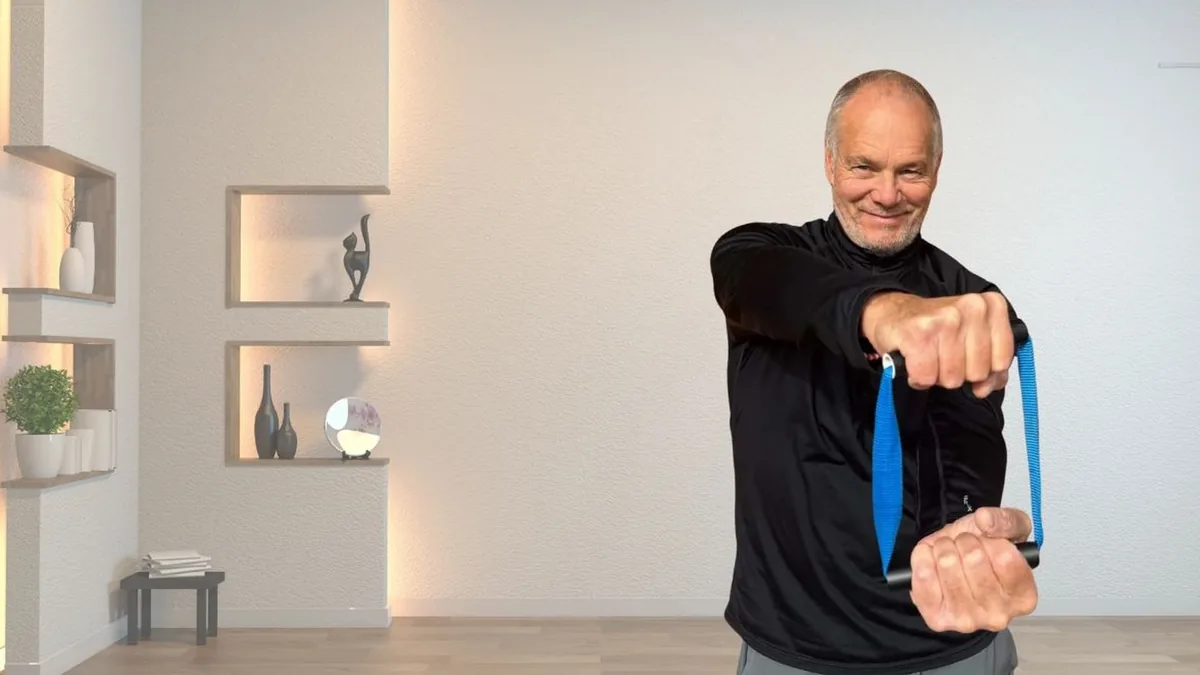
Why this happens / What this is
A medical device is, in general terms, a product made to diagnose, treat or prevent a health condition. Makers of those products are generally expected to show how the product performs before they make those claims.
ShoulderBack Pro is a different kind of product. It is a 160-gram trainer, roughly 5 cm long, designed and assembled in Canada. Two handles are joined by a fixed-length, non-elastic strap. One arm assists while the other resists, and you set the effort, pace and range.
The words a product uses shape what you expect from it. A product that says it treats shoulder pain implies a diagnosis. ShoulderBack Pro is designed to help you move your shoulders in a controlled way. That is a narrower, more honest claim.
What the research says
- Most shoulder research looks at exercise in general, not at a particular device. Exercise with resistance that builds gradually is the type most likely to help rotator-cuff-related shoulder pain. Gentle, unloaded movement alone probably doesn't move pain much [R01].
- Most shoulder pain is managed in primary care with advice and exercise. Acute, severe pain after an injury needs a proper diagnosis [R30].
- Training control and coordination is an established part of shoulder rehab. The usual order runs from range to strength to control [R16]. A product that trains control can fit into that picture, but that does not prove its own benefit.
What you can do
Before you trust a shoulder product's claims, you can check a few things.
- Read the claim closely. Words like "treats," "fixes" or "prevents" signal a medical claim.
- Ask what the evidence is. Look for trials of that product, not only studies of the exercise type.
- Ask a clinician. If you are considering a product for a diagnosed shoulder problem, ask your doctor or physiotherapist first.
- Start seated. Try the movements in an armchair first, and stop at any sharp pain.
- Keep expectations plain. A useful product helps you move and feel more in control. That is a reasonable goal.
Where ShoulderBack Pro fits — and where it doesn't
If the idea of controlled, self-paced movement appeals, SeeSaw is a good first lesson: one arm gently guides the other through alternating reaches, and the resistance comes from your own other arm. Open the Door, which the site lists as working the infraspinatus and rhomboid major, is a natural second.
The boundary is the one in the title: no clinical trials, and not a treatment for any diagnosed condition. The 16 video lessons are free, and the trainer is $29 (4-pack $87, free shipping, 30-day guarantee) in the shop.
When to see a professional
See a doctor or physiotherapist promptly if you have: pain after a fall or injury with sudden weakness or loss of movement; a shoulder that looks deformed, very swollen or bruised; fever or feeling unwell alongside the pain; chest pain or breathlessness (call emergency services); constant pain that doesn't change with rest or activity; pain that wakes you most nights; numbness, tingling or weakness into the arm or hand; pain in several joints at once; or pain that hasn't improved after a couple of weeks of sensible self-care.
Whether or not a product is a medical device, a doctor or physiotherapist is the person who diagnoses a shoulder problem.
Try this movement
All 16 video lessons →Frequently asked questions
Is ShoulderBack Pro a medical device?
No. It is a wellness product: a 160-gram movement trainer for controlled shoulder movement. It is not intended to diagnose, treat or prevent anything.
Does ShoulderBack Pro have clinical trials?
No. There are no clinical trials of ShoulderBack Pro. The research on shoulder exercise is about exercise in general, not this device.
Can I use it for a diagnosed rotator cuff problem?
Ask your clinician first. It is not a treatment for a diagnosed condition. If you have been cleared for gentle, controlled movement, it may be a simple thing to add.
Sources
- Naunton J et al. (2020). Effectiveness of progressive and resisted and non-progressive or non-resisted exercise in rotator cuff related shoulder pain: systematic review and meta-analysis of RCTs. Clinical Rehabilitation. https://search.pedro.org.au/search-results/record-detail/61404
- Mureşan et al. (2022). Effects of a novel proprioceptive rehabilitation device on shoulder joint position sense, pain and function. Medicina. https://www.ncbi.nlm.nih.gov/pmc/articles/PMC9505091/
- NHS Greater Glasgow & Clyde — Shoulder red flags; NHS MPFT self-help — Shoulder pain; BESS/BOA pathway summary (2021). https://www.nhsggc.scot/page_category/services/page/33
More in this topic
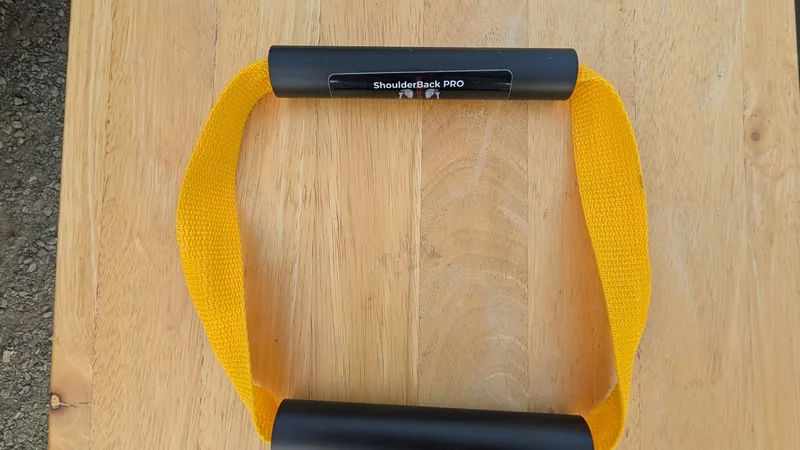 Essential guide: How ShoulderBack Pro Works: One Device, Two Connected Handles, Your Own Resistance
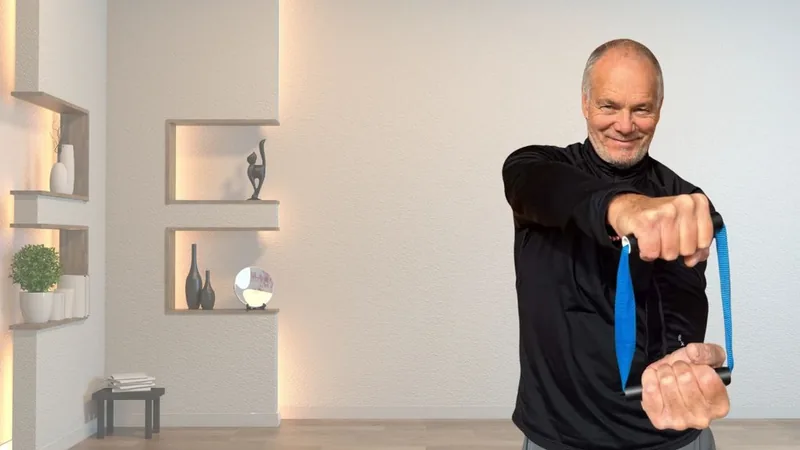 Pairing SBP With Walking: The Simplest Whole-Body Routine for Active Aging
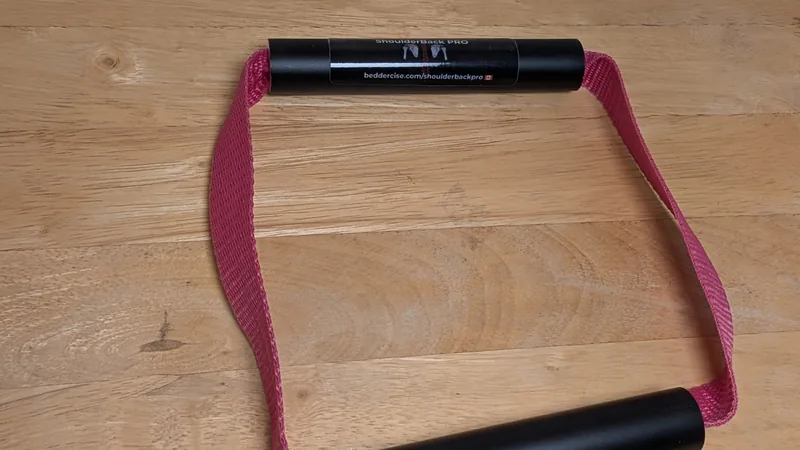 Locomotive: Rolling Circles for the Upper Back and Rear Cuff
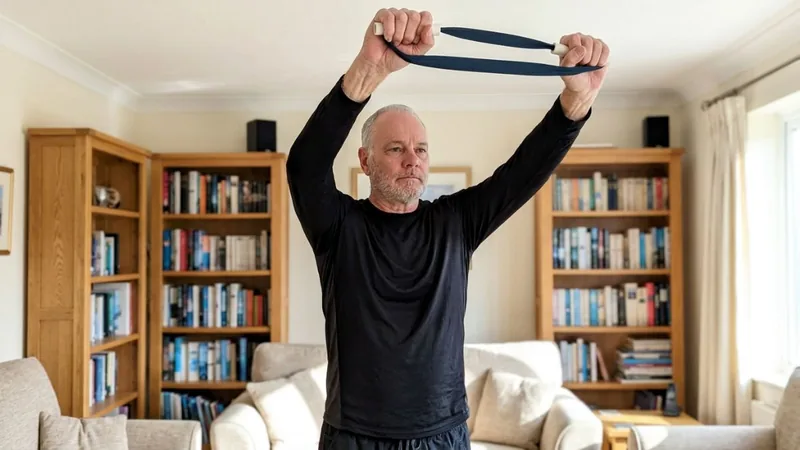 Overhead Press (High Shelf Reach): Trapezius and Deltoids Without a Weight