Coordination, control & how ShoulderBack Pro works
Why Nothing Snapping or Dropping Changes How Your Shoulders Behave
5-minute read · Published October 31, 2025 · Updated October 31, 2025
Why this happens
Many people feel uneasy about shoulder exercise, and that feeling is reasonable. A band that snaps back can jerk the arm. A weight that drops can strain a joint that is already touchy. Even a strap that stretches without warning can change the effort halfway through a movement.
Control is the answer to most of these worries. When you know how far the strap goes and how hard it will pull, you can decide when to stop. Many people find they brace less when nothing can surprise them.
Good shoulder equipment is simple. It should stay the same length, keep the same feel from start to finish, and let you set the effort. You want a tool that is predictable, not one that surprises you.
What the research says
- Resisted exercise that gets a little harder over the weeks probably helps rotator cuff-related shoulder pain. The key word is progressive: load builds in steps, rather than jumping suddenly [R01].
- Fear and barriers can keep older adults from strength work. Research guidance says these should be addressed directly, not ignored [R06].
- The WHO recommends that adults over 65 include strength and balance activity at least three days a week, and that every move counts [R07]. Small, controlled sessions can fit that goal.
- We have not found research that tests a specific snap-free design against other tools. The points above come from general exercise evidence, not from ShoulderBack Pro itself.
What you can do
- Check the equipment first. Look for a fixed length, a steady grip and no sudden give. If a tool snaps or drops, it may not suit a cautious start.
- Start with a small effort. Choose the lightest setting that still feels like work. You can increase it later.
- Keep the range small. Move only through the part of the arc that feels smooth and calm.
- Stop when pain sharpens. Mild effort is normal. Sharp, new or spreading pain is a reason to rest and get it checked.
- Build slowly. Add a little more range or effort only after several calm sessions in a row.
- Try a seated option. Sit in a sturdy chair with your back supported. Keep elbows bent and movements small.
- Pair it with a check-in. If you are not sure what suits your shoulder, ask a clinician to watch you move once.
For a gentle place to begin, try the SeeSaw movement, which alternates slow reaches with one arm guiding the other. You can also read about controlled movement and why slow beats stretchy.
Where ShoulderBack Pro fits — and where it doesn't
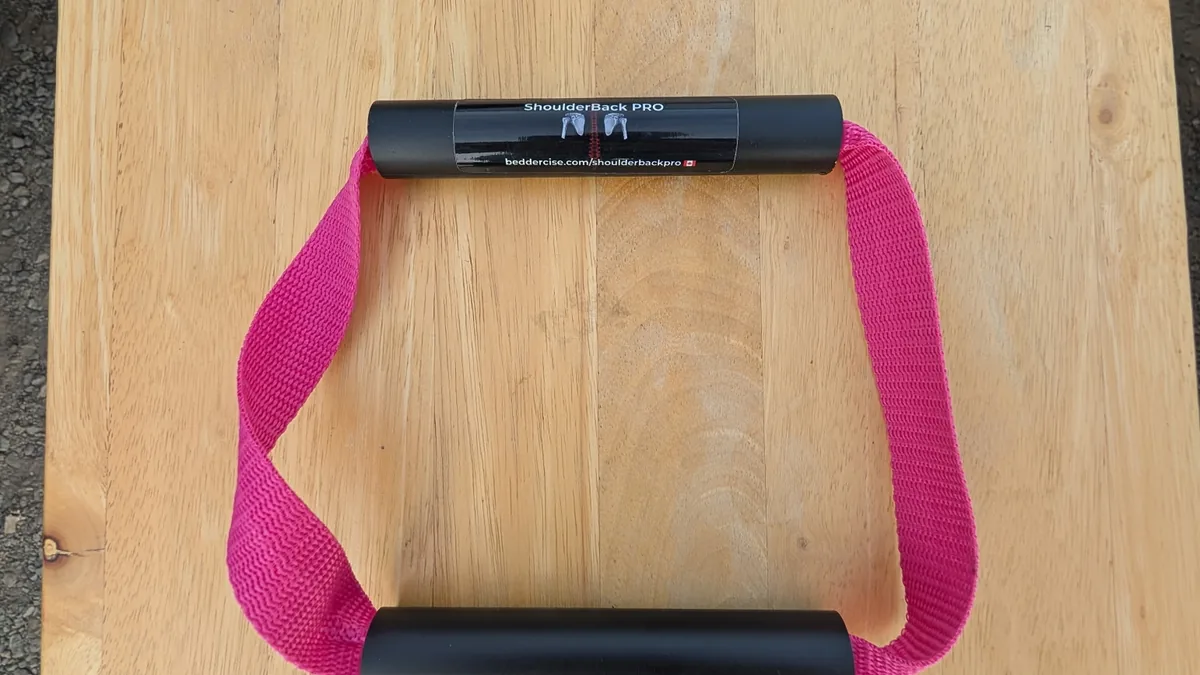
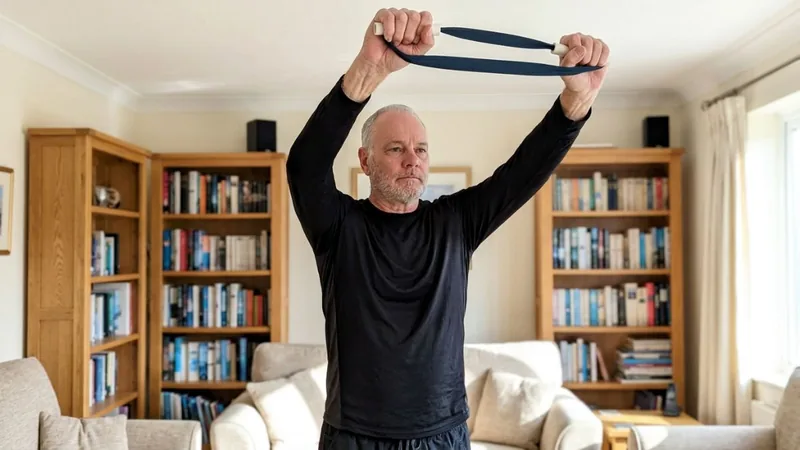
The design answers the worry directly: two handles on a fixed-length, non-elastic strap, 160 grams, nothing to snap back or fall. The resistance comes from your other arm, so you decide how hard to push, and you progress by resisting more or moving through more range. SeeSaw and Windshield Wipers are gentle places to start, seated or standing.
It is a wellness tool, not a medical device, and it has no clinical trials. See the shop page if you want to look closer.
When to see a professional
Only a doctor, physiotherapist or other qualified clinician can diagnose the cause of shoulder pain. If a movement causes pain that does not settle, stop and ask for an assessment.
See a doctor or physiotherapist promptly if you have: pain after a fall or injury with sudden weakness or loss of movement; a shoulder that looks deformed, very swollen or bruised; fever or feeling unwell alongside the pain; chest pain or breathlessness (call emergency services); constant pain that doesn't change with rest or activity; pain that wakes you most nights; numbness, tingling or weakness into the arm or hand; pain in several joints at once; or pain that hasn't improved after a couple of weeks of sensible self-care.
Try this movement
All 16 video lessons →Frequently asked questions
What makes shoulder exercise equipment safe?
Equipment that does not snap back, stretch unpredictably or drop is easier to control. Look for a fixed length, a steady grip and a way to set the effort yourself.
Is it normal to feel nervous about shoulder exercise?
Yes. Many older adults worry about pain or injury, and the research notes that these fears are a barrier worth addressing. A gentle start can ease that worry.
Can I use controlled equipment if my shoulder is sore?
Only after a clinician has cleared you for gentle movement. Start with a small range and stop if pain sharpens.
Does safe equipment mean I can skip a professional?
No. Equipment can make a routine easier to control, but it does not replace an assessment for pain that is new, severe or not improving.
Sources
- Naunton J et al. (2020). Effectiveness of progressive and resisted and non-progressive or non-resisted exercise in rotator cuff related shoulder pain: systematic review and meta-analysis of RCTs. Clinical Rehabilitation. https://search.pedro.org.au/search-results/record-detail/61404
- Fragala MS, Cadore EL, Dorgo S et al. (2019). Resistance Training for Older Adults: Position Statement From the National Strength and Conditioning Association. J Strength Cond Res. https://pubmed.ncbi.nlm.nih.gov/31343601/
- WHO (2020). Guidelines on physical activity and sedentary behaviour. https://www.sydney.edu.au/news-opinion/news/2020/11/26/new-global-guidelines-on-physical-activity-and-sedentary-behavio.html
More in this topic
 Essential guide: How ShoulderBack Pro Works: One Device, Two Connected Handles, Your Own Resistance
 Pairing SBP With Walking: The Simplest Whole-Body Routine for Active Aging
 Locomotive: Rolling Circles for the Upper Back and Rear Cuff
 Overhead Press (High Shelf Reach): Trapezius and Deltoids Without a Weight