Coordination, control & how ShoulderBack Pro works
Who ShoulderBack Pro Is NOT For (An Honest List)
5-minute read · Published April 25, 2025 · Updated April 25, 2025
Why an honest list matters
A product that claims to suit everyone is usually overselling. Shoulders vary. Some problems need assessment before any movement. Others can be helped by controlled movement, once a clinician agrees.
So the useful question is not "Is this good?" It is "Which group am I in?" The list below can help you answer that. It is a starting point, not a diagnosis.
How to use this list
Read each group slowly. If you recognize yourself in one, pause and talk to a clinician before you start. If none apply, you can still begin gently and stop at any pain. Either way, bring this list to your next appointment.
Who should not start with ShoulderBack Pro first
- Anyone with a recent injury. Pain after a fall or injury, sudden weakness, a deformed or very swollen shoulder, or severe night pain needs medical assessment first [R30].
- Anyone with frozen shoulder. Frozen shoulder involves scar-like tissue in the joint capsule that causes pain and loss of movement [R18]. Do not wait it out. Untreated cases improved only partly over one to four years [R19]. See a clinician first.
- Anyone with nerve symptoms. Numbness, tingling or weakness in the arm or hand needs assessment first [R30].
- Anyone after surgery. Follow the surgeon's or physiotherapist's protocol. Use ShoulderBack Pro only if they approve it.
- Anyone with severe osteoporosis, a recent fracture, or an inflammatory arthritis flare. Ask a clinician before any new routine.
- Anyone who wants significant strength. Resisted exercise that progresses over time has the stronger support [R01]. A band or dumbbell may suit that goal better.
What the research says
- Progressive, resisted exercise probably makes a modest difference rotator cuff pain. Gentle, unloaded movement alone probably does not [R01].
- For frozen shoulder, the belief that it resolves on its own is not supported. Untreated cases improved only partly after one to four years [R19].
- Most shoulder pain is managed in primary care with advice and exercise. Severe or sudden pain after trauma needs proper diagnosis [R30].
What you can do
- Check the red flags first. If any of the warning signs in the box below apply, see a clinician before any new movement.
- Ask a clinician if you have a diagnosed condition. Bring this list with you and ask whether controlled movement is appropriate.
- If you are cleared, start seated and gentle. Use slow, small movements. A chair with a supportive back helps.
- Pick a goal that fits. For gentle, regular movement, a trainer may suit you. For significant strength, a band or dumbbell may suit you better.
- Stop at sharp pain. Note what happened, and get it checked if it continues.
Where ShoulderBack Pro fits and where it doesn't
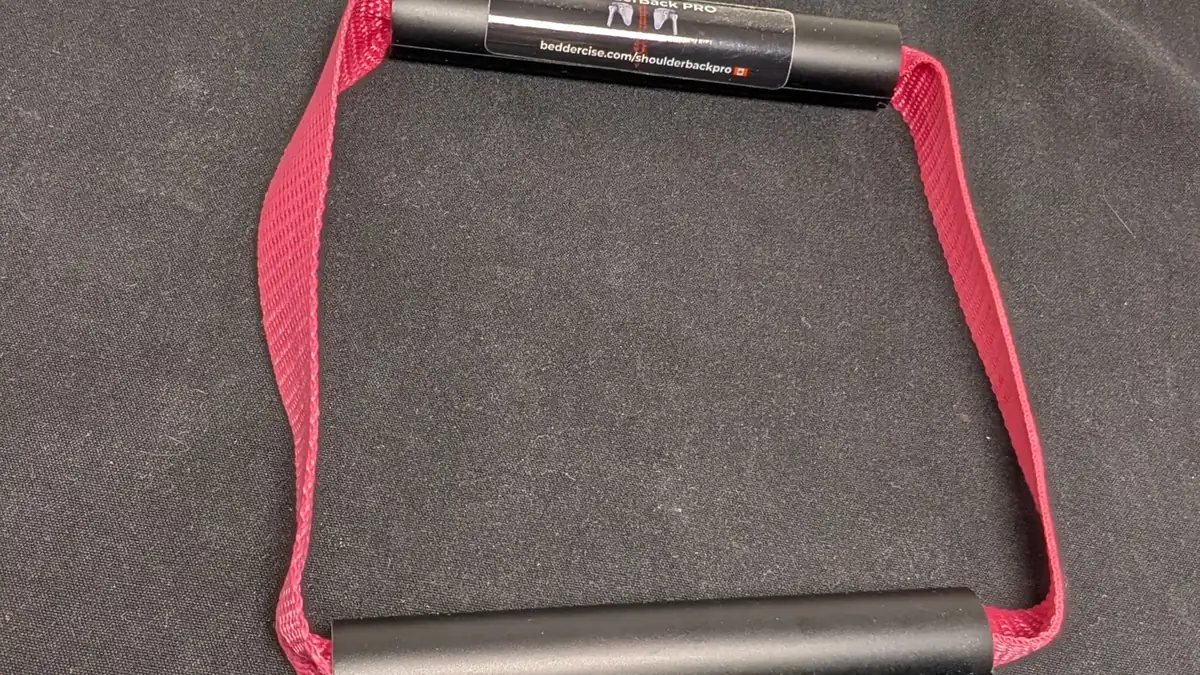
If none of the groups above is you and a clinician is happy for you to move, SeeSaw is a gentle first lesson: alternating reaches, one arm guiding the other, designed to work the scapular stabilizers. Open the Door is designed to work the infraspinatus and rhomboid major with elbows at your sides. Both can be done seated, and the resistance comes from your other arm.
It is a wellness tool with no clinical trials behind it, so it is not a treatment for any condition. The trainer is $29 CAD with a 30-day full-refund guarantee.
When to see a professional
See a doctor or physiotherapist promptly if you have: pain after a fall or injury with sudden weakness or loss of movement; a shoulder that looks deformed, very swollen or bruised; fever or feeling unwell alongside the pain; chest pain or breathlessness (call emergency services); constant pain that doesn't change with rest or activity; pain that wakes you most nights; numbness, tingling or weakness into the arm or hand; pain in several joints at once; or pain that hasn't improved after a couple of weeks of sensible self-care.
A doctor or physiotherapist is the right person to diagnose the cause of your shoulder pain. Ask one before any new routine if you have a recent injury, surgery or nerve symptoms.
Try this movement
All 16 video lessons →Frequently asked questions
Is ShoulderBack Pro safe for everyone?
No product is right for everyone. Check the list above, and ask a clinician if you are unsure which group you are in.
Can I use it after surgery?
Only if your surgeon or physiotherapist approves. Follow their protocol first, and bring them this list.
What if I have a condition I have not been told about?
Get assessed. A doctor or physiotherapist diagnoses the cause of shoulder pain. Please do not self-diagnose from a list.
I have a desk job and some stiffness. Is it for me?
It may be. Short, gentle, seated movement can suit a desk worker with no red flags. If the stiffness is new, sudden or painful, check with a clinician first [R30].
Sources
- Naunton J et al. (2020). Effectiveness of progressive and resisted and non-progressive or non-resisted exercise in rotator cuff related shoulder pain: systematic review and meta-analysis of RCTs. Clinical Rehabilitation. https://search.pedro.org.au/search-results/record-detail/61404
- Le HV, Lee SJ, Nazarian A, Rodriguez EK (2017). Adhesive capsulitis of the shoulder: review of pathophysiology and current clinical treatments. Shoulder & Elbow 9(2):75-84. https://pubmed.ncbi.nlm.nih.gov/28405218/
- Wong CK et al. (2017). Natural history of frozen shoulder: fact or fiction? A systematic review. Physiotherapy 103(1):40-47. https://pubmed.ncbi.nlm.nih.gov/27641499/
- NHS Greater Glasgow & Clyde, shoulder red flags; NHS MPFT self-help, shoulder pain; BESS/BOA pathway summary (2021). https://pmc.ncbi.nlm.nih.gov/articles/PMC7905504
More in this topic
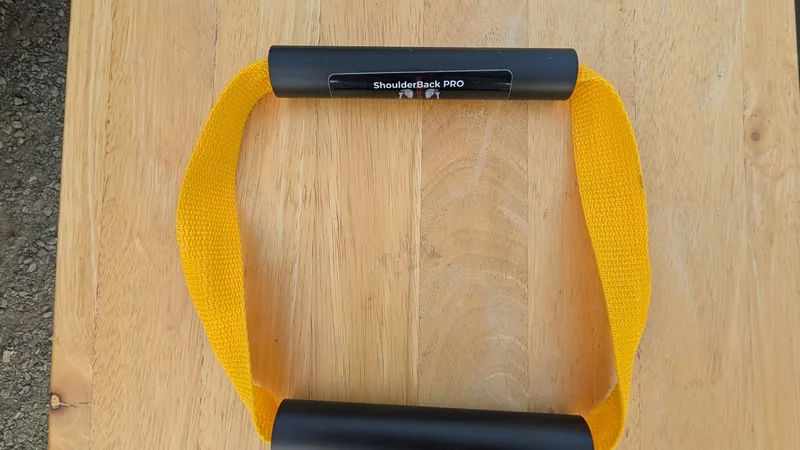 Essential guide: How ShoulderBack Pro Works: One Device, Two Connected Handles, Your Own Resistance
 Pairing SBP With Walking: The Simplest Whole-Body Routine for Active Aging
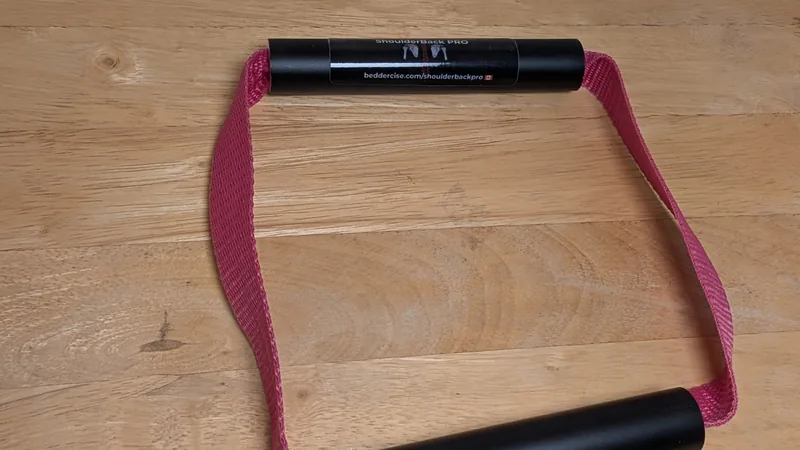 Locomotive: Rolling Circles for the Upper Back and Rear Cuff
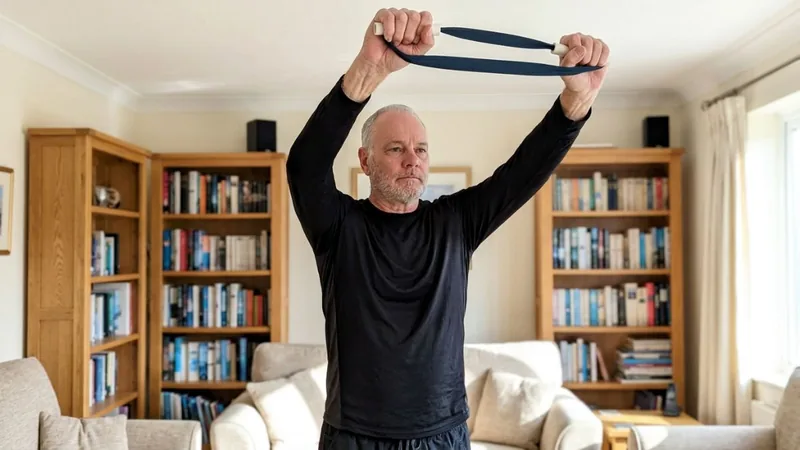 Overhead Press (High Shelf Reach): Trapezius and Deltoids Without a Weight