Coordination, control & how ShoulderBack Pro works
What Physiotherapists Might Say About a Tool Like SBP (and Questions to Ask Yours)
5-minute read · Published October 26, 2026 · Updated October 26, 2026
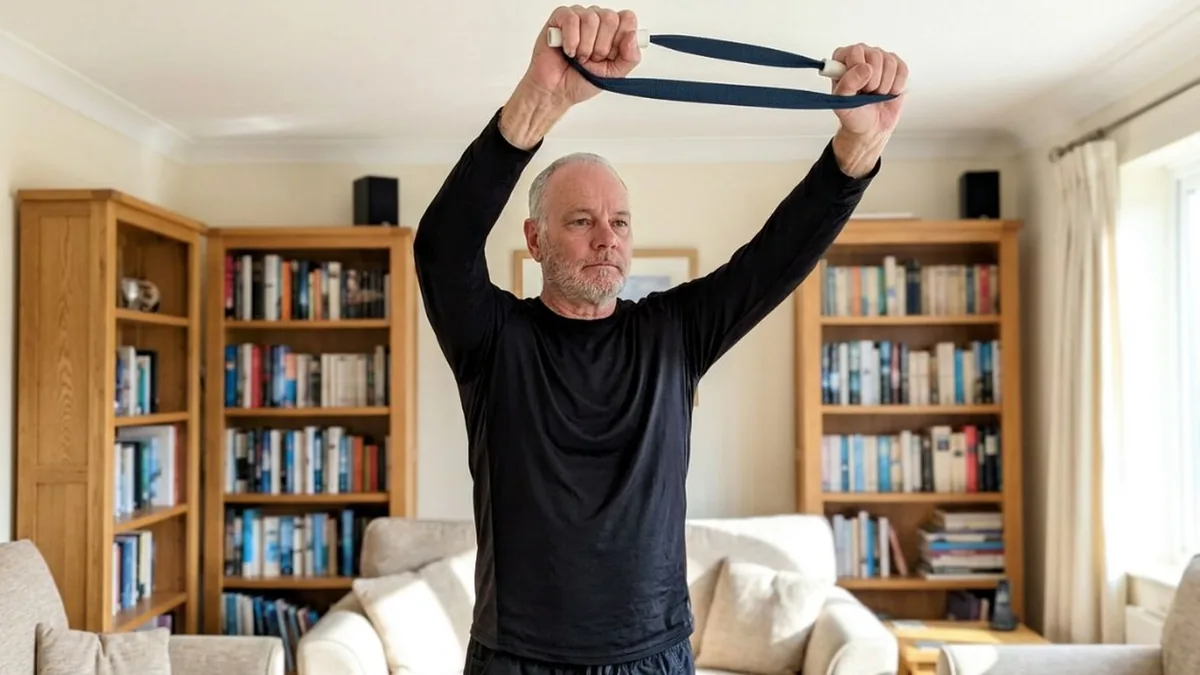
Why ask a physiotherapist at all
Shoulder pain has many possible sources. A physiotherapist examines the joint, the shoulder blade, the neck and the upper back, then builds a plan around what they find. Most shoulder pain is managed in primary care with advice and exercise [R30]. A physiotherapist is often the person who designs that exercise. If you are unsure whether to see a physiotherapist or a doctor first, your family doctor or a pharmacist can point you the right way.
A tool like ShoulderBack Pro is a movement trainer, not a diagnosis. It works best as one part of a plan, not the whole plan. That is why a conversation with your own clinician matters.
This article is part of our how-it-works guide for ShoulderBack Pro.
What the research says
Rehabilitation research describes a rough order. Range of motion comes first, then strength, then control and coordination [R16]. A good physiotherapist will move you along that order at a pace that suits you.
For rotator-cuff-related pain, resisted exercise that progresses over time probably helps, while gentle, unloaded movement alone probably does not move pain much [R01]. Motor-control programs reduced disability slightly more than generic exercise in the short and medium term, though the reason is not fully known [R02].
The key point for your conversation is that progression matters. Ask how the plan will change over time, not just what to do today.
The review could not say whether the gain came from motor control or from tailoring, which is a good reason to ask how your clinician will tailor yours.
What you can do
- Write down your questions. Use the list in the FAQ below and add your own.
- Describe your history. Note what started the pain, what it feels like, and what wakes you at night.
- Ask about the diagnosis. Ask what the physiotherapist thinks is going on, and what they still need to rule out.
- Ask which movements to avoid. Ask what to skip for now, and why.
- Ask how hard to go. Ask what effort is right, and what signs mean you should stop.
- Ask how progress will be measured. Ask what good progress looks like in weeks, not days.
- Bring the device if you have it. Show them how you plan to use it, seated or standing.
- Write down the answers. Keep the notes so you can compare progress at your next visit.
Where ShoulderBack Pro fits, and where it doesn't
If your physiotherapist is open to it, SBP offers two lessons worth raising. SeeSaw works the scapular stabilizers through alternating reaches, and Windshield Wipers uses slow side-to-side arcs for the rotator cuff. Because the resistance comes from your other arm, effort is easy to dial up or down, and progression means resisting harder or moving through more range.
SBP is a wellness tool, not a treatment or a substitute for physiotherapy, and there are no clinical trials of it. Browse the 16 video lessons with your clinician, and see the shop page if it fits the plan.
When to see a professional
See a doctor or physiotherapist promptly if you have: pain after a fall or injury with sudden weakness or loss of movement; a shoulder that looks deformed, very swollen or bruised; fever or feeling unwell alongside the pain; chest pain or breathlessness (call emergency services); constant pain that doesn't change with rest or activity; pain that wakes you most nights; numbness, tingling or weakness into the arm or hand; pain in several joints at once; or pain that hasn't improved after a couple of weeks of sensible self-care.
If you are a caregiver researching for a parent, bring their questions and their history to the appointment.
Try this movement
All 16 video lessons →Frequently asked questions
Can a physiotherapist recommend a device like SBP?
They can. Many will consider it as one tool in a plan, depending on your assessment. Ask them directly whether it fits your shoulder and your goals.
What questions should I bring to my physiotherapist?
Ask about your diagnosis, which movements to avoid, how hard to work, what signs mean stop, and how progress will be measured.
Does SBP replace physiotherapy?
No. SBP is not a replacement for physiotherapy and is not a treatment. It may be one simple way to practise cleared, controlled movement at home.
What should I tell my physiotherapist about my SBP use?
Tell them what you do, how often, and how you feel the next day. Honest feedback helps them adjust the plan.
Should I stop if a movement hurts?
Mild effort is normal. Sharp, pinching, electric or lingering pain is a reason to stop that movement and mention it to your clinician.
Sources
- Naunton J et al. (2020). Effectiveness of progressive and resisted and non-progressive or non-resisted exercise in rotator cuff related shoulder pain: systematic review and meta-analysis of RCTs. Clinical Rehabilitation. https://search.pedro.org.au/search-results/record-detail/61404
- Dubé M-O et al. (2024). The Efficacy of Exercise Therapy for Rotator Cuff-Related Shoulder Pain According to the FITT Principle: Systematic Review With Meta-analyses. JOSPT. https://pubmed.ncbi.nlm.nih.gov/38848304/
- Mureşan et al. (2022). Effects of a novel proprioceptive rehabilitation device on shoulder joint position sense, pain and function. Medicina. https://www.ncbi.nlm.nih.gov/pmc/articles/PMC9505091/
- NHS Greater Glasgow & Clyde, Shoulder red flags; NHS MPFT self-help, Shoulder pain; BESS/BOA pathway summary (2021). https://pmc.ncbi.nlm.nih.gov/articles/PMC7905504
More in this topic
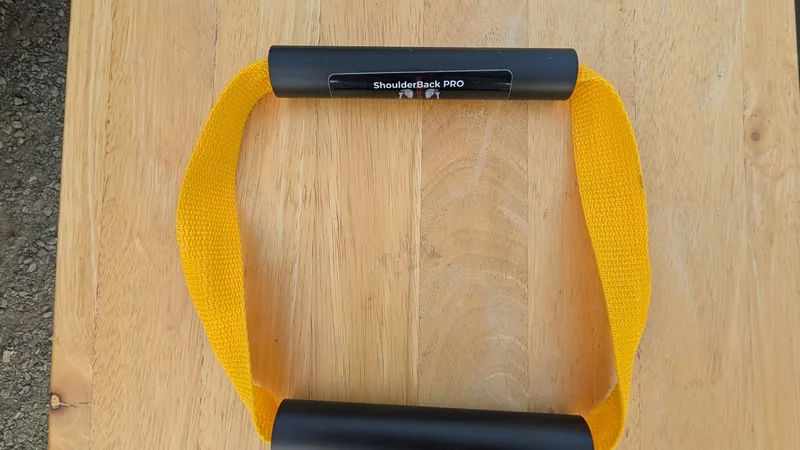 Essential guide: How ShoulderBack Pro Works: One Device, Two Connected Handles, Your Own Resistance
 Pairing SBP With Walking: The Simplest Whole-Body Routine for Active Aging
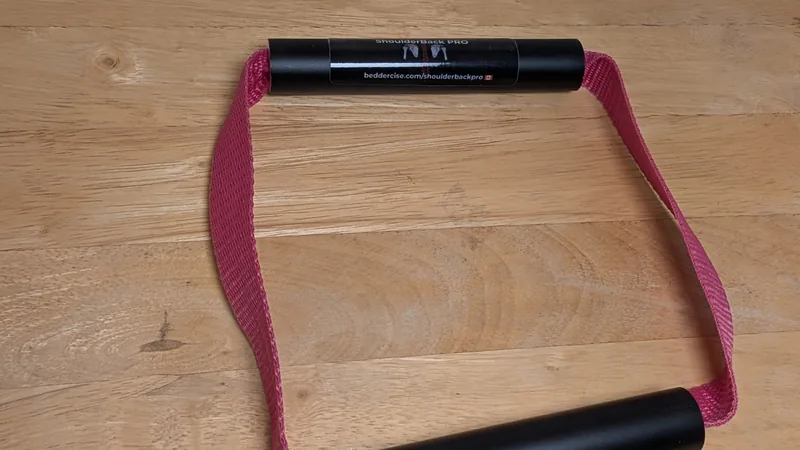 Locomotive: Rolling Circles for the Upper Back and Rear Cuff
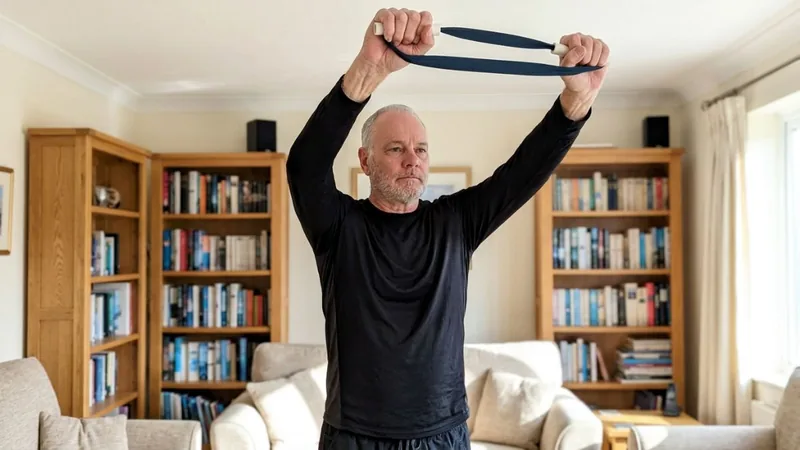 Overhead Press (High Shelf Reach): Trapezius and Deltoids Without a Weight