Comparisons, buyer's guides & honest product answers
Weighted vs Unweighted Shoulder Mobility Tools
4-minute read · Published March 27, 2025 · Updated March 27, 2025
What the two types are
Weighted tools include dumbbells, weighted sticks and wands. The added weight stays the same whatever you do, so the muscles work to move it through each range.
Unweighted tools use something other than added weight, such as a band, a strap, your other arm or your own body. Resistance changes with position and with how hard you push or pull.
What the research says
[R01] found that progressive, resisted exercise probably helps rotator cuff-related shoulder pain. Gentle, unloaded movement alone probably does not change pain much. [R07] recommends muscle-strengthening activity on at least two days a week for adults.
Neither source compared weighted tools with unweighted ones. So we cannot say one type is better for shoulder health. Evidence for each tool on its own is limited, so ask your clinician if you are unsure.
What you can do
- Start lighter than you think you need. Choose a load you can control through the whole movement.
- Match the tool to the goal. Pick added weight for strength, and control and range for mobility.
- Progress slowly. Change one thing at a time, such as weight, range or repeats.
- Choose a seated option. A chair with back support works for either type.
- Stop if pain is sharp or lingers. Check with a clinician before adding weight if you have a diagnosed shoulder condition.
Where ShoulderBack Pro fits, and where it doesn't
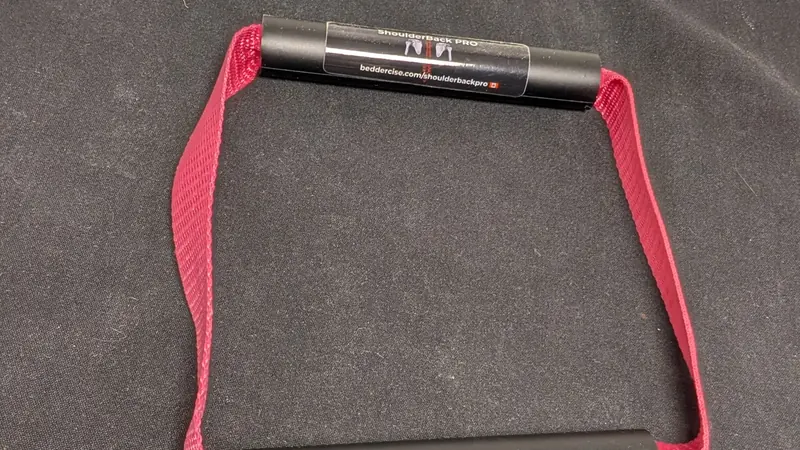
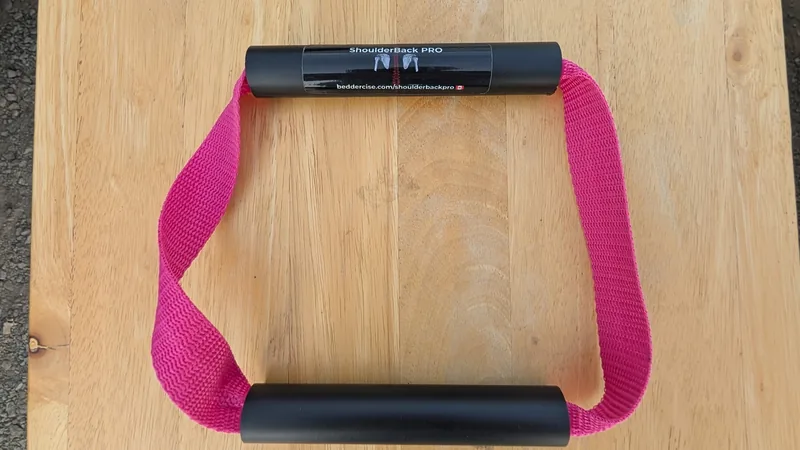
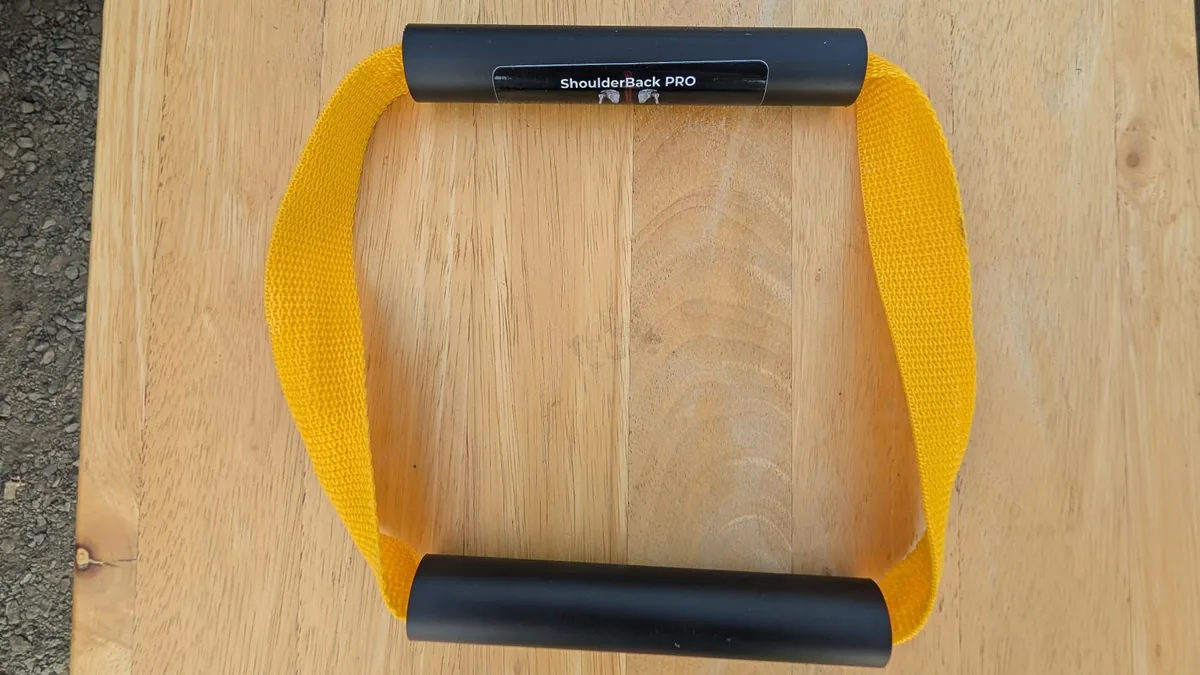
ShoulderBack Pro sits on the unweighted side. The resistance comes from your other arm, through a fixed, non-elastic strap, so you set the effort, pace and range. To progress, resist harder, move through more range or do longer sets.
Dumbbell Raise (Weightless Lateral Glide) is the natural comparison with a dumbbell lateral raise: it lifts outward to the side with no weight, designed to work the supraspinatus and lateral deltoid, seated or standing. It will not replace weights if heavy strength is your goal. Browse all 16 video lessons, or see the shop page.
See a doctor or physiotherapist promptly if you have: pain after a fall or injury with sudden weakness or loss of movement; a shoulder that looks deformed, very swollen or bruised; fever or feeling unwell alongside the pain; chest pain or breathlessness (call emergency services); constant pain that doesn't change with rest or activity; pain that wakes you most nights; numbness, tingling or weakness into the arm or hand; pain in several joints at once; or pain that hasn't improved after a couple of weeks of sensible self-care.
When to see a professional
If you have a diagnosed shoulder condition, ask your doctor or physiotherapist which tools and loads are right for you. Get assessed first after a recent injury, or if the pain is new and sharp.
Learn more
Try this movement
All 16 video lessons →Frequently asked questions
Are weighted shoulder tools better than unweighted ones?
The research we can cite does not compare them directly, so neither type is proven better. Added weight can help strength when it is increased sensibly.
Do I need weights for healthy shoulders?
Not always. Adults are advised to do muscle-strengthening activity at least two days a week, which can come from several kinds of resistance [R07].
Can I use both types?
Many people mix tools across the week. Change one thing at a time, and check with a clinician if you have a diagnosed shoulder condition.
Sources
- Naunton J et al. (2020). Effectiveness of progressive and resisted and non-progressive or non-resisted exercise in rotator cuff related shoulder pain: systematic review and meta-analysis of RCTs. Clinical Rehabilitation. https://search.pedro.org.au/search-results/record-detail/61404
- WHO (2020). Guidelines on physical activity and sedentary behaviour. https://www.sydney.edu.au/news-opinion/news/2020/11/26/new-global-guidelines-on-physical-activity-and-sedentary-behavio.html