Coordination, control & how ShoulderBack Pro works
Using SBP With One Sensitive Shoulder: How the Other Arm Supports It
4-minute read · Published May 6, 2026 · Updated May 6, 2026
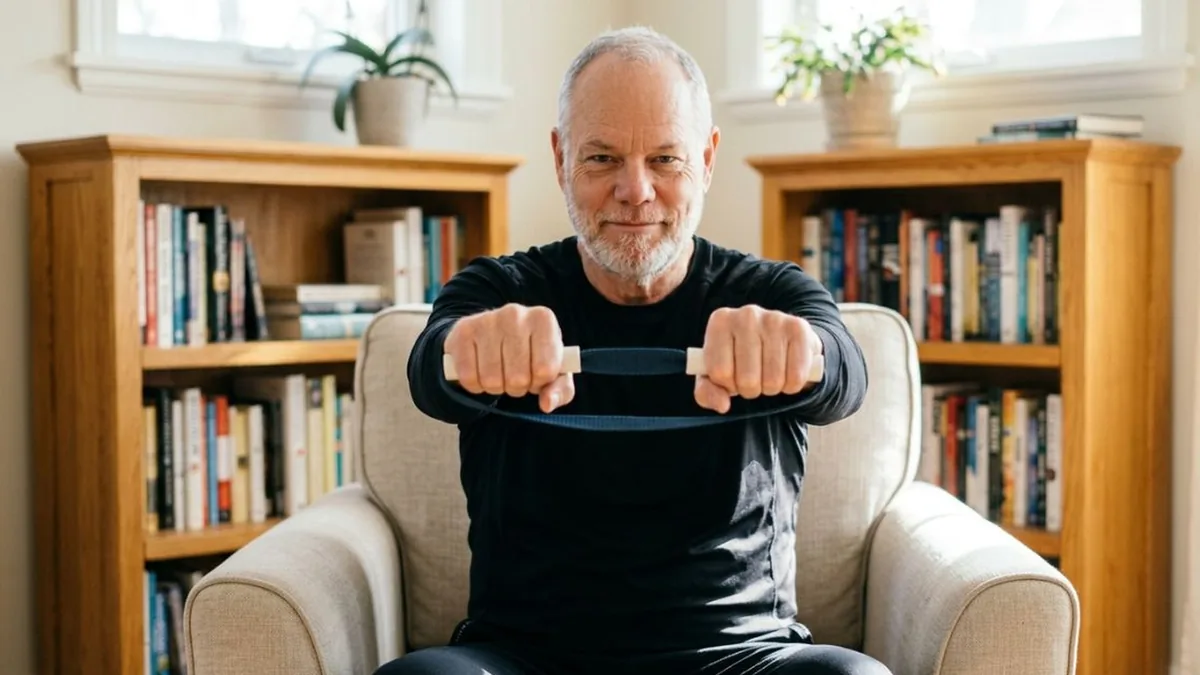
Why one shoulder can feel different
Many people have one shoulder that feels more sensitive than the other, or one that gets sore after certain tasks. A sensitive shoulder can come from several causes. Only a clinician can tell which one applies to you.
The goal here is simple. Keep moving gently, and do not load the sore side more than it can handle.
What the research says
- In stroke rehabilitation, training that moved both arms together improved shoulder movement more than training one arm alone [R14]. These results come from stroke patients, not from healthy adults or people with sore shoulders. Read them as an idea, not proof.
- Training that challenges joint position sense improved control in the trained wrist and in the opposite, untrained wrist [R15]. In plain words, the two sides of the body can learn from each other. That study was about the wrist.
- Shoulder problems often come with reduced joint position sense, the body's sense of where a joint is. Rehab tends to move through range, strength, then control and coordination [R16].
- There are no strong studies of two-arm training for a sore shoulder specifically.
What you can do
- Get checked first if you are unsure. Knowing the cause of a sore shoulder makes every later choice safer.
- Let the healthy arm lead. Keep the sore arm relaxed and at low effort. Move only within a pain-free range.
- Try it seated. Sit in a firm chair with your back supported. Let the healthier arm guide slow, small reaches.
- Stop short of sharp pain. A mild sense of effort is fine. Sharp pain, pins and needles, or weakness are signs to stop.
- Track the next morning. Note the effort you used and how the shoulder feels when you wake. Adjust from there.
Where ShoulderBack Pro fits — and where it doesn't
The two handles are joined by a fixed strap, so the healthy arm sets the pace and range while the sore side stays light. SeeSaw (alternate gentle reaches, one arm guiding the other) and Open The Door (elbows at sides, forearms swinging outward) both suit this, and both can be done seated. They are among the 16 video lessons.
It is a wellness tool, not a treatment, and there are no clinical trials of it yet. After surgery, follow your surgeon's or physio's protocol and use it only with their approval. If you want a guided, controlled option, you can order ShoulderBack Pro ($29, with a 30-day guarantee).
When to see a professional
The red flags below follow standard NHS and orthopaedic guidance [R30].
See a doctor or physiotherapist promptly if you have: pain after a fall or injury with sudden weakness or loss of movement; a shoulder that looks deformed, very swollen or bruised; fever or feeling unwell alongside the pain; chest pain or breathlessness (call emergency services); constant pain that doesn't change with rest or activity; pain that wakes you most nights; numbness, tingling or weakness into the arm or hand; pain in several joints at once; or pain that hasn't improved after a couple of weeks of sensible self-care.
Before any new routine, ask a clinician if you have severe osteoporosis, a recent fracture, an inflammatory arthritis flare, or have recently had surgery.
Try this movement
All 16 video lessons →Frequently asked questions
Can I exercise with one sore shoulder?
Often, yes, with low effort and a pain-free range. Ask a clinician first if you are not sure why it hurts.
Does the healthy arm do all the work?
In SBP the healthy arm can guide the sore side. You decide how much effort each arm gives, so you can keep the sore side light.
Will training the healthy arm help the sore one?
Some research suggests the two sides of the body can learn from each other. This has not been shown for shoulder pain specifically.
When should I stop?
Stop for sharp pain, sudden weakness, numbness, or pain that wakes you at night, and see a clinician.
Sources
- Journal of Physical Therapy Science (2016). The effects of bilateral movement training on upper limb function in chronic stroke patients. https://pmc.ncbi.nlm.nih.gov/articles/PMC5011582
- Scientific Reports (2021). Proprioceptive-focused training transfers gains to the opposite, untrained limb. https://pmc.ncbi.nlm.nih.gov/articles/PMC7935923
- Mureşan et al. (2022). Effects of a novel proprioceptive rehabilitation device on shoulder joint position sense, pain and function. Medicina. https://www.ncbi.nlm.nih.gov/pmc/articles/PMC9505091/
- NHS Greater Glasgow & Clyde, Shoulder red flags; NHS MPFT self-help, Shoulder pain; BESS/BOA pathway summary (2021). https://pmc.ncbi.nlm.nih.gov/articles/PMC7905504
More in this topic
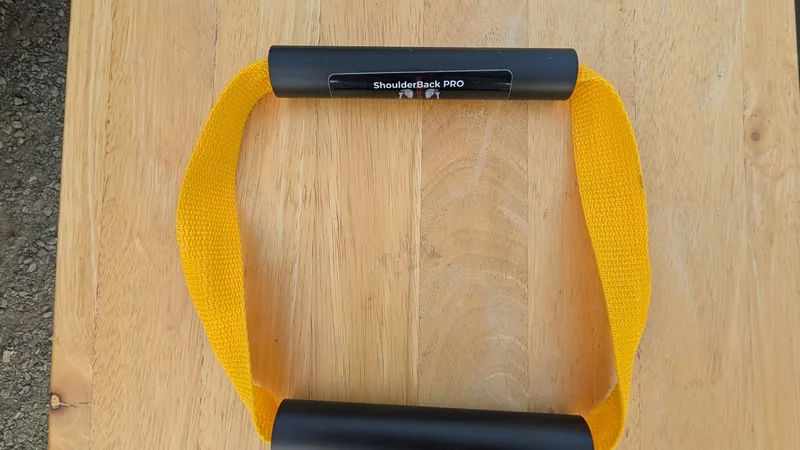 Essential guide: How ShoulderBack Pro Works: One Device, Two Connected Handles, Your Own Resistance
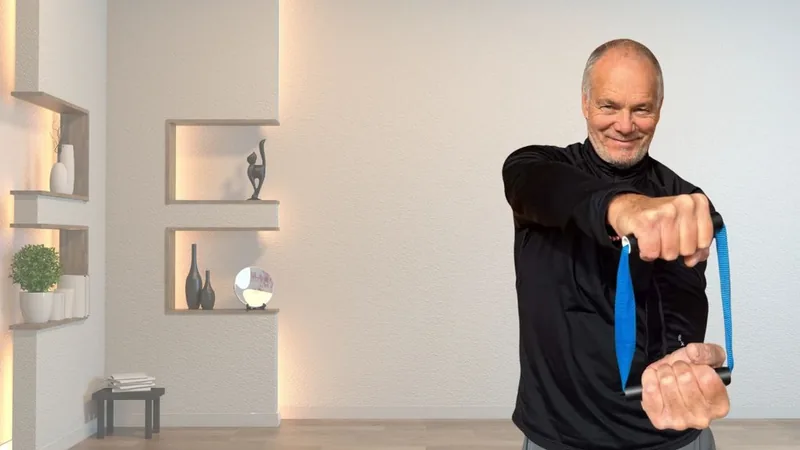 Pairing SBP With Walking: The Simplest Whole-Body Routine for Active Aging
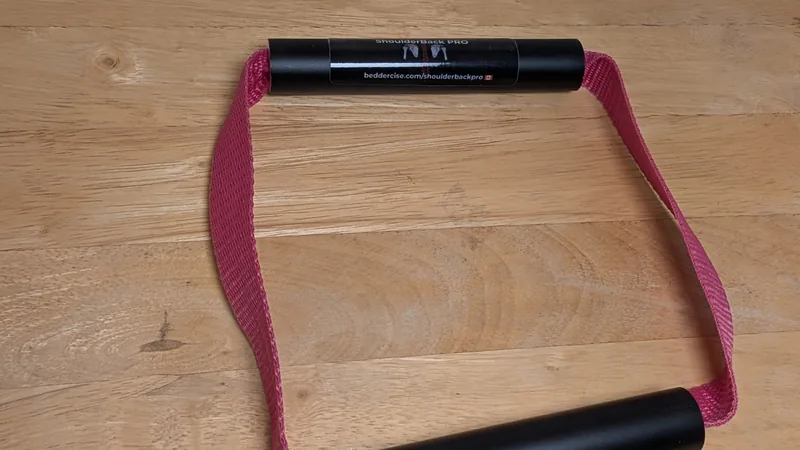 Locomotive: Rolling Circles for the Upper Back and Rear Cuff
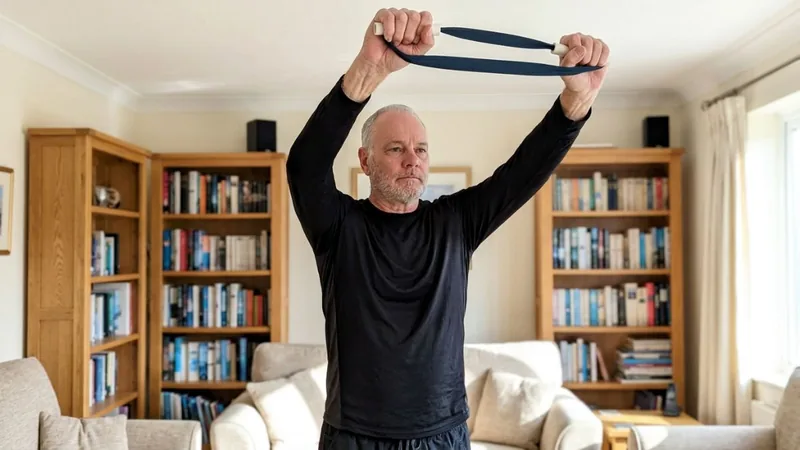 Overhead Press (High Shelf Reach): Trapezius and Deltoids Without a Weight