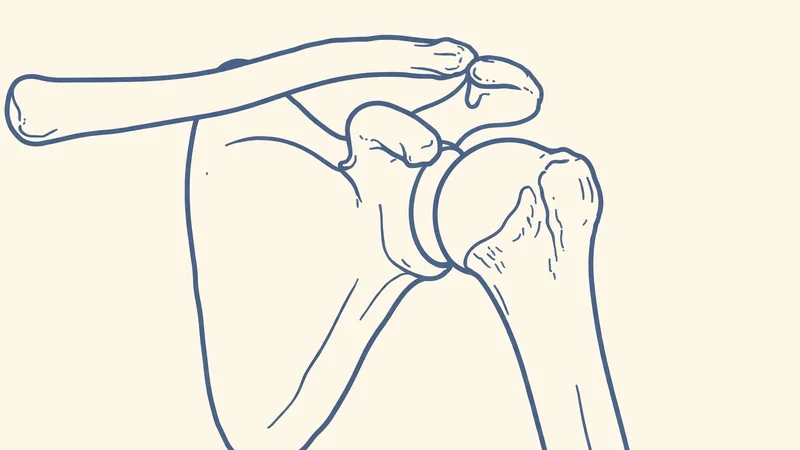
Shoulder anatomy & how it works
Upper Trapezius: Why It Gets Tight From Stress and What Helps
4-minute read · Published July 14, 2026 · Updated July 14, 2026
What this is
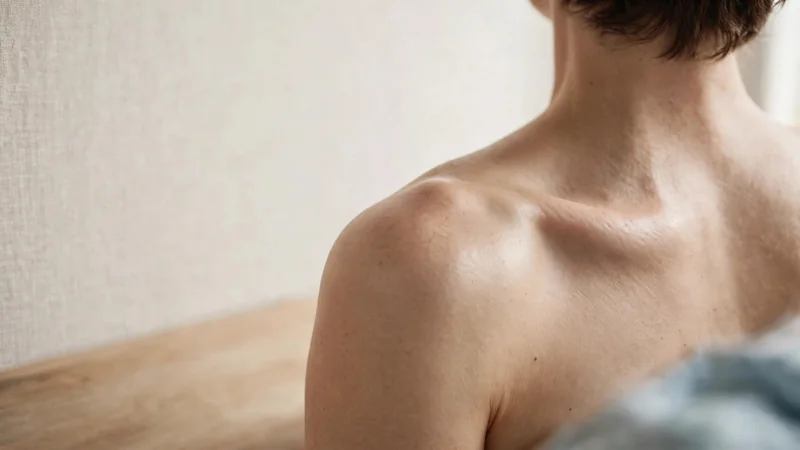
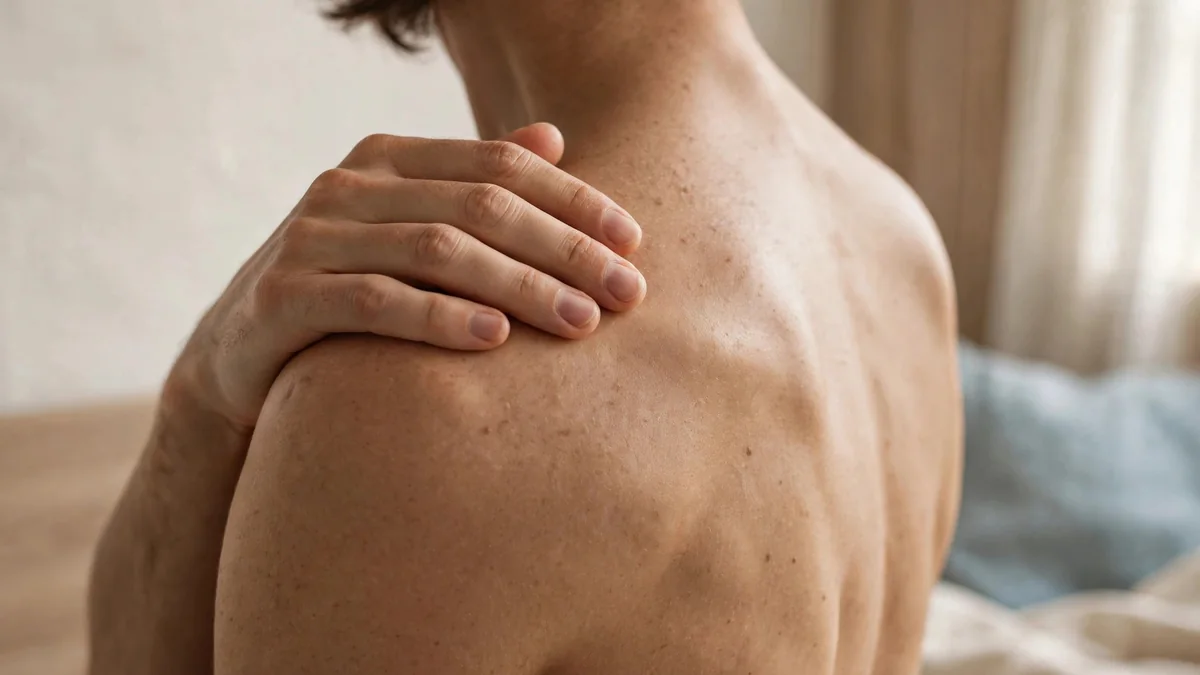
The upper trapezius is a broad, flat muscle that runs from the base of your skull, down across your shoulder, and out to the collarbone. It helps lift and shrug your shoulder and keep your head steady.
When you are stressed, many people brace their shoulders up toward their ears without noticing. The upper trapezius can hold that effort for long periods, and it can start to feel stiff or sore.
This is a common experience. It is not a diagnosis, and it does not mean the muscle is damaged. For the wider picture of how shoulder muscles work together, see how the shoulder works.
What the research says
- Posture is not a proven cause of pain. An umbrella review of 41 systematic reviews found no consensus that spinal posture causes low-back pain [R25].
- Posture is associated with neck pain. Forward head posture is associated with neck pain, and exercise-based programs are the main studied treatment. The word is "associated," not "causes" [R27].
- Strength, mobility and posture are each associated with shoulder pain in older adults. These are possible targets to work on, but the link to posture specifically is limited and indirect [R28].
What you can do
- Take a shoulder break every hour. Let your arms hang and roll your shoulders back and down. Seated: do this in your chair without standing.
- Breathe out into the shoulders. Take a slow breath in, then let your shoulders drop as you breathe out. Repeat five times.
- Gentle neck and shoulder reach. Sit tall, then slowly tilt your ear toward your shoulder and back. Stop before any pinch. Seated: this is seated by design.
- Practise shoulder-blade control. Draw your shoulder blades gently down and back, then relax. Many clinicians suggest this to build the muscles that balance the upper trapezius.
- See a clinician for ongoing tightness. If the tightness lingers or spreads, get it checked rather than pushing harder.
Where ShoulderBack Pro fits — and where it doesn't
The part it can help with is shoulder-blade movement. In SeeSaw, one arm guides the other through small alternating reaches, a calm way to practise moving the shoulder blades without shrugging. Try the SeeSaw routine slowly, or see the trainer.
It does nothing for stress itself or a neck problem, and no clinical trials of it exist yet. A screen break, heat or massage may be the better first step for many people.
When to see a professional
See a doctor or physiotherapist promptly if you have: pain after a fall or injury with sudden weakness or loss of movement; a shoulder that looks deformed, very swollen or bruised; fever or feeling unwell alongside the pain; chest pain or breathlessness (call emergency services); constant pain that doesn't change with rest or activity; pain that wakes you most nights; numbness, tingling or weakness into the arm or hand; pain in several joints at once; or pain that hasn't improved after a couple of weeks of sensible self-care.
Only a doctor, physiotherapist or other qualified clinician can diagnose the cause of neck or shoulder tightness.
Try this movement
SeeSaw (the muscles around the shoulder blade) →Frequently asked questions
Does posture cause upper trapezius pain?
The research does not show that posture alone causes pain. There is no consensus that spinal posture causes low-back pain, and posture is only associated with neck pain [R25][R27].
Can stress make it tight?
Many people feel more tension under stress, and tension can show up in the shoulders. The mechanism is not fully settled.
Will stretching fix it?
We cannot promise that. Gentle movement and strength work are reasonable things to try, and a clinician can tell you what suits you.
Sources
- Swain CTV et al. (2020). No consensus on causality of spine postures or physical exposure and low back pain: umbrella review of 41 systematic reviews. J Biomechanics. Cited as an umbrella review of 41 systematic reviews (Swain 2020). https://getfitcraft.com/guides/exercises-for-posture
- Healthcare (MDPI) 2023; 11(19):2604. Treatment of chronic neck pain in patients with forward head posture: systematic narrative review. https://www.mdpi.com/2227-9032/11/19/2604
- PMC narrative review (2026). Body composition, strength, mobility and posture associated with shoulder pain and disability in community-dwelling older adults. https://www.ncbi.nlm.nih.gov/pmc/articles/PMC13513864/