Shoulder anatomy & how it works
Triceps Long Head and Coracobrachialis: Two Arm Muscles That Cross the Shoulder
4-minute read · Published January 27, 2025 · Updated January 27, 2025
Why this happens: what the muscles do
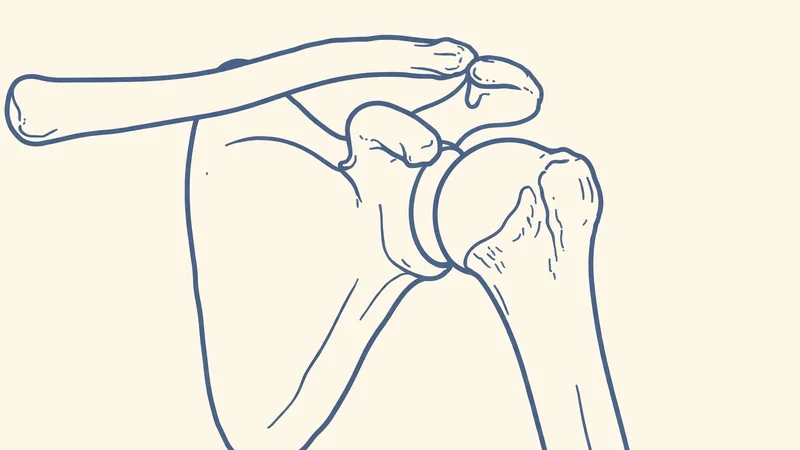
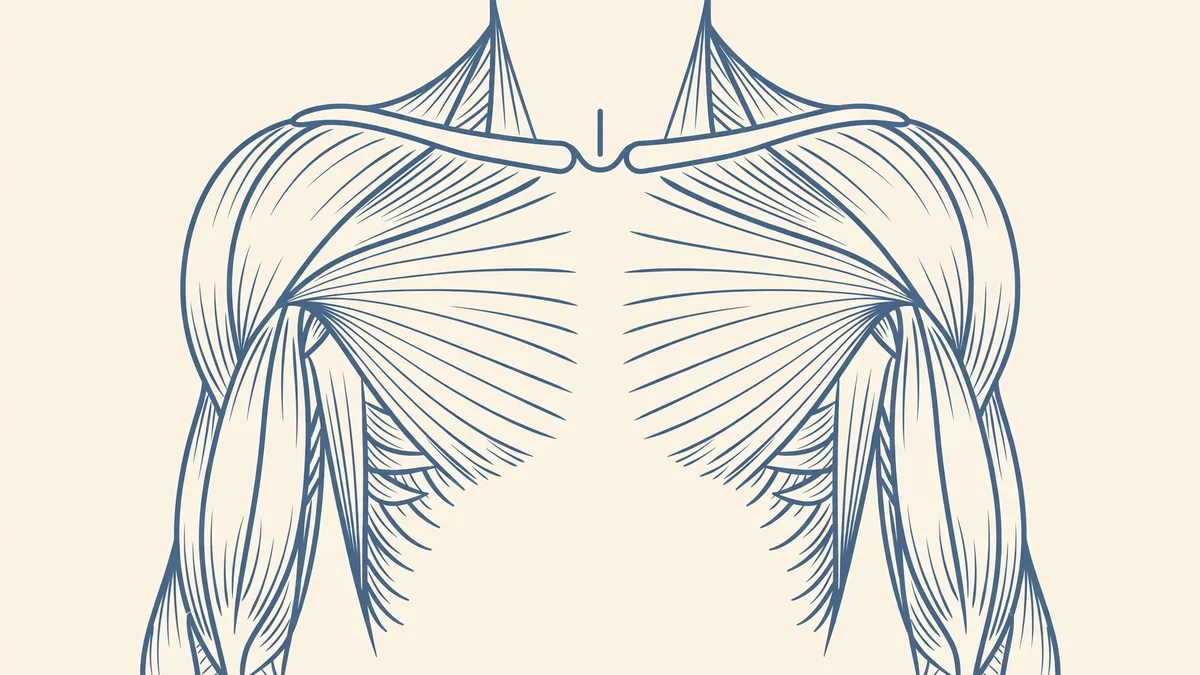
The triceps long head starts on the shoulder blade, just below the shoulder socket, and runs down the back of the arm to the elbow. Because it crosses the shoulder, it can help move the arm backward as well as straighten the elbow.
The coracobrachialis starts at the coracoid, a hook of bone on the front of the shoulder blade, and runs down the inside of the arm. It helps bring the upper arm forward and toward the body.
Both cross the shoulder joint, so changes in how they work can affect how the shoulder feels. For the wider picture, see how the shoulder works.
What the research says
There isn't research on these two muscles on their own, so their role in shoulder pain is plausible, not proven. Here is the closest evidence.
- Shoulder problems are linked with reduced joint position sense, which is associated with less accurate movement [R16].
- Two-arm training improved shoulder movement more than single-arm training in stroke rehabilitation [R14]. That is stroke evidence, not evidence from healthy adults.
What you can do
- Notice which movements bring on symptoms, such as reaching behind you or pushing up from a chair, and write them down.
- Get an assessment if you have arm pain, weakness, or numbness or tingling in the hand.
- Try a gentle elbow bend and straighten while seated, with your arm at your side and no weight in your hand.
- Ask a clinician before progressing any movement.
Where ShoulderBack Pro fits, and where it doesn't
The better first step is an assessment from a physiotherapist or doctor, who can tell you whether these muscles are involved. Once gentle movement is cleared, a pocket-size trainer such as ShoulderBack Pro is an optional general-conditioning tool for later, not a treatment for pain in these muscles. The routines page shows what it involves.
When to see a professional
See a doctor or physiotherapist promptly if you have: pain after a fall or injury with sudden weakness or loss of movement; a shoulder that looks deformed, very swollen or bruised; fever or feeling unwell alongside the pain; chest pain or breathlessness (call emergency services); constant pain that doesn't change with rest or activity; pain that wakes you most nights; numbness, tingling or weakness into the arm or hand; pain in several joints at once; or pain that hasn't improved after a couple of weeks of sensible self-care.
A doctor or physiotherapist is the person who can diagnose the cause of any arm or shoulder symptoms. This article cannot do that.
Try this movement
SeeSaw (the muscles around the shoulder blade) →Frequently asked questions
Can the triceps long head cause shoulder pain?
It can be involved in some shoulder problems because it crosses the joint. A clinician who examines you is the right person to decide whether it is part of your pain.
What does the coracobrachialis do?
It helps bring the upper arm forward and toward the body. It works with the other shoulder muscles, so it is rarely the only part of the story.
Should I stretch these muscles myself?
Not without advice first. If you have pain, numbness or weakness, see a clinician before starting any new movement.
Sources
- Mureşan et al. (2022). Effects of a novel proprioceptive rehabilitation device on shoulder joint position sense, pain and function. Medicina. https://www.ncbi.nlm.nih.gov/pmc/articles/PMC9505091/
- Journal of Physical Therapy Science (2016). The effects of bilateral movement training on upper limb function in chronic stroke patients. https://pmc.ncbi.nlm.nih.gov/articles/PMC5011582