Coordination, control & how ShoulderBack Pro works
Travel Shoulder Routine: A 160-Gram Trainer in a Carry-On
4-minute read · Published April 17, 2026 · Updated April 17, 2026
Why this happens / What this is
Travel is hard on shoulders in a particular way. Long flights and drives keep you seated and reaching in one position. Bags get lifted overhead and pulled off belts. Hotel beds and rental chairs can leave the shoulder blades in one place for hours. Many people notice stiffness after arrival.
What the research says
- Resisted, progressive exercise probably helps. For rotator-cuff-related shoulder pain, exercise that gets harder over time probably helps. Gentle movement with no load probably does not move the needle on pain [R01].
- Control and coordination may help. Programs that teach control may edge out generic exercise for shoulder disability in the short and medium term, though we don't fully know why [R02].
- Two-arm training has been studied in stroke rehab. In that research, training both arms together improved shoulder movement more than single-arm work [R14]. That study group was stroke patients, not healthy travellers. It is a reason the idea is interesting, not proof that it works for you.
- Travel routines have not been studied directly. Our sources do not test a travel routine. If you have a shoulder condition, evidence varies, so ask your clinician.
What you can do
Pick three moves for a short routine. All of them can be done seated.
- Shoulder rolls. Sit tall. Roll both shoulders back in slow circles, then forward. Keep your neck long and relaxed.
- Chair reach. Sit tall with your arms out in front at shoulder height. Slowly reach up as if placing something on a high shelf, stopping before any pinch.
- Gentle arm swings. Let your arms hang by your sides. Swing them gently forward and back through a small range to wake up the joint.
- Stand and walk, when it is safe. On a flight, once the seatbelt sign is off, stand and do a few slow shoulder circles as you walk.
Where ShoulderBack Pro fits — and where it doesn't
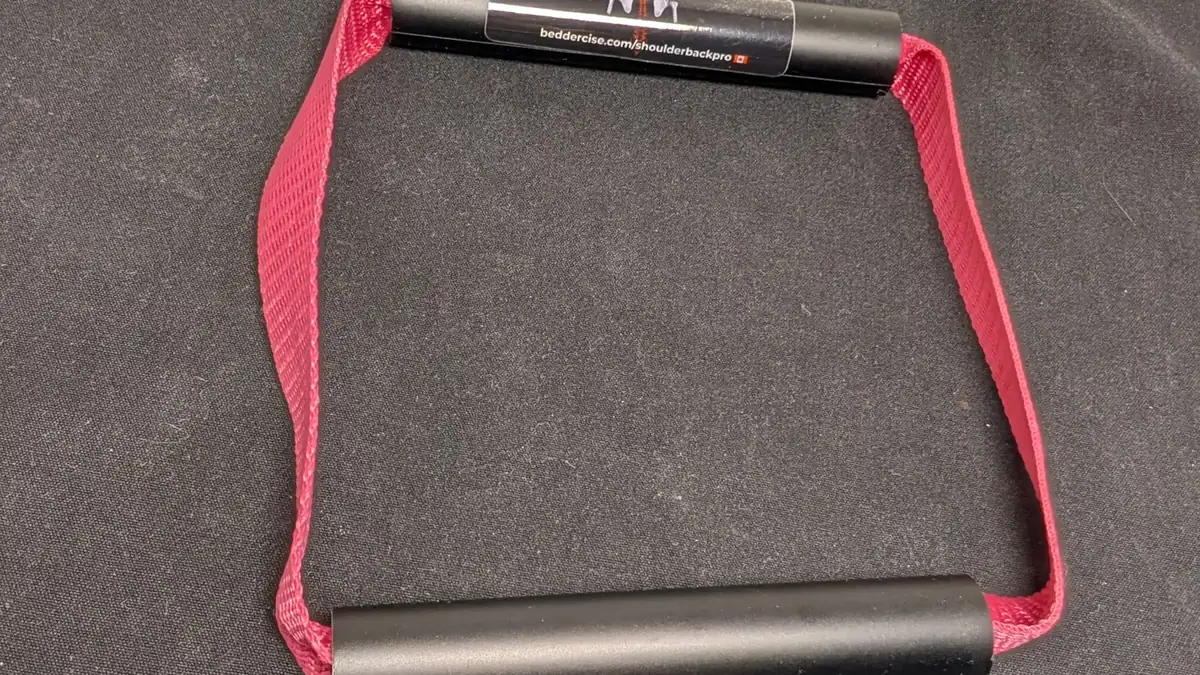
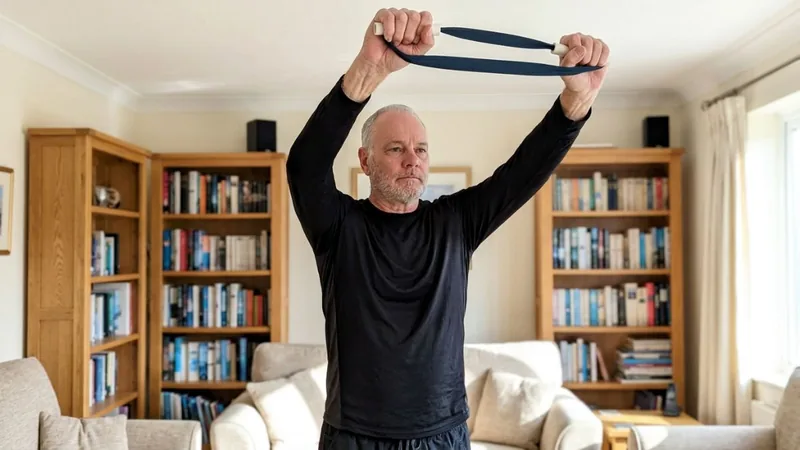
A 160-gram trainer with no anchors or weights is an easy thing to pack, and two of the 16 free video lessons suit a trip. SeeSaw alternates gentle reaches with one arm guiding the other, which works in a seat or a hotel room. Bear Hugs Me draws the trainer to your chest and adds a slow, wide breath after long sitting. Because your other arm supplies the resistance, you can press harder or go further as the week goes on, or keep it easy on a travel day.
It's not a medical device and not a treatment, and there is no trial evidence about it specifically. The trainer is $29 CAD with a 30-day guarantee, and the lessons are free to watch first.
When to see a professional
See a doctor or physiotherapist promptly if you have: pain after a fall or injury with sudden weakness or loss of movement; a shoulder that looks deformed, very swollen or bruised; fever or feeling unwell alongside the pain; chest pain or breathlessness (call emergency services); constant pain that doesn't change with rest or activity; pain that wakes you most nights; numbness, tingling or weakness into the arm or hand; pain in several joints at once; or pain that hasn't improved after a couple of weeks of sensible self-care. [R30]
Try this movement
All 16 video lessons →Frequently asked questions
Can I take ShoulderBack Pro on a plane?
Yes. It weighs 160 grams and is roughly 5 cm, so it fits in a carry-on. Check your airline's rules for any item you carry on.
Should I travel with a sore shoulder?
Not without advice if the pain is sharp, new or waking you at night. Ask a clinician before you start any routine, and stop at any movement that brings on pinching or sharp pain.
How long does a travel routine take?
It can take a few minutes. Many people do a short set between flight legs or at the start of each day of a trip.
Sources
- Naunton J et al. (2020). Effectiveness of progressive and resisted and non-progressive or non-resisted exercise in rotator cuff related shoulder pain: systematic review and meta-analysis of RCTs. Clinical Rehabilitation. https://search.pedro.org.au/search-results/record-detail/61404
- Dubé M-O et al. (2024). The Efficacy of Exercise Therapy for Rotator Cuff-Related Shoulder Pain According to the FITT Principle: Systematic Review With Meta-analyses. JOSPT. https://pubmed.ncbi.nlm.nih.gov/38848304/
- Journal of Physical Therapy Science (2016). The effects of bilateral movement training on upper limb function in chronic stroke patients. https://pmc.ncbi.nlm.nih.gov/articles/PMC5011582
- NHS Greater Glasgow & Clyde, Shoulder red flags; NHS MPFT self-help, Shoulder pain; BESS/BOA pathway summary (2021). https://pmc.ncbi.nlm.nih.gov/articles/PMC7905504
More in this topic
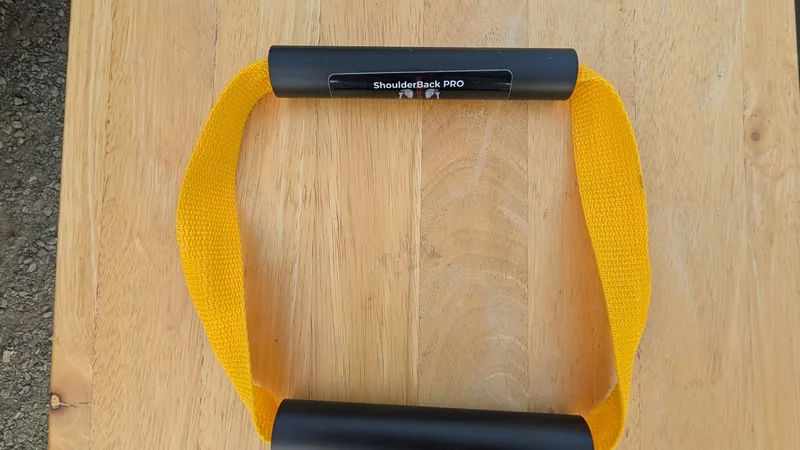 Essential guide: How ShoulderBack Pro Works: One Device, Two Connected Handles, Your Own Resistance
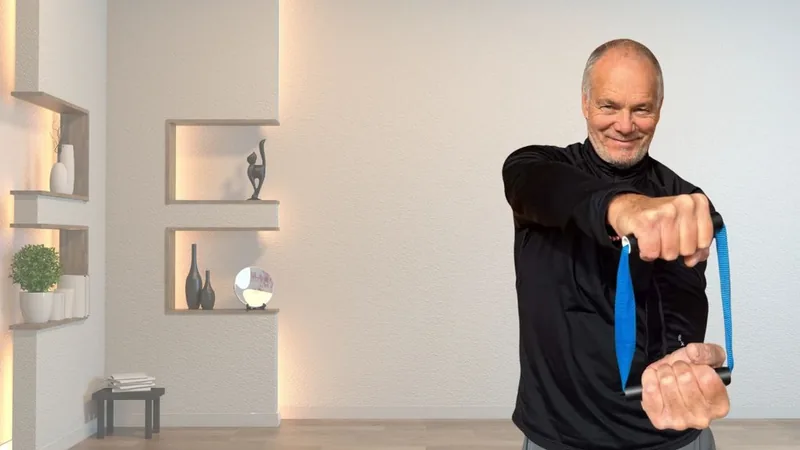 Pairing SBP With Walking: The Simplest Whole-Body Routine for Active Aging
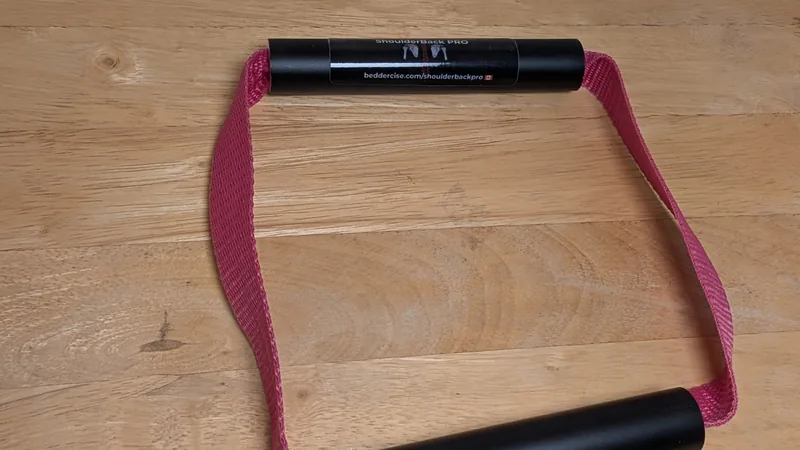 Locomotive: Rolling Circles for the Upper Back and Rear Cuff
 Overhead Press (High Shelf Reach): Trapezius and Deltoids Without a Weight