Coordination, control & how ShoulderBack Pro works
The Three 3-Minute Rituals: Refreshing Awareness, Greet the Morning, Vitality & Posture
5-minute read · Published January 27, 2026 · Updated January 27, 2026
Why this happens / What this is
Many people sit for long periods and then move in a hurry. The shoulders can feel tight, and the upper back may feel heavy by the afternoon. A short, planned routine gives the shoulders a regular chance to move through a range they may not use all day. Many people find it easier to keep a habit when it has a clear start and finish. Three minutes is a small, defined commitment.
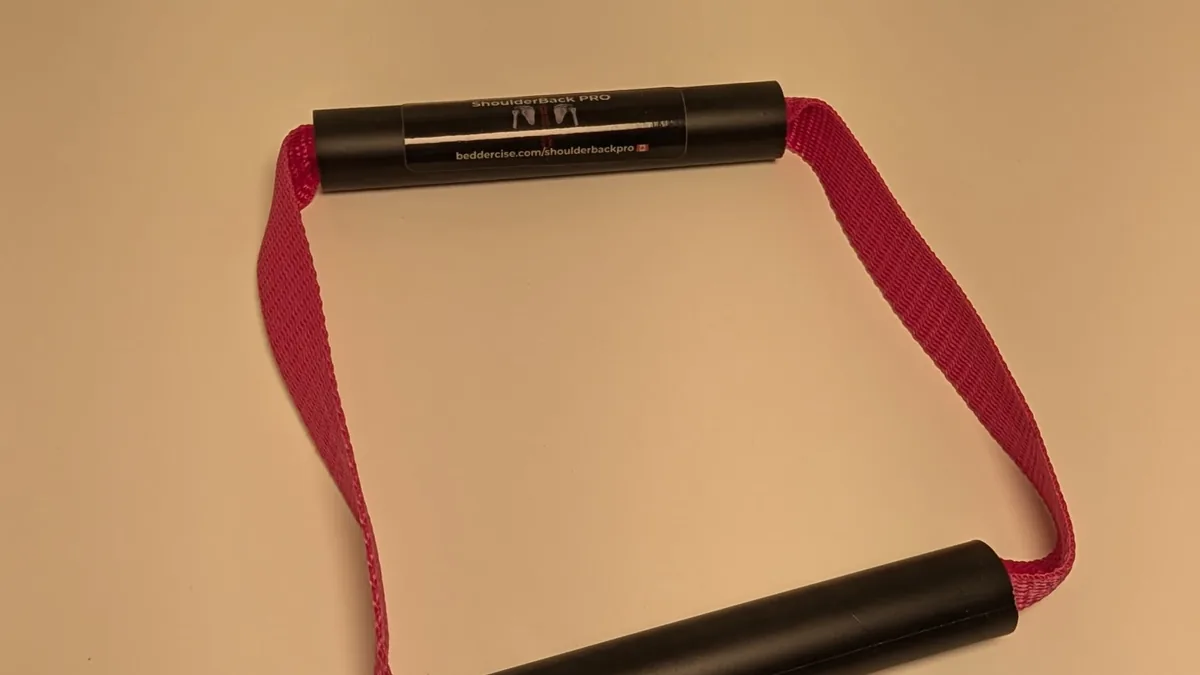
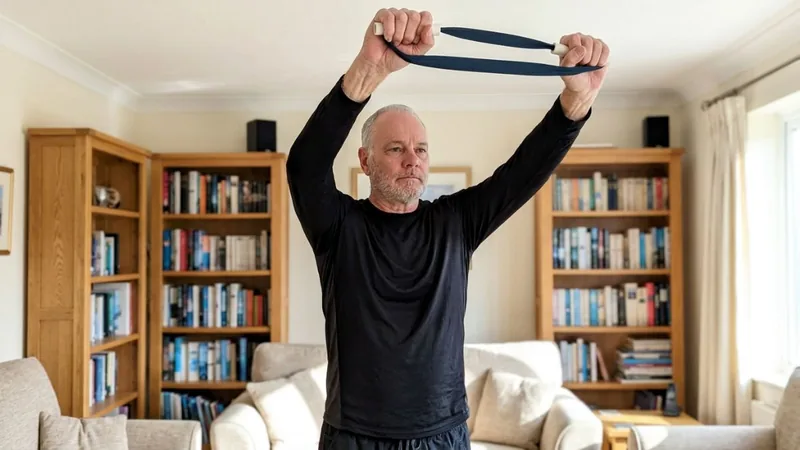
ShoulderBack Pro is a 160-gram trainer with two handles joined by a fixed-length strap. One arm assists while the other resists. You set the effort, pace and range, and nothing stretches, snaps or drops. Each ritual is built from movements that the guided lessons teach step by step.
What the research says
- Exercise with resistance that builds gradually is the type most likely to help shoulder pain more than gentle, unloaded movement alone [R01]. The rituals are mainly about controlled movement. The resistance comes from your other arm, so they become more strengthening as you resist harder, move through more range, or do longer sets.
- Adults are advised to add muscle-strengthening work on at least two days a week, and every bit of activity counts toward the total [R07].
- Bilateral training, where both arms work together, improved shoulder movement more than single-arm training in stroke rehabilitation [R14]. That is evidence from stroke patients, not from healthy adults or from ShoulderBack Pro itself. It is a reason the two-arm idea is interesting, not proof that it works for you.
What you can do
Each ritual is designed to take about three minutes. Start with one, and add the others when you feel ready. Keep the pace slow enough that you could talk through it. If a movement sharpens pain, skip it and try again later.
- Refreshing Awareness. This ritual uses three movements: SeeSaw, Open The Door and Windshield Wipers. SeeSaw is an alternating reach where one arm guides the other. Open The Door has your elbows at your sides and your forearms swing outward. Windshield Wipers are slow side-to-side arcs.
- Greet the Morning. This ritual uses Around the World, Steering and Bear Hugs Me. Around the World is one large, unhurried circle in front of you. Steering is a turn of an imaginary wheel, ten-and-two. Bear Hugs Me draws the trainer to your chest while you breathe wide.
- Vitality & Posture. This ritual uses Crosscuts, Overhead Press and Locomotive. Crosscuts is a diagonal glide from a high shoulder to the opposite hip. Overhead Press is a reach up as if placing a teacup on a high shelf. Locomotive is rolling forward circles like train wheels.
For a seated routine, sit tall in an armchair with your feet flat and your back supported. Keep the range small and the pace slow. Stop any movement that sharpens pain, and rest between rituals if you need to.
Where ShoulderBack Pro fits — and where it doesn't
If you want one place to begin, try Refreshing Awareness: SeeSaw has one arm guide the other, and Open The Door works the back of the shoulder with your elbows at your sides. The 16 video lessons are free and taught by the inventor, Van Hill, and the printable card helps once you know the movements. ShoulderBack Pro is a wellness tool, not a treatment, and has no clinical trials; a clinician's plan or a different tool may be the better first step for some people. It is $29 CAD with a 30-day guarantee (shop).
When to see a professional
See a doctor or physiotherapist promptly if you have: pain after a fall or injury with sudden weakness or loss of movement; a shoulder that looks deformed, very swollen or bruised; fever or feeling unwell alongside the pain; chest pain or breathlessness (call emergency services); constant pain that doesn't change with rest or activity; pain that wakes you most nights; numbness, tingling or weakness into the arm or hand; pain in several joints at once; or pain that hasn't improved after a couple of weeks of sensible self-care.
Only a clinician can diagnose the cause of shoulder pain. Before starting any ritual, check with a clinician if you have had surgery, a recent fracture, or a condition that affects your bones or joints.
Try this movement
All 16 video lessons →Frequently asked questions
Are the three rituals meant to be done in a particular order?
No. Many people use one ritual a day, or choose the one that fits their morning. Try them in any order and keep the one you enjoy most.
Can I do the rituals seated?
Yes. Each ritual can be done from an armchair, with your back supported and your feet flat on the floor. Stand only when that feels comfortable.
How often should I practise?
Daily practice is a common habit, but recovery matters too. National activity guidance suggests strength work on at least two days a week, so a short daily session is a flexible way to meet that.
Do the rituals replace physiotherapy?
No. ShoulderBack Pro is not a treatment and does not replace a clinician's plan. If you have a diagnosed shoulder problem, follow your clinician's advice first.
Sources
- WHO (2020). Guidelines on physical activity and sedentary behaviour. University of Sydney summary of WHO 2020. https://www.sydney.edu.au/news-opinion/news/2020/11/26/new-global-guidelines-on-physical-activity-and-sedentary-behavio.html
- Naunton J et al. (2020). Effectiveness of progressive and resisted and non-progressive or non-resisted exercise in rotator cuff related shoulder pain: systematic review and meta-analysis of RCTs. Clinical Rehabilitation. https://search.pedro.org.au/search-results/record-detail/61404
- Journal of Physical Therapy Science (2016). The effects of bilateral movement training on upper limb function in chronic stroke patients. https://pmc.ncbi.nlm.nih.gov/articles/PMC5011582
More in this topic
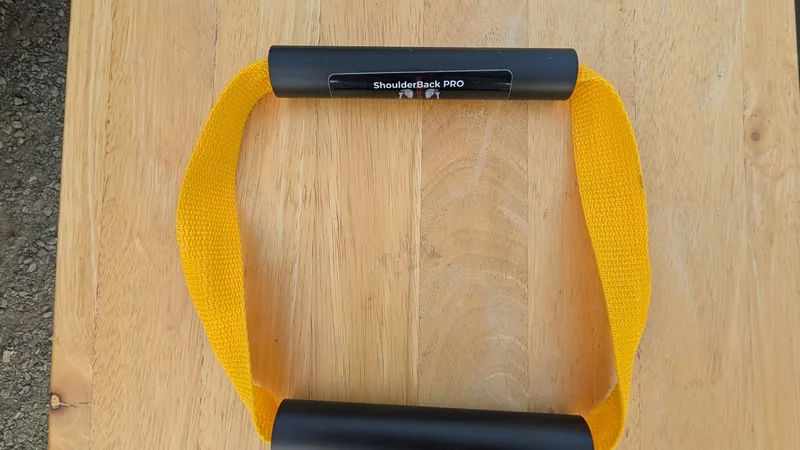 Essential guide: How ShoulderBack Pro Works: One Device, Two Connected Handles, Your Own Resistance
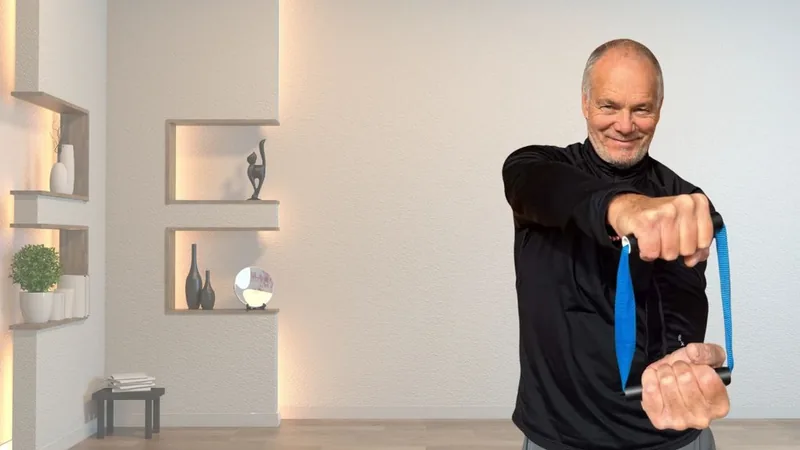 Pairing SBP With Walking: The Simplest Whole-Body Routine for Active Aging
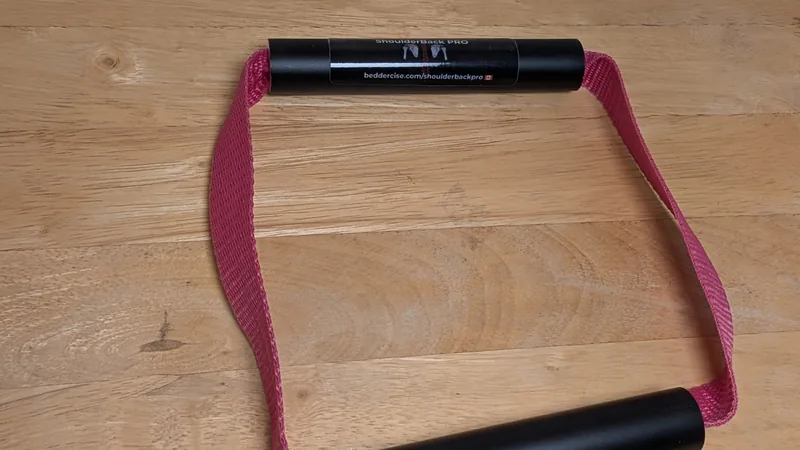 Locomotive: Rolling Circles for the Upper Back and Rear Cuff
 Overhead Press (High Shelf Reach): Trapezius and Deltoids Without a Weight