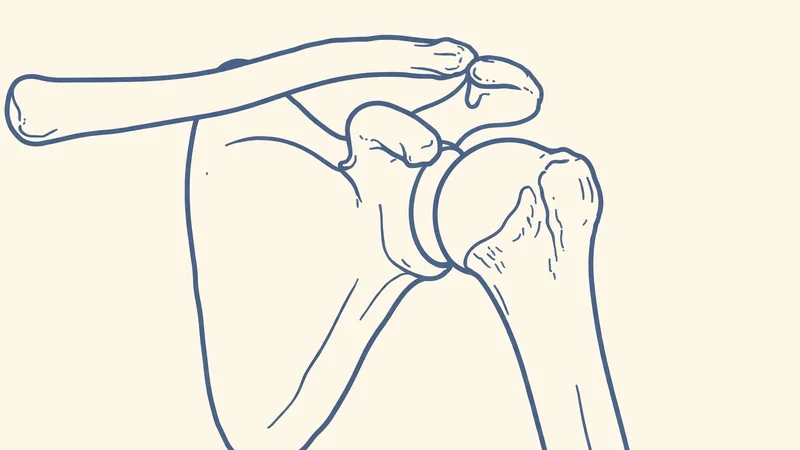
Shoulder anatomy & how it works
Teres Major: The 'Little Lat' and Why It Matters for Reaching Behind You
4-minute read · Published August 20, 2026 · Updated August 20, 2026

What this muscle is
The teres major is a thick, band-like muscle on the back of your shoulder blade (the scapula). It attaches to the upper arm bone (the humerus). Its job is to help pull the arm back and down, and to turn it inward.
It sits close to the latissimus dorsi, the broad "lat" muscle of the back. That closeness is why many people call it the "little lat."
Why it matters for daily life
Think about reaching behind you for a seatbelt, tucking in a shirt, or fastening a bra. These movements use the teres major along with other muscles around the shoulder blade.
Many people notice that reaching behind them feels harder when the shoulder muscles are tired or stiff. That is an everyday experience, not a diagnosis.
What the research says
- In adults 60 and older, strength, mobility, body composition and posture are each linked to shoulder pain and disability. These are factors that can change over time [R28]. The evidence on posture in older adults is limited.
- Scapular stabilization exercises, which train the muscles that steady the shoulder blade, improved pain and function in a 2025 review [R03].
- Rehab often moves in stages: range of motion first, then strength, then motor control and coordination [R16].
- There isn't strong research on the teres major specifically; the findings above are about the wider shoulder-blade team.
What you can do
- Test your reach gently. Slowly reach one hand behind your back, then the other. Stop at any pinching or sharp pain.
- Try seated shoulder-blade slides. Sit tall, gently draw your shoulder blades down and back, hold for a few breaths, then release.
- Build range before effort. Use slow, comfortable reaches first. Add more effort only when the movement feels smooth. Seated or standing both work.
Where ShoulderBack Pro fits — and where it doesn't
The site lists Resisting Arrest (trainer behind your back, glide the hands apart) as designed to work the lats and scapular depressors, the neighbours of the teres major, and Crosscuts for the lats on a diagonal. In both, one arm resists the other, so you choose the effort. Neither isolates the teres major, and the trainer cannot tell you why your reach hurts. It's a wellness product, not a medical device, and no clinical trial has studied it.
For the bigger picture, see how the shoulder works, or see the routines page and the trainer.
When to see a professional
See a doctor or physiotherapist promptly if you have: pain after a fall or injury with sudden weakness or loss of movement; a shoulder that looks deformed, very swollen or bruised; fever or feeling unwell alongside the pain; chest pain or breathlessness (call emergency services); constant pain that doesn't change with rest or activity; pain that wakes you most nights; numbness, tingling or weakness into the arm or hand; pain in several joints at once; or pain that hasn't improved after a couple of weeks of sensible self-care.
Try this movement
SeeSaw (the muscles around the shoulder blade) →Frequently asked questions
Where is the teres major?
It sits on the back of the shoulder blade, low and to the outside. It runs from the shoulder blade to the upper arm bone.
Can I train the teres major on its own?
Shoulder muscles usually work as a team. A clinician or physiotherapist can tell you which movements suit you.
Does reaching behind me mean something is wrong?
Not on its own. Persistent pain, weakness or numbness needs an assessment.
Sources
- Frontiers in Bioengineering & Biotechnology (2025). Specific modes of exercise to improve rotator cuff-related shoulder pain: systematic review and meta-analysis. https://pmc.ncbi.nlm.nih.gov/articles/PMC12011739/
- Mureşan et al. (2022). Effects of a novel proprioceptive rehabilitation device on shoulder joint position sense, pain and function. Medicina. https://www.ncbi.nlm.nih.gov/pmc/articles/PMC9505091/
- PMC narrative review (2026). Body composition, strength, mobility and posture associated with shoulder pain and disability in community-dwelling older adults. https://www.ncbi.nlm.nih.gov/pmc/articles/PMC13513864/