Ancient wisdom & traditional movement practices
Sun Salutations and the Shoulder: A Movement-by-Movement Look
5-minute read · Published November 28, 2024 · Updated November 28, 2024
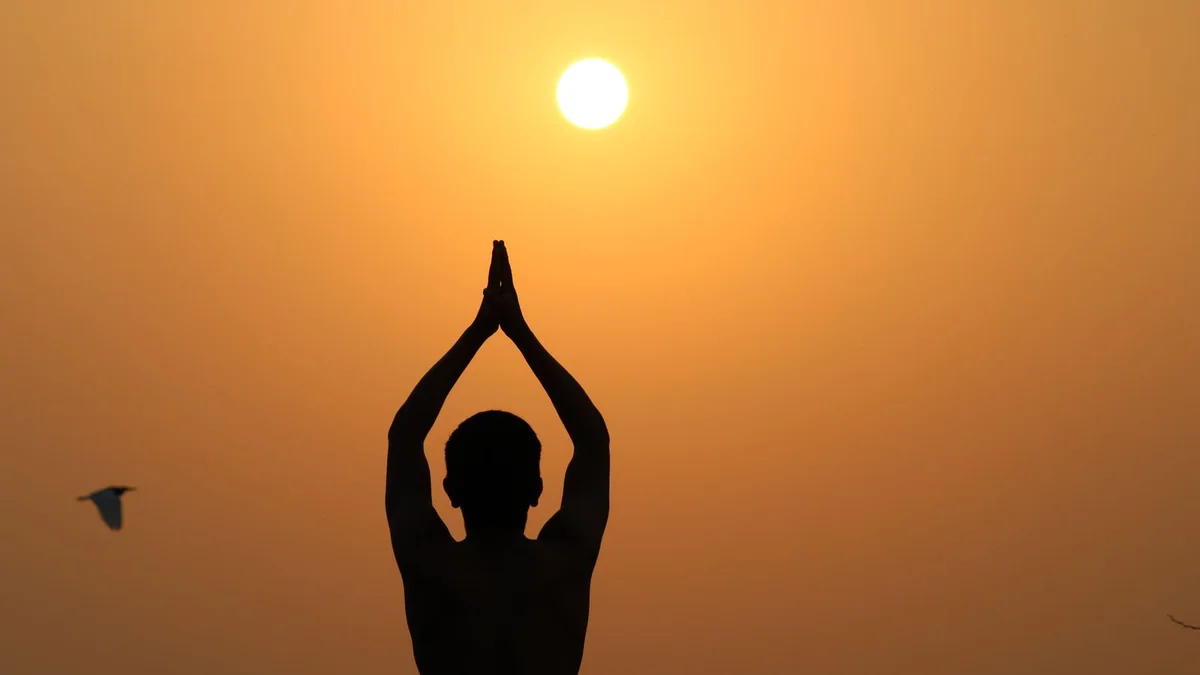
What this is
Sun salutations are a flowing sequence, usually repeated several times. The movements include a reach overhead, a forward bend, a step back into a plank or push-up position, and a return to standing. Each part asks something different of the shoulder.
The shoulder blade has to move smoothly on the ribs, and the arm has to hold weight in positions it does not always meet in daily life. Overhead reach asks for range. Plank and push-up asks for strength and stability. Rotation asks for control. A movement-by-movement look helps you choose which parts to adapt.
What the research says
Several modern trials test traditional movement in older adults. A Thai Yoga trial of 12 weeks, with two 90-minute sessions a week, improved chair stands, arm curls, sit-and-reach, back scratch and a six-minute walk compared with a control group in sedentary adults over 60 [R11]. An Iyengar yoga pilot found that twice-weekly yoga for 12 weeks improved standing balance and mobility in adults around 68 [R12].
A review of tai chi and qigong trials in adults 55 and over found they may help physical function and reduce fall risk, blood pressure, depression and anxiety [R10]. These trials are about yoga, tai chi and qigong, not about sun salutations specifically.
The quality of these studies varies, and most are small. Be cautious about strong claims, and remember that a result in one group does not guarantee the same result for you (evidence varies, ask your clinician).
What you can do
- Start seated. Sit tall in a sturdy chair and practise the arm sweep overhead, the side bend and the seated twist. Keep each movement within a comfortable range.
- Skip the plank if your shoulder is sore. The push-up and plank positions put a lot of load through the shoulders. Use a wall or a chair instead, or leave them out for now.
- Slow the overhead reach. Sweep your arms up and out, then lower them with control. Avoid pushing into pain or arching the lower back.
- Use circles to warm up. Slow, controlled arm circles, both directions, help prepare the shoulder before the sequence.
- Build up gradually. Repeat the sequence two or three times, and stop if pain sharpens, wakes you at night or comes with numbness or weakness.
Where ShoulderBack Pro fits — and where it doesn't
Around the World is the lesson that lines up with the circling and overhead parts of a sun salutation. You draw one large, unhurried circle in front of you while the other arm resists, which works the serratus anterior and lower trapezius that help the shoulder blade move with the arm. To progress, resist harder, circle through more range or do longer sets. Do it seated or standing, and find it in the 16 video lessons.
It does not teach the standing poses, balance, breath work or the plank, so a qualified yoga teacher who knows your shoulder history is the better place for those. It is not a medical device and not a treatment, and there is no trial evidence about it specifically. The trainer is here.
For the broader picture, read ancient wisdom for strong shoulders and the tai chi and shoulders guide.
When to see a professional
See a doctor or physiotherapist promptly if you have: pain after a fall or injury with sudden weakness or loss of movement; a shoulder that looks deformed, very swollen or bruised; fever or feeling unwell alongside the pain; chest pain or breathlessness (call emergency services); constant pain that doesn't change with rest or activity; pain that wakes you most nights; numbness, tingling or weakness into the arm or hand; pain in several joints at once; or pain that hasn't improved after a couple of weeks of sensible self-care.
Try this movement
Around the World (circles, both arms) →Frequently asked questions
Are sun salutations safe for sore shoulders?
Not without adjustment. The push-up and plank positions load the shoulders heavily. If your shoulder hurts, use a seated or modified version and check with a clinician first.
Do I need to be flexible to start?
No. A Thai Yoga trial enrolled sedentary adults over 60, not experienced practitioners. Start with the range that feels comfortable and build slowly.
Is this ancient practice proven to help?
Being old does not make a practice proven. Some modern trials of yoga, tai chi and qigong show benefits for older adults, but most are small and the results vary.
Sources
- Rogers CE, Larkey LK, Keller C (2009). A review of clinical trials of tai chi and qigong in older adults. West J Nurs Res 31(2):245-79. https://qigonginstitute.org/abstract-print/4690
- Noradechanunt C, Worsley A, Groeller H (2017). Thai Yoga improves physical function and well-being in older adults: a randomised controlled trial. J Sci Med Sport. https://ro.uow.edu.au/smhpapers/4599
- Tiedemann A et al. (2013). A 12-week Iyengar yoga program improved balance and mobility in older community-dwelling people: pilot RCT. J Gerontol A. https://www.qigonginstitute.org/abstract-print/9524
More in this topic
 Essential guide: Ancient Wisdom for Strong Shoulders: What Traditional Movement Got Right (and What Science Adds)
 The Chinese Medicine Clock and Morning Movement: Fun Framing, Real Habit
 Cold Water and Shoulders: From Nordic Plunges to Modern Ice Baths
 Ancient Massage Traditions: Thai, Tui Na, Lomi Lomi — Comfort vs Proof