Coordination, control & how ShoulderBack Pro works
Strength Through Movement: Why Control Matters More Than Load for Everyday Shoulders
6-minute read · Published October 9, 2025 · Updated October 9, 2025
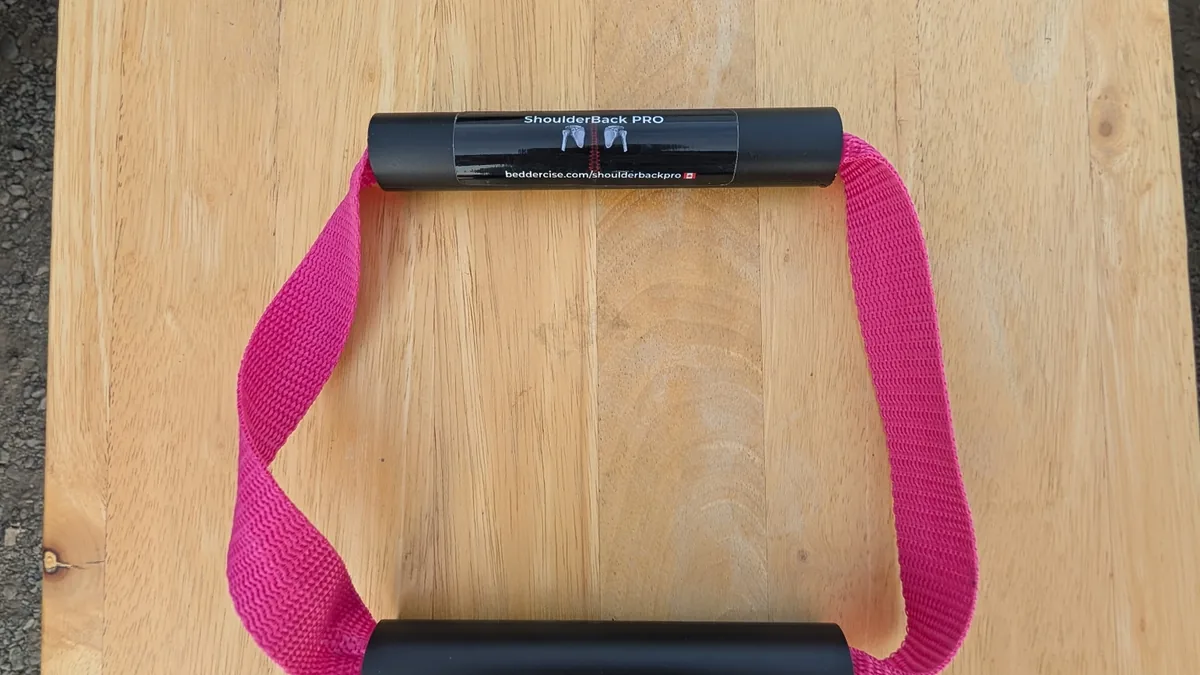
What "control" means in a shoulder
Control is the ability to start, guide, slow and stop a movement smoothly. It depends on the nervous system as much as the muscles. When you reach for a cup, your brain decides which muscles to switch on, how strongly and in what order. Good control means those decisions are timely and even.
Load is different. Load is how much resistance a movement works against. You can have plenty of load and still move with poor control, and you can move with good control at very light load. Both matter, and they work together.
Why it matters for everyday life
Everyday shoulder tasks, like reaching overhead, lifting a bag or pulling a door, rely on smooth coordination. A shoulder that moves with control can handle these tasks with less strain and more confidence. A shoulder that lacks control may feel wobbly, jerky or easily tired.
Control also shapes how we move when the shoulder is sore. People often guard, moving stiffly or avoiding reaches. Many clinicians suggest gentle, controlled practice gives the nervous system a chance to relearn smooth patterns.
What the research says
- In rotator cuff-related shoulder pain, progressive, resisted exercise showed a benefit of uncertain clinical importance versus no treatment. Non-resisted, non-progressive exercise showed no significant benefit [R01]. Resisted exercise that gets a little harder over the weeks probably helps.
- Motor-control programs reduce shoulder disability slightly more than non-specific exercise in the short and medium term. The certainty is moderate, and it is unclear whether control itself is the reason [R02].
- A 2025 review found that scapular stabilization exercise improved pain and function, and that mobilization or stretching and handgrip exercise were also linked with better outcomes [R03].
- In stroke rehabilitation, training both arms together improved shoulder movement more than single-arm training [R14]. This research is from stroke patients, not healthy adults, so treat it as an idea to explore rather than proof.
- Shoulder disorders go with reduced joint position sense, and that sense influences how accurately we move [R16]. That is one reason slow, attentive practice is thought to be worthwhile.
What you can do
- Start with control, not load. Choose a slow, comfortable movement and aim for smoothness. Seated option: sit in an armchair with your back supported.
- Count the quality, not the reps. Five smooth repetitions beat fifteen rushed ones. Pause at the end of each range.
- Use both arms. A guiding pattern, where one arm steers the other, asks for control on both sides. Many people find this easier to keep going with than a single hard exercise.
- Add effort slowly. When a movement feels steady and pain-free for a couple of weeks, you can consider resisting a little harder with the other arm, moving through more range, or doing longer sets. Change one thing at a time.
- Track how it feels. Note whether the movement is smoother, steadier and more even. Write it down in a notebook.
- Get a clinician's view on load. Before adding weights or resistance, especially with a diagnosed condition or a recent injury, ask a clinician or physiotherapist.
Where ShoulderBack Pro fits and where it doesn't
Because one arm guides while the other resists, ShoulderBack Pro puts control first and lets you set the load yourself. SeeSaw, which the site lists as working the shoulder-blade stabilizers, is a good place to feel even, alternating reaches. Open The Door (infraspinatus and rhomboid major) asks for slow, matched swings of both forearms. Both work seated. It's a wellness tool, not a treatment, and there are no clinical trials of it. Browse the 16 lessons on the routines page, or see the trainer. For heavier progressive loading, a physiotherapist may suggest something else.
When to see a professional
See a doctor or physiotherapist promptly if you have: pain after a fall or injury with sudden weakness or loss of movement; a shoulder that looks deformed, very swollen or bruised; fever or feeling unwell alongside the pain; chest pain or breathlessness (call emergency services); constant pain that doesn't change with rest or activity; pain that wakes you most nights; numbness, tingling or weakness into the arm or hand; pain in several joints at once; or pain that hasn't improved after a couple of weeks of sensible self-care.
Try this movement
All 16 video lessons →Frequently asked questions
Is control more important than load?
Both matter. Research suggests resisted, progressive exercise helps, and control-focused programs may help slightly more than generic exercise. The best mix depends on your situation.
How do I know if my control is improving?
Notice whether the movement feels smoother, steadier and more even on both sides. Track it over several weeks, and ask a clinician if you see no change.
Can I train control seated?
Yes. Many control exercises work well seated, which makes them useful for older adults and for people who prefer a stable position.
Does this mean I should avoid lifting weights?
No. Many people benefit from resistance training. Ask a clinician before adding load if you have a diagnosed shoulder problem or a recent injury.
Sources
- Naunton J et al. (2020). Effectiveness of progressive and resisted and non-progressive or non-resisted exercise in rotator cuff related shoulder pain: systematic review and meta-analysis of RCTs. Clinical Rehabilitation. https://search.pedro.org.au/search-results/record-detail/61404
- Dubé M-O et al. (2024). The Efficacy of Exercise Therapy for Rotator Cuff-Related Shoulder Pain According to the FITT Principle: Systematic Review With Meta-analyses. JOSPT. https://pubmed.ncbi.nlm.nih.gov/38848304/
- Frontiers in Bioengineering & Biotechnology (2025). Specific modes of exercise to improve rotator cuff-related shoulder pain: systematic review and meta-analysis. https://pmc.ncbi.nlm.nih.gov/articles/PMC12011739/
- Journal of Physical Therapy Science (2016). The effects of bilateral movement training on upper limb function in chronic stroke patients. https://pmc.ncbi.nlm.nih.gov/articles/PMC5011582
- Mureşan et al. (2022). Effects of a novel proprioceptive rehabilitation device on shoulder joint position sense, pain and function. Medicina. https://www.ncbi.nlm.nih.gov/pmc/articles/PMC9505091/
More in this topic
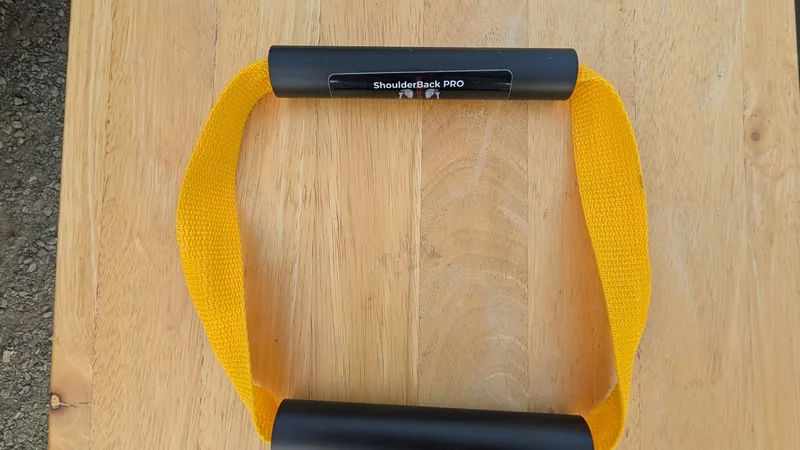 Essential guide: How ShoulderBack Pro Works: One Device, Two Connected Handles, Your Own Resistance
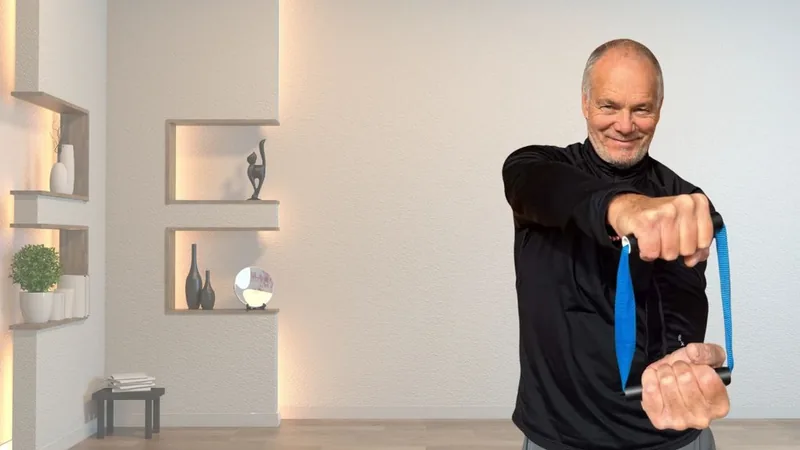 Pairing SBP With Walking: The Simplest Whole-Body Routine for Active Aging
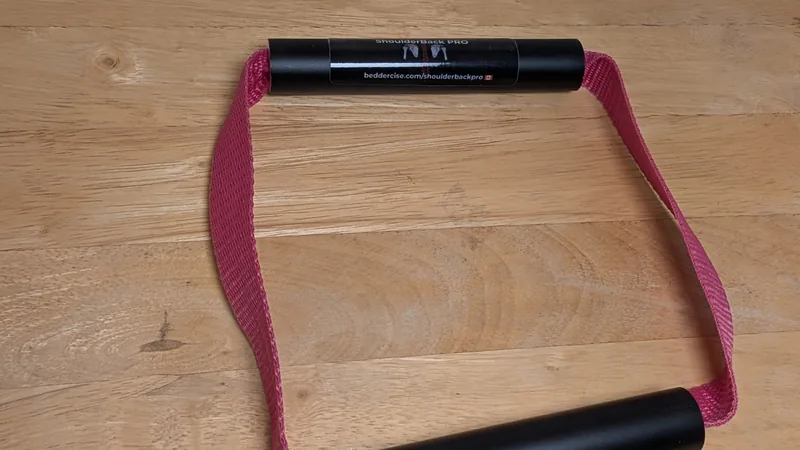 Locomotive: Rolling Circles for the Upper Back and Rear Cuff
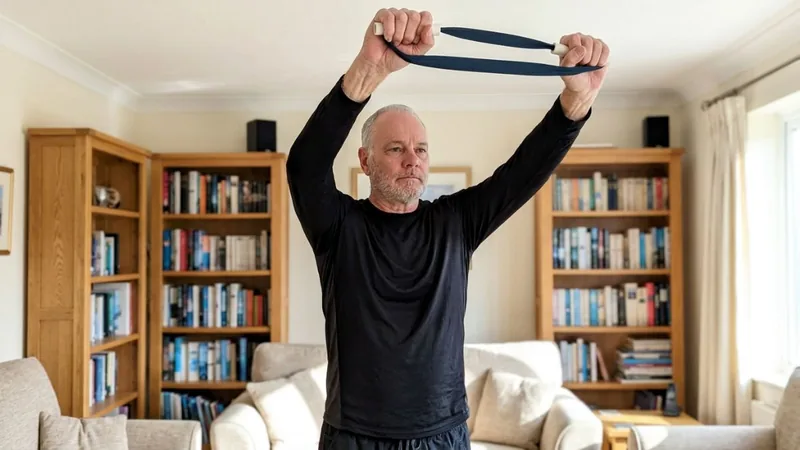 Overhead Press (High Shelf Reach): Trapezius and Deltoids Without a Weight