Shoulder anatomy & how it works
Serratus Anterior: The 'Boxer's Muscle' That Keeps Your Shoulder Blade Flat
4-minute read · Published July 30, 2026 · Updated July 30, 2026

What this is
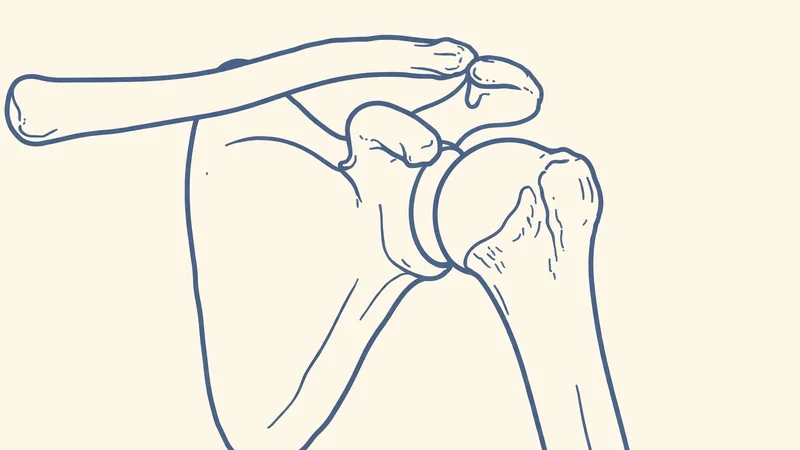
The serratus anterior runs from the upper ribs to the inner edge of the shoulder blade. Its job is to keep the shoulder blade snug against the rib cage as you reach forward or push. When it works well, the arm glides on a stable base. When it is under-used, the shoulder blade may drift, and other muscles may have to do extra work.
That is why people call it the "boxer's muscle." Its role in reaching and pushing is similar to a punch that stays anchored.
What the research says
- Scapular stabilization exercise improved pain and function in rotator-cuff-related shoulder pain. A 2025 review of specific exercise types found this benefit, which includes the muscles that stabilize the shoulder blade [R03].
- Shoulder rehab often moves in stages. Clinicians commonly progress from range of motion, to strength, to control and coordination. Treat that order as a guide rather than a strict rule [R16].
- Strength and mobility are linked to shoulder pain later in life. Strength, mobility and posture are each associated with shoulder pain and disability in people 60 and older. These are targets to work on, not blame [R28].
What you can do
- Sit tall. Use a supportive chair and let your shoulders rest down, away from your ears.
- Try a slow reach. Reach one arm forward, then let it return. Keep the movement small and smooth.
- Use a glide with a partner arm. Move both arms together, letting one arm gently resist the other. Progress by resisting a little harder, moving through more range or adding repeats.
- Keep the shoulder blade quiet. Stop before it shrugs or lifts.
- Build slowly. Add repeats or range only when the effort feels light and the shoulder feels settled.
- Ask a clinician about winging. If the shoulder blade sticks out visibly, or you have numbness or weakness, get an assessment first.
Where ShoulderBack Pro fits — and where it doesn't
Two of the ShoulderBack Pro exercises target this muscle. Around the World is a slow, large circle in front of you that the site lists for the serratus anterior and lower trapezius, and Boxing is a soft alternating push that the site lists for the serratus and triceps. SeeSaw is a gentle place to start. Your other arm supplies the resistance, so you choose how hard to push. It is a wellness product, not a medical device, and no clinical trial has studied it. See a clinician first if you have pain or nerve symptoms.
When to see a professional
See a doctor or physiotherapist promptly if you have: pain after a fall or injury with sudden weakness or loss of movement; a shoulder that looks deformed, very swollen or bruised; fever or feeling unwell alongside the pain; chest pain or breathlessness (call emergency services); constant pain that doesn't change with rest or activity; pain that wakes you most nights; numbness, tingling or weakness into the arm or hand; pain in several joints at once; or pain that hasn't improved after a couple of weeks of sensible self-care.
A doctor or physiotherapist is the right person to diagnose winging or any other shoulder blade problem.
Try this movement
SeeSaw (the muscles around the shoulder blade) →Frequently asked questions
Why is it called the boxer's muscle?
Its fibres help push the arm forward and keep the shoulder blade anchored, which is useful in punching. Many people now call it that because of its role in reaching and pushing.
What happens if it is weak?
A weak serratus can let the shoulder blade drift away from the ribs, which some clinicians call scapular winging. Ask a clinician to check any visible winging, especially with nerve symptoms.
Can I train it seated?
Yes. Seated reaches and slow glides can work the muscles around the shoulder blade, within a range that feels comfortable.
How do I know it is working?
Some people notice steadier reaching and less shrugging over several weeks. Judge progress over weeks, not single sessions.
Sources
- Frontiers in Bioengineering & Biotechnology (2025). Specific modes of exercise to improve rotator cuff-related shoulder pain: systematic review and meta-analysis. PROSPERO CRD42024550602. https://pmc.ncbi.nlm.nih.gov/articles/PMC12011739/
- Mureşan et al. (2022). Effects of a novel proprioceptive rehabilitation device on shoulder joint position sense, pain and function. Medicina. https://www.ncbi.nlm.nih.gov/pmc/articles/PMC9505091/
- PMC narrative review (2026). Body composition, strength, mobility and posture associated with shoulder pain and disability in community-dwelling older adults. https://www.ncbi.nlm.nih.gov/pmc/articles/PMC13513864/