Coordination, control & how ShoulderBack Pro works
Reading the Strap: What Tension Feedback Teaches You About Your Weaker Side
4-minute read · Published February 24, 2025 · Updated February 24, 2025
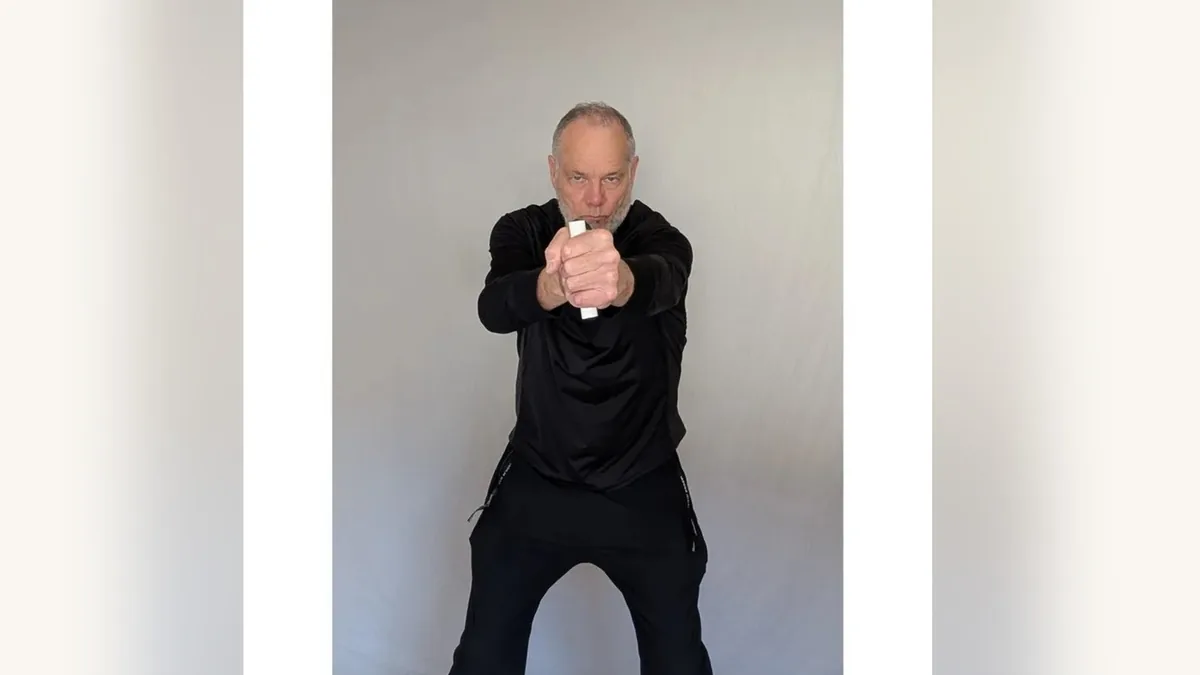
Why this happens: two arms, one strap
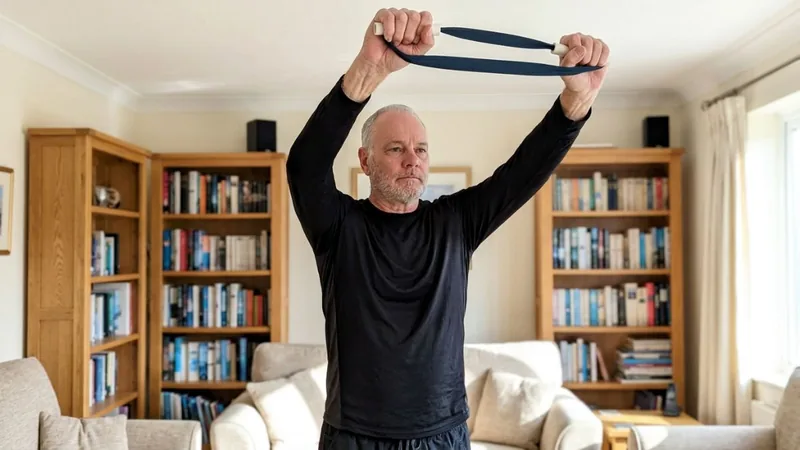
ShoulderBack Pro is a 160 gram trainer with two handles joined by a fixed-length, non-elastic strap. One arm assists while the other resists. You set the effort, pace and range.
Because the strap is fixed, you feel differences through your hands. One arm may need more effort to guide, drift, or move less smoothly. These are observations about how the movement feels. They are not measurements.
Part of what you notice is proprioception, the brain's sense of where a joint is. Shoulder disorders are linked with reduced joint position sense, which is associated with less accurate movement [R16]. For the bigger picture, see how ShoulderBack Pro works.
What the research says
- Shoulder disorders are linked with reduced joint position sense, which is associated with less accurate movement [R16].
- In a wrist study, training that challenged position sense improved the untrained opposite wrist 24 hours later [R15]. That is a wrist study, so it does not prove the same happens in the shoulder.
- In stroke rehabilitation, training both arms together improved shoulder movement more than single-arm training [R14]. That is stroke evidence, not evidence from healthy adults.
- The sources do not show that a left-right difference predicts injury. (Evidence varies. Ask your clinician.)
What you can do
- Move slowly with each arm, one side at a time. Notice effort, smoothness and a comfortable range.
- Keep pace and range the same on both sides so the comparison is fair. You can do this seated.
- Note anything painful, clicking or weaker. Those need a clinician.
- Try a two-arm drill such as SeeSaw, where one arm guides the other.
- Re-check every few weeks, not every day.
Where ShoulderBack Pro fits, and where it doesn't
Because one arm guides while the other resists, the trainer suits this kind of side-to-side noticing. SeeSaw (alternating reaches, one arm guiding the other) shows up differences in smoothness quickly, and Bicep Tricep lets you compare each arm's curl and extension. All 16 video lessons are on the routines page.
It is a wellness tool, not a measuring device, and it has no clinical trials. If one side is painful or weak, see a clinician first. The trainer is on the shop page.
When to see a professional
See a doctor or physiotherapist promptly if you have: pain after a fall or injury with sudden weakness or loss of movement; a shoulder that looks deformed, very swollen or bruised; fever or feeling unwell alongside the pain; chest pain or breathlessness (call emergency services); constant pain that doesn't change with rest or activity; pain that wakes you most nights; numbness, tingling or weakness into the arm or hand; pain in several joints at once; or pain that hasn't improved after a couple of weeks of sensible self-care.
A doctor or physiotherapist is the right person to assess a weaker side.
Try this movement
All 16 video lessons →Frequently asked questions
Does the strap measure how strong each arm is?
No. It gives you a feel for effort, pace and range on each side. It is not a measuring tool and does not diagnose a weaker side.
Is a left-right difference always a problem?
Not necessarily. The sources reviewed do not show that a small difference predicts injury. Pain, sudden weakness or a difference that is getting worse is a reason to see a clinician.
How often should I compare the two sides?
Check every few weeks rather than every day. Day-to-day changes can make one side feel different.
Sources
- Mureşan et al. (2022). Effects of a novel proprioceptive rehabilitation device on shoulder joint position sense, pain and function. Medicina. https://www.ncbi.nlm.nih.gov/pmc/articles/PMC9505091/
- Scientific Reports (2021). Proprioceptive-focused training transfers gains to the opposite, untrained limb. https://pmc.ncbi.nlm.nih.gov/articles/PMC7935923
- Journal of Physical Therapy Science (2016). The effects of bilateral movement training on upper limb function in chronic stroke patients. https://pmc.ncbi.nlm.nih.gov/articles/PMC5011582
More in this topic
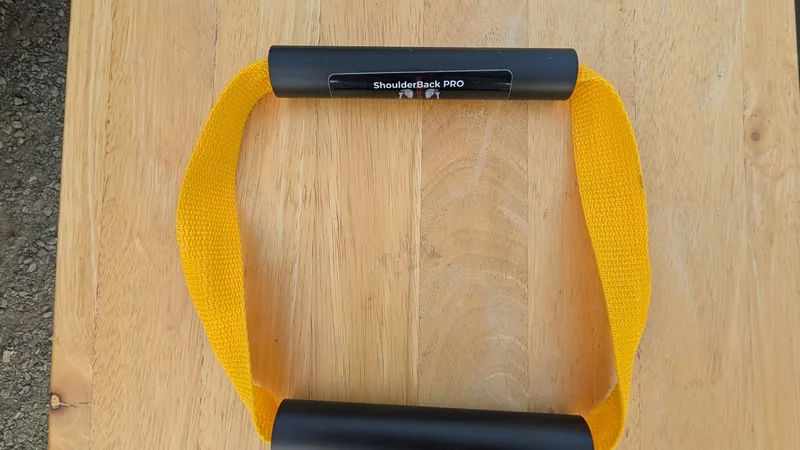 Essential guide: How ShoulderBack Pro Works: One Device, Two Connected Handles, Your Own Resistance
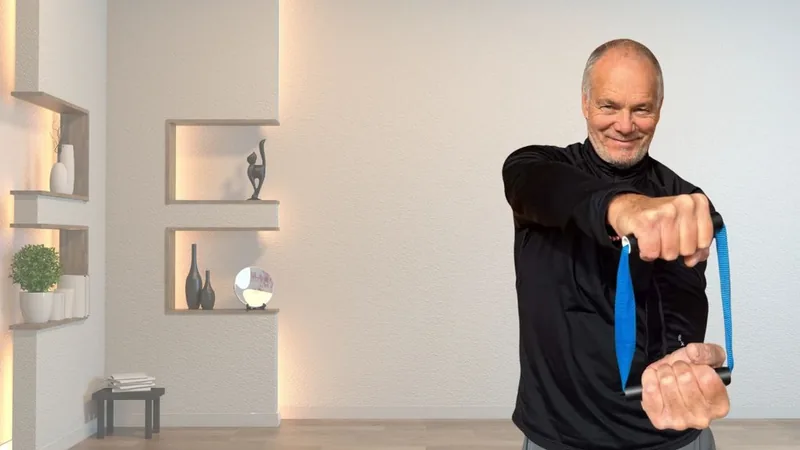 Pairing SBP With Walking: The Simplest Whole-Body Routine for Active Aging
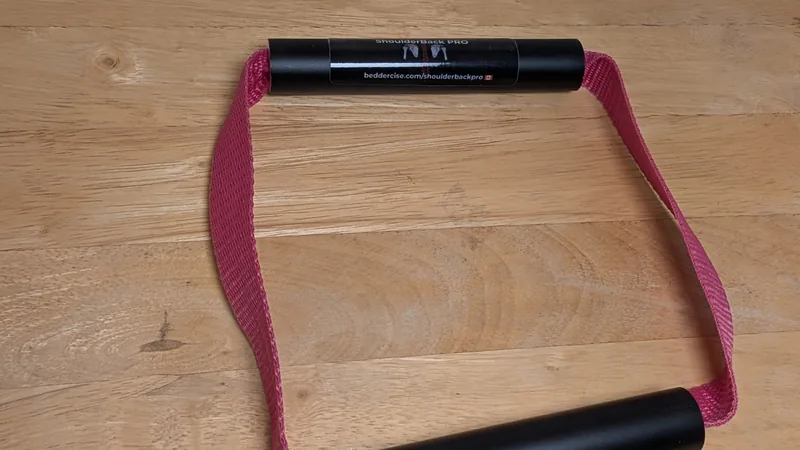 Locomotive: Rolling Circles for the Upper Back and Rear Cuff
 Overhead Press (High Shelf Reach): Trapezius and Deltoids Without a Weight