Food, nutrition & eating for joints and muscle
Protein After 50: How Much You Need to Keep Muscle (and Why Exercise Decides)
6-minute read · Published March 6, 2025 · Updated March 6, 2025

Why muscle matters after 50
Muscle is the tissue that moves you. It helps you climb stairs, get up from a chair, carry groceries and catch yourself when you trip. Over time, many people lose some muscle strength and mass. Researchers call the serious form sarcopenia, a term for significant loss of muscle strength and function with age.
Sarcopenia affects almost one in three older people, according to an Australian and New Zealand guideline summary [R08]. The same summary is clear that losing muscle is not inevitable, and that resistance exercise is the first-line approach. No drug exists for it. That is good news, because the tools are ones you already have.
What the research says
- Resistance training in older adults counters loss of muscle strength and mass, and supports function, mobility, independence and quality of life [R06]. Exercise is the main driver.
- Healthy older adults are commonly advised to take in about 1.0 to 1.2 grams of protein per kilogram of body weight a day. People who are ill or at risk of malnutrition may need 1.2 to 1.5 grams. All older people are advised to include daily physical activity, including resistance exercise [R09].
- An Australian and New Zealand guideline summary suggests 1 to 1.5 grams per kilogram may be considered for older adults with sarcopenia, excluding those with significant kidney disease. It notes that protein helps mainly when combined with resistance exercise [R08].
- The WHO recommends adults do muscle-strengthening activity on at least two days a week. Adults 65 and over should also do multicomponent activity that emphasises balance and strength on at least three days a week [R07].
For a 70 kg (about 154 lb) adult, the healthy-older-adult range works out to roughly 70 to 84 grams of protein a day. That is an illustration, not a prescription. Your own needs depend on your health, appetite and kidneys.
Evidence level for each approach
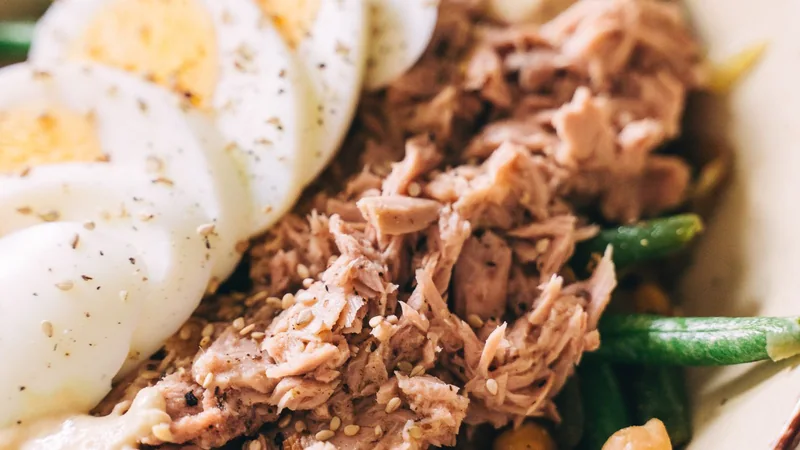
- Eating enough protein from food (eggs, fish, dairy, beans, lean meat): moderate support, mainly as a partner to resistance exercise [R08, R09].
- Protein powders and shakes: limited evidence that they do more than protein from food. They can be useful if you struggle to eat enough, but ask a dietitian first.
- Resistance exercise: the strongest support of the three [R06].
Medication note: Talk to your pharmacist or doctor before adding protein powder or any other supplement if you take blood thinners or other medication. If you have kidney disease, check with your clinician before increasing protein, because the guidance above does not apply to significant kidney disease [R08].
What you can do
- Build protein into meals you already eat. Aim for a palm-sized portion at each meal, from eggs, fish, dairy, beans, tofu or lean meat.
- Pair protein with strength work, not instead of it. Resistance exercise is the part with the strongest support [R06].
- Start with seated strength options if standing feels unsteady. Chair-based movements count.
- Do shoulder and upper-back movement most days, using controlled range. A short routine is better than none.
- Track your intake for a week with a dietitian or clinician if you are unsure. Many people guess too low or too high.
- Review your plan with your clinician every few months, especially if your appetite or weight changes.
Where ShoulderBack Pro fits — and where it doesn't
The trainer can help with one small part of this picture: keeping the shoulders and upper back moving. Around the World and Overhead Press (High Shelf Reach) are two of its 16 movements, and you can do them seated, with the other arm providing the resistance. Progress by resisting harder, moving through more range or doing longer sets.
It does not address protein, leg or hip strength, or muscle loss, and its light, self-chosen resistance is no substitute for whole-body strength work. It's a wellness tool with no clinical trials behind it, so it is not a treatment for any condition. The Refreshing Awareness ritual is a free three-minute place to start, and the trainer is $29 CAD. For the wider food picture, read the Mediterranean diet and joints and omega-3s for joint pain. Pillar context is in the anti-inflammatory diet guide.
When to see a professional
See a doctor or physiotherapist promptly if you have: pain after a fall or injury with sudden weakness or loss of movement; a shoulder that looks deformed, very swollen or bruised; fever or feeling unwell alongside the pain; chest pain or breathlessness (call emergency services); constant pain that doesn't change with rest or activity; pain that wakes you most nights; numbness, tingling or weakness into the arm or hand; pain in several joints at once; or pain that hasn't improved after a couple of weeks of sensible self-care.
Your doctor or a dietitian can assess whether your protein needs and muscle loss need a closer look.
Try this movement
Refreshing Awareness 3-minute ritual →Frequently asked questions
How much protein do I need after 60?
Research on healthy older adults suggests about 1.0 to 1.2 grams per kilogram of body weight daily. Your clinician or dietitian can adjust this for kidney disease, illness or appetite problems.
Do protein shakes work better than food?
The evidence is limited on whether powders do more than protein from food. Whole foods are a sensible default, and a shake can help if you struggle to eat enough. Check with a dietitian before adding one.
Will protein alone keep my muscles strong?
Probably not. Protein helps most when it is combined with resistance exercise, so strength work is the piece to prioritise.
Can ShoulderBack Pro replace strength training?
No. The trainer provides light, self-chosen resistance for the shoulder area. It does not replace whole-body strength work, and it does not address protein intake.
Sources
- Fragala MS, Cadore EL, Dorgo S et al. (2019). Resistance Training for Older Adults: Position Statement From the National Strength and Conditioning Association. Journal of Strength and Conditioning Research. https://pubmed.ncbi.nlm.nih.gov/31343601/
- WHO (2020). Guidelines on physical activity and sedentary behaviour. Summary via University of Sydney news (2020). https://www.sydney.edu.au/news-opinion/news/2020/11/26/new-global-guidelines-on-physical-activity-and-sedentary-behavio.html
- Australian/NZ sarcopenia guidelines summary (2025). Journal of Cachexia, Sarcopenia and Muscle, via Medical Republic. https://medicalrepublic.com.au/how-to-stop-muscle-loss-in-older-people/81501
- ESPEN Expert Group (Deutz NE et al., 2014). Protein intake and exercise for optimal muscle function with aging. Clinical Nutrition. https://dspace.stir.ac.uk/handle/1893/22753