Food, nutrition & eating for joints and muscle
Anti-Inflammatory Diet for Joint Pain: What's Proven, What's Promising, What's Hype
10-minute read · Published February 16, 2026 · Updated February 16, 2026
What "anti-inflammatory" means
Inflammation is the body's response to injury or irritation. Short-term inflammation is part of healing. Researchers are also interested in low-level, long-lasting inflammation, which is thought to keep some joints irritated.
Food marketing often uses the word "anti-inflammatory" loosely. A label can say it without any clear proof that the food changes your joints. The better question is what the research shows for the eating pattern, not whether a single ingredient sounds healthy.
Joint pain also has many causes. Osteoarthritis, rheumatoid arthritis, tendon problems and gout each need different care. A diet guide cannot tell you which one you have. Only a clinician can do that.
Why diet gets so much attention
People with joint pain want something they can control. Food is daily, familiar and easy to change, so it feels like a lever. That feeling is understandable. It is also why so many claims spread quickly, often from a single study, a lab result or a personal story.
Diet may matter. It can affect body weight, muscle strength and general health, which in turn may influence how a joint feels. The real question is how much, for whom, and compared with what. This article is built around that question.
What the research says
- Whole-diet patterns look more promising than single foods. Mediterranean-style and plant-based patterns are linked to less pain and better function in osteoarthritis. The word "linked" matters: these are associations, and a link does not prove cause [R21].
- Omega-3 fats have some of the better evidence. Some trials suggest a modest benefit in rheumatoid arthritis. The evidence for osteoarthritis is weaker [R20][R22].
- Turmeric (curcumin) and polyphenols show anti-inflammatory effects in the lab and in some clinical work. Human evidence for joint pain is not yet strong enough to recommend them [R20][R21].
- Older reviews are mixed. A review of evidence up to 2009 could not recommend vitamin E, ginger, turmeric or omega-3 for osteoarthritis. That review is old, but it fits a wider pattern: the evidence for single supplements is usually weaker than their labels imply [R20][R22].
- Diet fits alongside treatment, not in place of it. Anti-inflammatory food patterns are associated with lower inflammatory markers in rheumatoid arthritis, and experts describe them as a complement to medical care [R23].
For more detail on the fats, read omega-3s for joint pain. For the whole-pattern evidence, read the Mediterranean diet and joints.
Evidence at a glance
Evidence levels use the terms strong, moderate, limited and insufficient. "Limited" means some studies exist, but they are small, mixed or old.
| Item | Evidence level | What it means |
|---|---|---|
| Whole-diet patterns (Mediterranean style) | Limited for joint pain [R21] | Linked to less pain in osteoarthritis. Not proof of cause. |
| Omega-3 fats (fish or supplements) | Limited, mostly rheumatoid arthritis [R20][R22] | Modest benefit possible in RA. Weaker for osteoarthritis. |
| Ginger | Insufficient [R20] | Evidence is unclear. Not enough to recommend for joints. |
| Turmeric (curcumin) | Insufficient in people [R20] | Promising lab results. Not enough human trials. |
| Bromelain | Insufficient [R20] | Not enough evidence for joint inflammation. |
No level in this table is strong. If someone tells you a food or supplement "proves" joint relief, ask for the study.
Hype check: common claims
"Detox" or cleanse diets. Short cleanses are marketed as resetting inflammation. The sources used for this article give no support for cleanses changing joint pain. Ask your clinician before a cleanse, especially if you have kidney or heart concerns.
Nightshade vegetables. Tomatoes, peppers and potatoes are often blamed for joint pain. We found no strong research in our sources showing they cause joint pain, so for most people there is no clear reason to remove them. If you think a food makes your joints worse, keep a simple log and discuss it with your clinician.
Gluten-free for everyone. Gluten-free eating is medically necessary for some people with coeliac disease. For others, our sources give no clear evidence that it helps joint pain, so ask before making a big change.
"Eat this one food and the pain goes." Single foods rarely fix a complex problem. A pattern of eating, repeated over months, is a more realistic thing to test.
Supplements and your medication
If you take blood thinners or other medication, talk to your pharmacist or doctor before starting any supplement. This includes fish oil, turmeric, ginger and bromelain. Some supplements can interact with medicines, and a pharmacist can review your full list with you.
Do not stop or change a prescribed medication because of a food plan. Bring any supplement bottles to your next appointment so your clinician can review them.
How to read a diet claim
Before you act on a headline, ask four questions:
- Who was studied? Animals and lab cells are a first step, not proof for people with joint pain.
- Was it a pattern or a single food? Patterns over months are usually more useful than one ingredient.
- Compared with what? A result only means something next to a comparison group or usual care.
- Does it come with a cost? Expensive capsules, strict rules or cutting out whole food groups need a clear reason.
If a claim fails two or more of these tests, treat it as hype until a clinician or a good review says otherwise.
What you can do
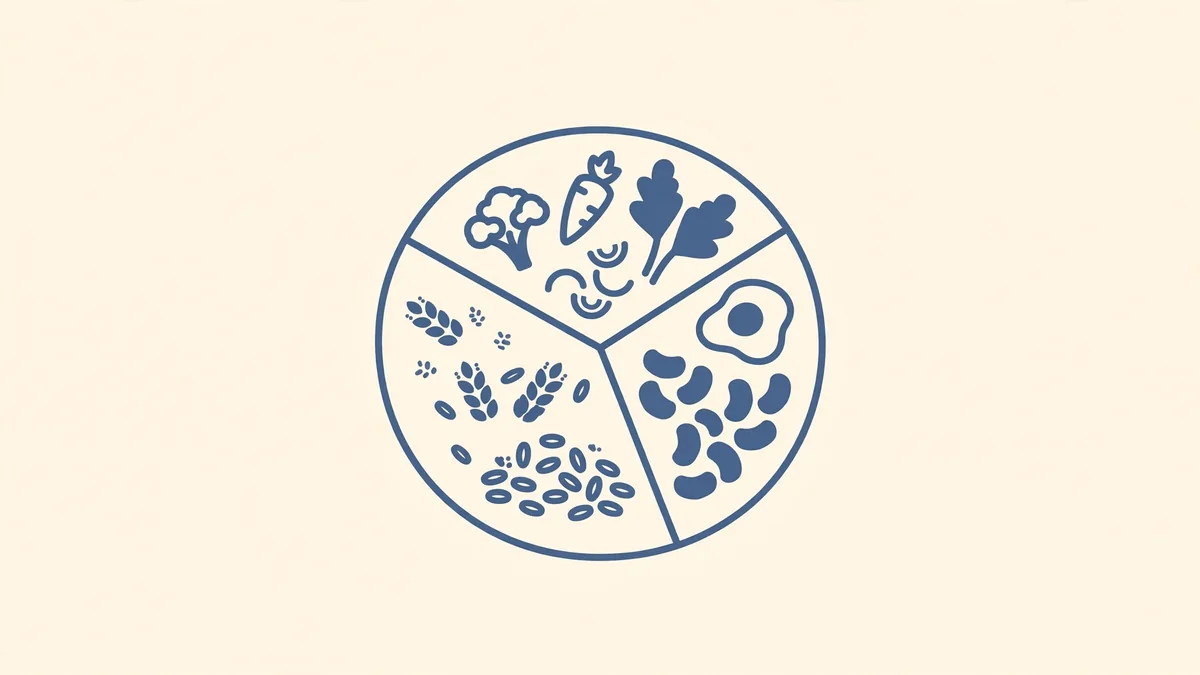
- Build most meals around vegetables, fruit, beans and lentils, whole grains, nuts and fish. This is the common thread in Mediterranean-style eating. Seated option: sit at the kitchen table to wash, chop and prep, which saves energy on your feet.
- Eat fish a few times a week. This is a sensible habit even if you are unsure about fish oil capsules.
- Get enough protein across the day, not all at once. For healthy older adults, one expert group suggests about 1.0 to 1.2 grams per kilogram of body weight daily [R09]. Many clinicians see muscle as part of supporting joints.
- Use herbs and spices for flavour first. Garlic, ginger and turmeric make food taste good. Their joint benefits remain unproven.
- Cut back on ultra-processed foods and sugary drinks. Many clinicians suggest this for general health, and it is easy to start with one swap a week.
- Ask before you buy a supplement. Ask what it does, what the evidence level is, and whether it interacts with anything you take.
- Pair food changes with the kind of movement your clinician recommends. Eating well and moving gently work together, but neither is a fix on its own.
- Keep a simple food and symptom notebook for a few weeks. Note what you ate, how much your joints ached, and how you slept. Patterns are easier to see on paper, and the notebook gives your clinician something concrete to review. Seated option: keep the notebook on the kitchen table next to your morning coffee.

Protein for muscle, in plain terms
Protein is the building block of muscle. Older adults often need more of it than they think, especially if appetite is low. The same expert group notes that people who are ill or at risk of malnutrition may need more, up to about 1.2 to 1.5 grams per kilogram per day [R09]. If you are losing weight without trying, or you have a condition that affects eating, ask your clinician before changing your diet.
Protein is not an anti-inflammatory tool. It supports muscle, and strong muscles help people stay active. Spreading protein across breakfast, lunch and dinner is often easier than one large serving at night. Good sources include eggs, yogurt, fish, beans, lentils, tofu and lean meat. Choose what you enjoy and can keep buying.
Where ShoulderBack Pro fits — and where it doesn't
ShoulderBack Pro does not fit this topic. It is a movement trainer, not a food or supplement, and it does not change what you eat. For eating questions, a registered dietitian, your doctor or your pharmacist is the right first call, and your physiotherapist can advise on movement (our routines page is there if they clear gentle movement).
When to see a professional
See a doctor or physiotherapist promptly if you have: pain after a fall or injury with sudden weakness or loss of movement; a shoulder that looks deformed, very swollen or bruised; fever or feeling unwell alongside the pain; chest pain or breathlessness (call emergency services); constant pain that doesn't change with rest or activity; pain that wakes you most nights; numbness, tingling or weakness into the arm or hand; pain in several joints at once; or pain that hasn't improved after a couple of weeks of sensible self-care. Red-flag list adapted from [R30].
Joint pain in several joints at once needs a medical assessment before you try a new diet.
Try this movement
Refreshing Awareness 3-minute ritual →Frequently asked questions
Is there one anti-inflammatory diet that works for joints?
No single diet has been proven. Whole-diet patterns such as the Mediterranean style are linked to less pain and better function in osteoarthritis, but a link is not proof that the diet causes the change.
Does turmeric help joint pain?
Lab studies look promising, but the evidence in people is insufficient. If you take blood thinners or other medication, talk to your pharmacist or doctor before taking turmeric supplements.
Can food replace my joint medication?
No. Diet can complement treatment, but it does not replace it. Do not stop or change a prescribed medication without talking to your clinician.
Are omega-3 fats worth taking for joints?
There is some evidence of a modest benefit in rheumatoid arthritis. For osteoarthritis, the evidence has been weaker and mixed. Eating fish is a sensible habit, and a supplement is a question for your clinician or pharmacist.
How much protein do older adults need?
For healthy older adults, one expert group suggests about 1.0 to 1.2 grams of protein per kilogram of body weight each day. Needs can be higher if you are ill or at risk of malnutrition, so ask your clinician.
Sources
- NCCIH (US National Center for Complementary and Integrative Health). Nutritional Approaches for Musculoskeletal Pain and Inflammation. https://www.nccih.nih.gov/health/providers/digest/musculoskeletal
- PMC narrative review (2025/26). Nutritional Interventions in Osteoarthritis: Mechanisms, Clinical Evidence, and Translational Opportunities. https://www.ncbi.nlm.nih.gov/pmc/articles/PMC12844890/
- Rosenbaum CC et al. (2010). Antioxidants and antiinflammatory dietary supplements for osteoarthritis and rheumatoid arthritis. Altern Ther Health Med. https://pubmed.ncbi.nlm.nih.gov/20232616/
- EBSCO Health Notes. Exploring anti-inflammatory diets in rheumatology. https://about.ebsco.com/blogs/health-notes/exploring-anti-inflammatory-diets-rheumatology
- ESPEN Expert Group (Deutz NE et al., 2014). Protein intake and exercise for optimal muscle function with aging. Clinical Nutrition. https://dspace.stir.ac.uk/handle/1893/22753
- NHS Greater Glasgow & Clyde. Shoulder red flags. https://www.nhsggc.scot/page_category/services/page/33