Comparisons, buyer's guides & honest product answers
Posture Corrector vs Movement Trainer: What Each Actually Does
6-minute read · Published December 24, 2025 · Updated December 24, 2025
Why this happens / What this is
Posture correctors are worn. They are usually a band that loops over the shoulders and pulls them back, or a brace that holds the upper back in an upright position. The idea is simple: keep the shoulders in a "better" place while you wear it.
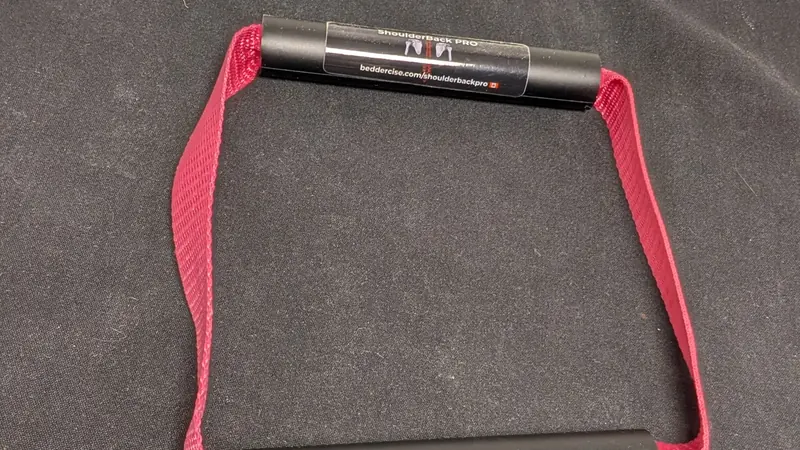
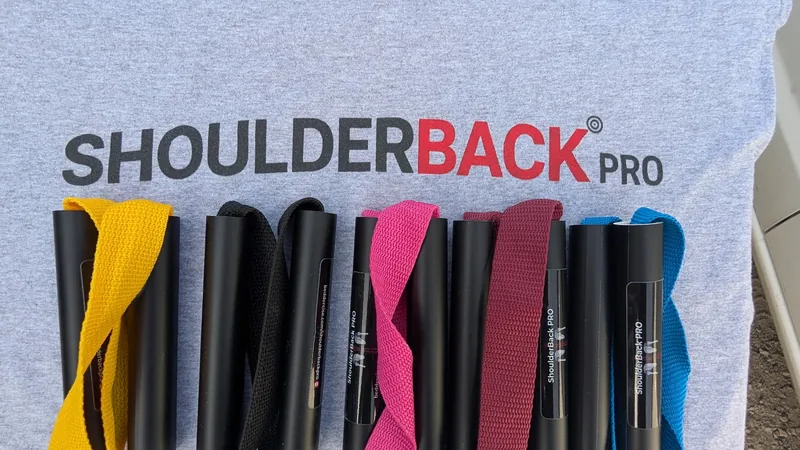
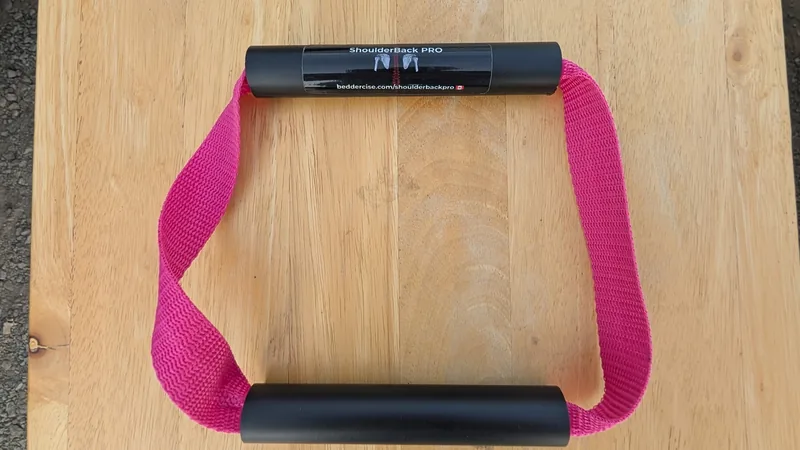
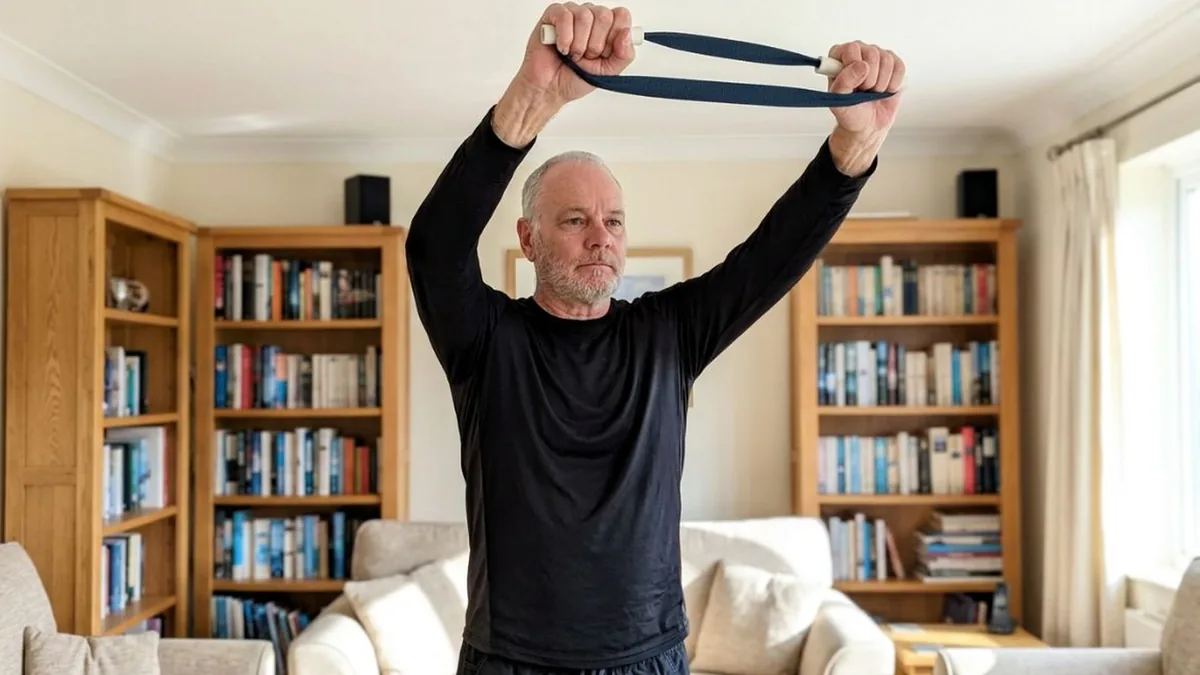
Movement trainers work the other way. You use them to move. The muscles of the shoulder blade, upper back and shoulder do the work, and the tool gives you resistance and feedback. ShoulderBack Pro is a 160-gram trainer with two handles joined by a fixed strap. One arm assists while the other resists, and you set the effort, pace and range. Nothing stretches, snaps or drops, and you can use it seated or standing. You can read more about how body-controlled resistance works.
The difference matters because posture is not as simple as "hold it straight." Researchers have not reached consensus on whether spinal posture causes low back pain [R25]. Forward head posture is linked with neck pain, but the link is an association, not a proven cause [R27]. A brace can be comfortable, but it is thought to do little to train the muscles that hold the shoulders in place.
What the research says
- The research does not support the idea that a single right posture prevents pain. There is no consensus that spinal posture causes low back pain [R25].
- Exercise can improve forward head angle. The relationship between a posture change and a pain change is still unsettled [R26].
- Forward head posture is associated with neck pain. Exercise-based programs, including stabilization work, are the main studied treatment [R27].
- In rotator-cuff-related shoulder pain, programs that teach control and coordination may do slightly better than generic exercise in the short and medium term [R02]. Nothing in this research compares braces with movement.
What you can do
- Start with a question. Ask what you want to change: how you feel after sitting, how far you can reach, or how your neck or shoulder feels. Your answer points to the tool.
- If you use a brace, keep it short. Wear one for limited periods, and take it off to move and rest. Do not rely on it all day.
- If you choose movement, start seated. Work in a comfortable range with slow, controlled reps. You can use a trainer or light resistance from a band.
- Build a short routine. Ten minutes, a few times a week, is a sensible starting point. Many clinicians suggest consistency matters more than intensity.
- Check in with a clinician if pain persists. A physiotherapist can look at your posture and movement, and suggest whether a brace, exercise or both makes sense.
Where ShoulderBack Pro fits — and where it doesn't
ShoulderBack Pro belongs in the movement category. It never holds your shoulders in place; one arm resists the other, so your own muscles do the work. For posture-minded movement, Bear Hugs Me is designed to work the middle trapezius and rhomboids, and Locomotive the upper-back extensors and back of the rotator cuff. Resist harder or go longer to progress. It's a wellness tool, not a treatment, with no clinical trials yet, and the 16 video lessons are free.
When to see a professional
See a doctor or physiotherapist promptly if you have: pain after a fall or injury with sudden weakness or loss of movement; a shoulder that looks deformed, very swollen or bruised; fever or feeling unwell alongside the pain; chest pain or breathlessness (call emergency services); constant pain that doesn't change with rest or activity; pain that wakes you most nights; numbness, tingling or weakness into the arm or hand; pain in several joints at once; or pain that hasn't improved after a couple of weeks of sensible self-care.
A physiotherapist can recommend whether a brace, an exercise plan or something else suits your shoulder and posture.
Try this movement
All 16 video lessons →Frequently asked questions
Does a posture corrector fix rounded shoulders?
We found no strong research showing that a posture corrector changes shoulder posture long term. The research on posture and pain is also unsettled [R25].
Is a posture corrector harmful?
Not usually for short periods, though some clinicians worry that wearing one for long stretches lets the muscles do less of their usual job. Ask a clinician if you are unsure.
Which one should I try first?
If you have been cleared to move, a short, controlled movement routine is the better first step. If you have pain, a clinician should look at it before you buy either.
Sources
- Swain CTV et al. (2020). No consensus on causality of spine postures or physical exposure and low back pain: umbrella review of 41 systematic reviews. J Biomechanics. https://getfitcraft.com/guides/exercises-for-posture
- Sheikhhoseini R et al. (2018). Effectiveness of therapeutic exercise on forward head posture: systematic review and meta-analysis. J Manipulative Physiol Ther. https://getfitcraft.com/guides/exercises-for-posture
- Healthcare (MDPI) 2023; 11(19):2604. Treatment of chronic neck pain in patients with forward head posture: systematic narrative review. https://www.mdpi.com/2227-9032/11/19/2604
- Dubé M-O et al. (2024). The Efficacy of Exercise Therapy for Rotator Cuff-Related Shoulder Pain According to the FITT Principle: Systematic Review With Meta-analyses. JOSPT. https://pubmed.ncbi.nlm.nih.gov/38848304/