Food, nutrition & eating for joints and muscle
Plant-Based Protein for Older Adults: Can You Build Muscle Without Meat?
5-minute read · Published October 21, 2025 · Updated October 21, 2025
Why this happens
Your muscles are made of protein, and they need a steady supply to repair and adapt. With age, many people lose some muscle and strength. The severe form is called sarcopenia. Australian and New Zealand guidelines note that it affects almost one in three older people, and that muscle loss is not inevitable [R08].
Protein is only part of the story. Resistance exercise is the first-line approach for keeping muscle, and protein helps mainly when it is combined with that training [R08]. Many clinicians suggest food alone is unlikely to produce the same result.
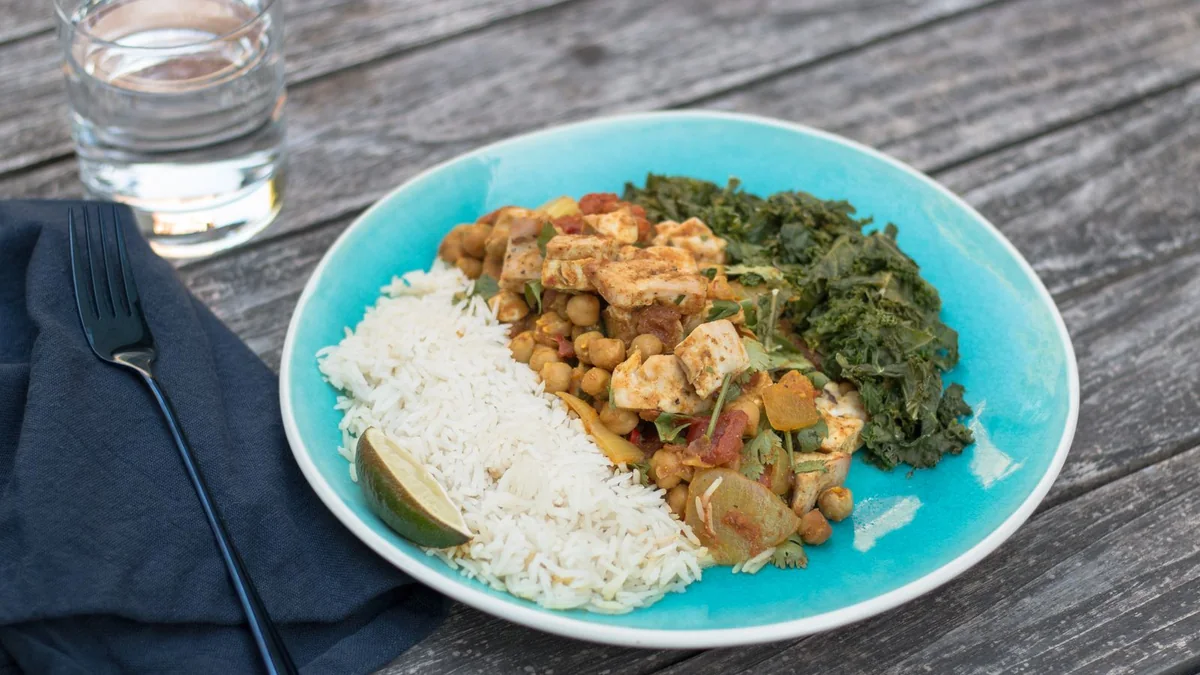
Plant foods such as beans, lentils, tofu, soy, nuts and whole grains supply protein. Whether plant protein builds muscle as well as animal protein is not settled in the sources used for this guide (evidence varies, so ask a dietitian or your clinician).
What the research says
- Healthy older people are suggested to aim for at least 1.0 to 1.2 grams of protein per kilogram of body weight a day. People who are ill or at risk of malnutrition may need 1.2 to 1.5 grams [R09].
- Protein may be considered at 1.0 to 1.5 grams per kilogram for older adults with sarcopenia, except where there is significant kidney disease [R08].
- Protein helps mainly when combined with resistance exercise [R08].
- Resistance training supports muscle strength, mass, function and independence in older adults [R06].
- Adults are advised to do muscle-strengthening activity at least two days a week, and adults 65 and older are advised to add balance and strength work [R07].
What you can do
- Get a personal target. Talk to your clinician or a dietitian. Use the 1.0 to 1.2 grams per kilogram range as a starting point, and remember that one kilogram is about 2.2 pounds.
- Spread protein across the day. Include a protein food at breakfast, lunch and dinner, rather than saving most of it for one meal.
- Choose a variety of plant proteins. Beans, lentils, tofu, soy milk, nuts and whole grains all contribute. Mix them through the week.
- Make meals seated if standing is hard. Keep a stool or chair near the stove or counter. Prepare simple, one-pot meals.
- Pair food with training. Add strength work on at least two days a week, seated or standing [R07]. Protein supports training; it does not replace it.
- Check before you change anything. If you have kidney disease, or take medication, ask your clinician before raising your protein intake [R08].
Where ShoulderBack Pro fits — and where it doesn't
ShoulderBack Pro does not fit this topic. It doesn't supply protein, and muscle is built through resistance training with food as support [R08]. Your dietitian or doctor is the right first call. Our routines page covers shoulder movement only, not nutrition.
Related reading: for the wider picture, see the anti-inflammatory diet for joint pain: what is proven, promising and hype. You can also read protein after 50: how much you need to keep muscle and easy high-protein meals for seniors who don't like cooking.
When to see a professional
See a doctor or physiotherapist promptly if you have: pain after a fall or injury with sudden weakness or loss of movement; a shoulder that looks deformed, very swollen or bruised; fever or feeling unwell alongside the pain; chest pain or breathlessness (call emergency services); constant pain that doesn't change with rest or activity; pain that wakes you most nights; numbness, tingling or weakness into the arm or hand; pain in several joints at once; or pain that hasn't improved after a couple of weeks of sensible self-care [R30].
Try this movement
Refreshing Awareness 3-minute ritual →Frequently asked questions
Can I get enough protein without meat?
Often, yes, with planning. Beans, lentils, tofu, soy foods, nuts and whole grains all contribute protein. A dietitian or your doctor can help you check your total.
Does protein alone build muscle?
No. Protein helps mainly when it is combined with resistance exercise [R08]. Muscle is built through training, with nutrition supporting it.
Do I need a protein powder?
Not necessarily. If you add a powder or supplement, talk to your pharmacist or doctor first, especially if you take blood thinners or other medication.
How do I work out my daily target?
Multiply your weight in kilograms by 1.0 to 1.2 for a healthy older adult [R09]. Check with your clinician before aiming higher, and ask first if you have kidney disease [R08].
Sources
- Fragala MS, Cadore EL, Dorgo S et al. (2019). Resistance Training for Older Adults: Position Statement From the National Strength and Conditioning Association. J Strength Cond Res. https://pubmed.ncbi.nlm.nih.gov/31343601/
- WHO (2020). Guidelines on physical activity and sedentary behaviour. https://www.sydney.edu.au/news-opinion/news/2020/11/26/new-global-guidelines-on-physical-activity-and-sedentary-behavio.html
- Australian/NZ sarcopenia guidelines summary (2025). Journal of Cachexia, Sarcopenia and Muscle, via Medical Republic. https://medicalrepublic.com.au/how-to-stop-muscle-loss-in-older-people/81501
- ESPEN Expert Group (Deutz NE et al., 2014). Protein intake and exercise for optimal muscle function with aging. Clinical Nutrition. https://dspace.stir.ac.uk/handle/1893/22753
- NHS Greater Glasgow & Clyde, Shoulder red flags; NHS MPFT self-help, Shoulder pain; BESS/BOA pathway summary (2021). https://www.nhsggc.scot/page_category/services/page/33