Food, nutrition & eating for joints and muscle
Easy High-Protein Meals for Seniors Who Don't Like Cooking
6-minute read · Published February 25, 2026 · Updated February 25, 2026
Why this happens
Muscle is made of protein, and your body uses and rebuilds it all the time. As people age, muscle can shrink and weaken. This is called sarcopenia, meaning loss of muscle mass and strength.
The Australian and New Zealand guidelines note that sarcopenia affects almost one in three older people. They also say that losing muscle is not inevitable [R08]. Muscle helps hold your shoulder blades and arms steady, so keeping it matters for everyday reaching and lifting.
What the research says
- Protein targets exist. Healthy older people are often advised to aim for about 1.0 to 1.2 grams of protein per kilogram of body weight a day. Those who are ill or at risk of malnutrition may be advised 1.2 to 1.5 grams [R09]. For a 70 kg (about 154 lb) person, that is roughly 70 to 84 grams a day.
- Protein works best with exercise. Protein helps mainly when combined with resistance exercise, such as strength training. Resistance exercise is the first-line approach for muscle loss, and no drug does this job [R08].
- Food evidence varies. The table below rates the evidence for common foods and items. Most of the food evidence is for joint pain, not muscle.
| Food or item | Evidence level | What the sources say |
|---|---|---|
| Protein foods (eggs, yogurt, beans, lentils, fish) | Moderate (expert guidelines) | Advised for muscle health in older adults, mainly with exercise [R08][R09] |
| Omega-3s (fatty fish, such as salmon or sardines) | Moderate for rheumatoid arthritis; limited for osteoarthritis | Some modest benefit in rheumatoid arthritis; mixed results in osteoarthritis [R20][R22] |
| Mediterranean-style eating | Limited | Linked to less pain and better function in osteoarthritis, but not proven [R21] |
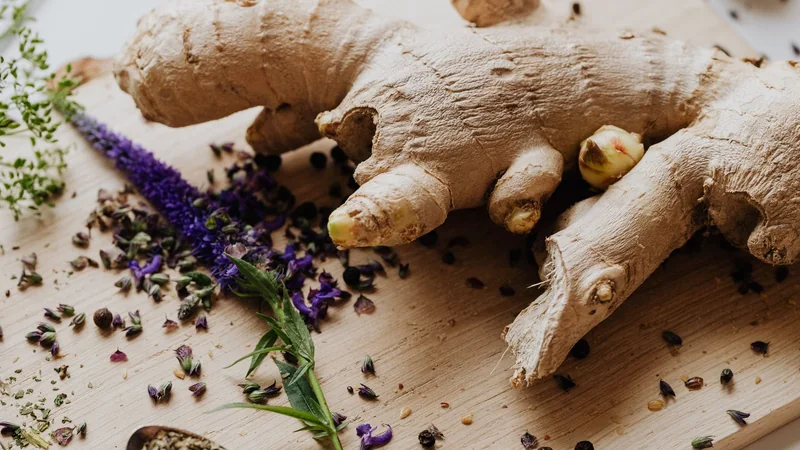
| Ginger | Insufficient | Evidence for joint and muscle pain is unclear [R20] |
| Turmeric or curcumin | Insufficient | Promising in the lab, but not enough evidence in people [R20][R21] |
Medication check: If you take blood thinners or other medication, talk to your pharmacist or doctor before adding supplements such as omega-3, ginger or turmeric.
What you can do
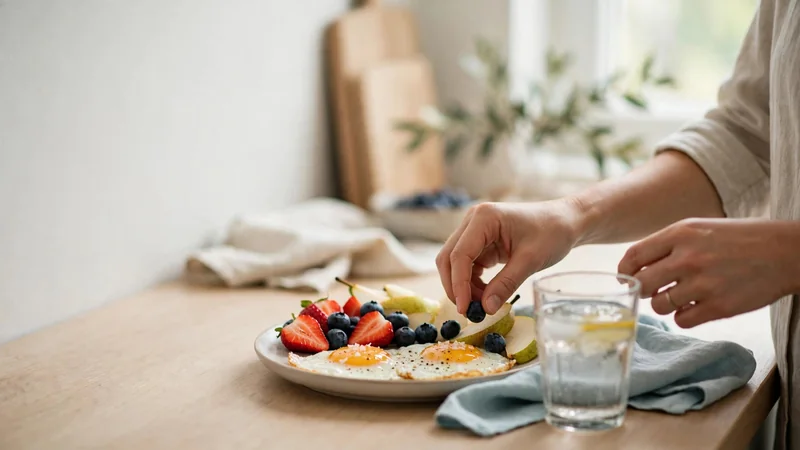
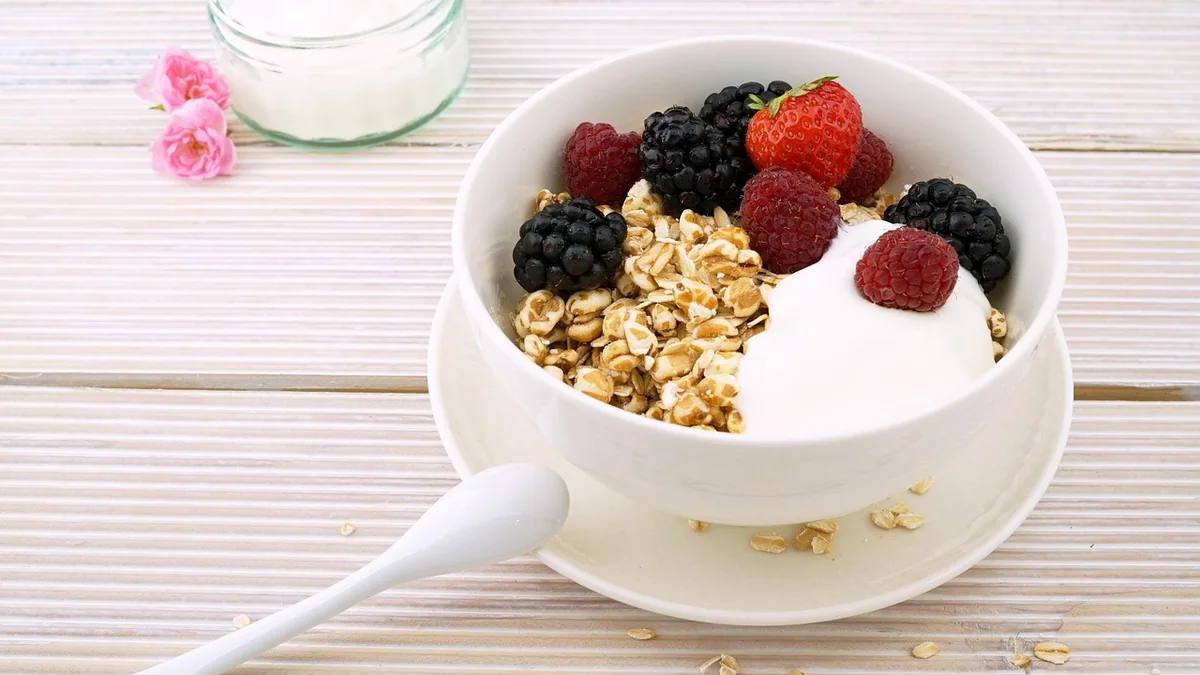
- Breakfast in five minutes. Have Greek yogurt or cottage cheese with berries, or two scrambled eggs with spinach.
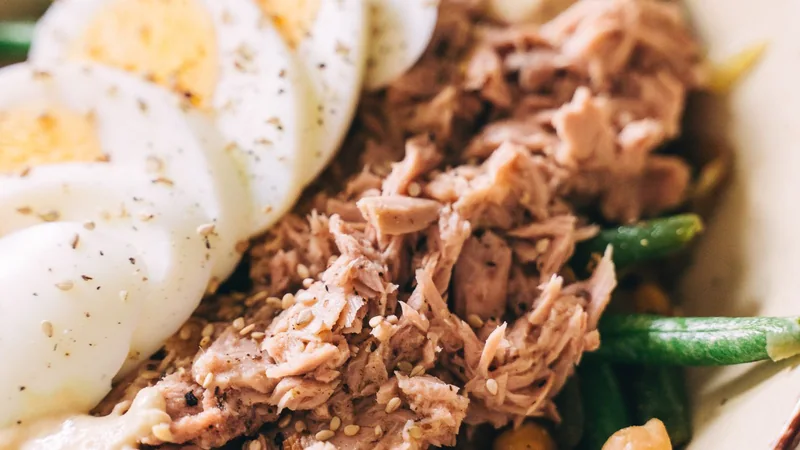
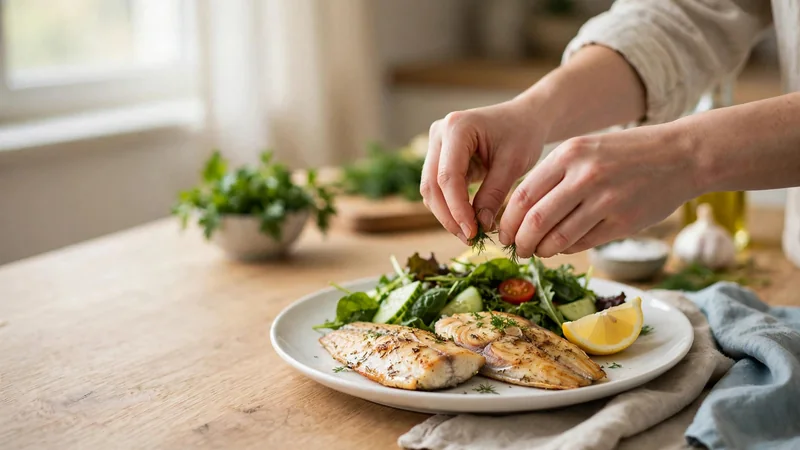
- Lunch with no cooking. Canned salmon or sardines on whole-grain crackers, with raw vegetables on the side.
- Easy dinner. A tin of lentil or bean soup, heated, with bread or a salad. Choose low-salt options when you can.
- Snacks that count. Cheese with a hard-boiled egg, or hummus with whole-grain pita.
- Cook once, eat twice. Make a pot of soup or chili and freeze single portions for later.
- Seated prep. Sit down to open tins, chop or assemble meals, with your items at a comfortable height. Use two hands to lift heavy pots, and ask for help with anything overhead that causes shoulder pain.
Where ShoulderBack Pro fits and where it doesn't
This one is about food, and a shoulder movement trainer has nothing to add. A registered dietitian or your doctor is the right person for a meal plan, especially with kidney disease. General movement ideas are in the free lessons.
When to see a professional
Ask your doctor or a registered dietitian to set your protein target. This matters most if you have kidney disease, diabetes, or are losing weight without trying.
See a doctor or physiotherapist promptly if you have: pain after a fall or injury with sudden weakness or loss of movement; a shoulder that looks deformed, very swollen or bruised; fever or feeling unwell alongside the pain; chest pain or breathlessness (call emergency services); constant pain that doesn't change with rest or activity; pain that wakes you most nights; numbness, tingling or weakness into the arm or hand; pain in several joints at once; or pain that hasn't improved after a couple of weeks of sensible self-care.
Try this movement
Refreshing Awareness 3-minute ritual →Frequently asked questions
How much protein do older adults need?
Healthy older people are often advised about 1.0 to 1.2 grams of protein per kilogram of body weight a day, and a little more if they are ill or at risk of malnutrition. Ask your clinician for your personal target.
Do I need protein powder?
Usually not. Whole foods can meet the target. Powder is an option if meals are hard to manage, but it is not required.
Will more protein help my shoulder pain?
Protein supports muscle, but it is not a treatment for shoulder pain. Shoulder pain needs a clinician's assessment, and the muscle benefits of protein work best with exercise.
Do anti-inflammatory foods help joints?
Eating patterns such as Mediterranean-style diets are linked to less pain in osteoarthritis, but the link is not proof. Evidence for single foods and supplements is mixed.
Sources
- Australian/NZ sarcopenia guidelines summary (2025). Journal of Cachexia, Sarcopenia and Muscle, via Medical Republic. https://medicalrepublic.com.au/how-to-stop-muscle-loss-in-older-people/81501
- ESPEN Expert Group (Deutz NE et al., 2014). Protein intake and exercise for optimal muscle function with aging. Clinical Nutrition. https://dspace.stir.ac.uk/handle/1893/22753
- NCCIH (US National Center for Complementary and Integrative Health). Nutritional Approaches for Musculoskeletal Pain and Inflammation. https://www.nccih.nih.gov/health/providers/digest/musculoskeletal
- PMC narrative review (2025/26). Nutritional Interventions in Osteoarthritis: Mechanisms, Clinical Evidence, and Translational Opportunities. https://www.ncbi.nlm.nih.gov/pmc/articles/PMC12844890/
- Rosenbaum CC et al. (2010). Antioxidants and antiinflammatory dietary supplements for osteoarthritis and rheumatoid arthritis. Altern Ther Health Med. https://pubmed.ncbi.nlm.nih.gov/20232616/