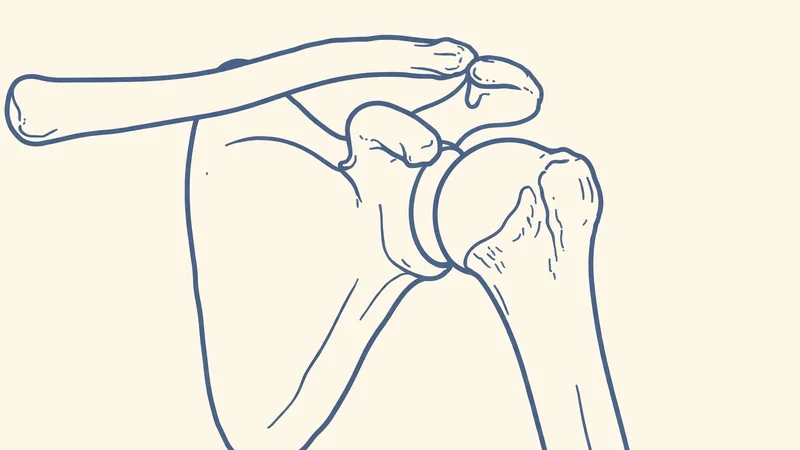
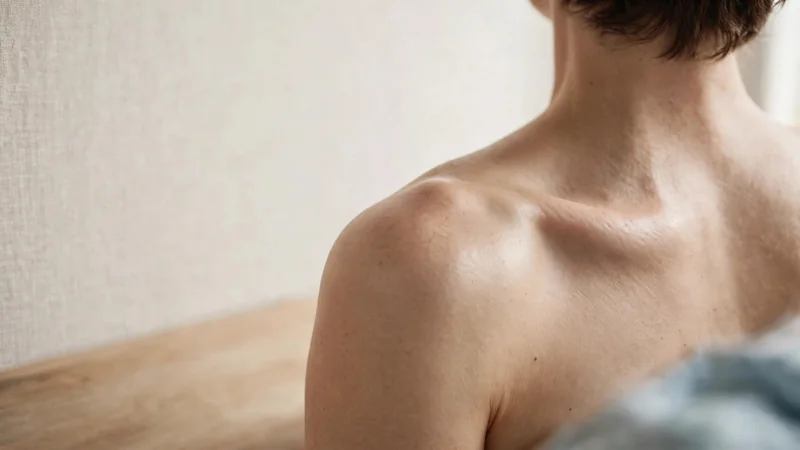
Shoulder anatomy & how it works
Pectoralis Minor: The Small Chest Muscle That Pulls Shoulders Forward
4-minute read · Published July 23, 2025 · Updated July 23, 2025
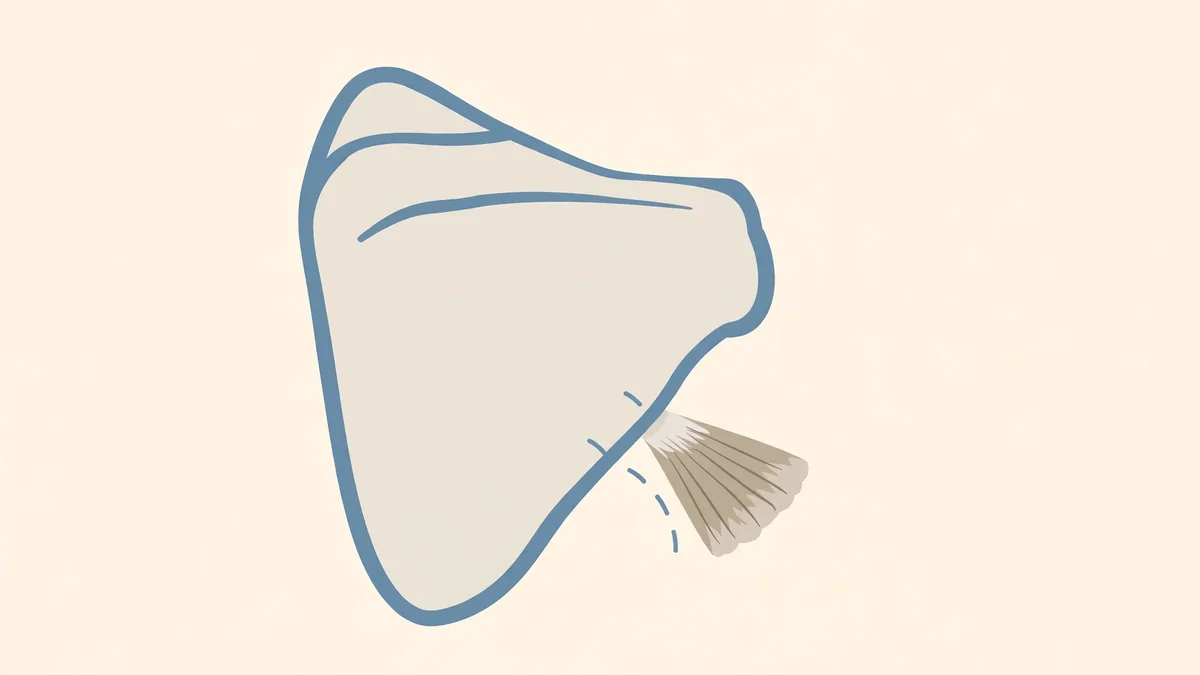
What this muscle does
Pectoralis minor sits beneath the larger chest muscle, the pectoralis major. It runs from the ribs to a bony point on the shoulder blade, called the coracoid process. When it shortens or tightens, it can draw the shoulder blade forward and down.
That is why it is often blamed for rounded shoulders. The picture is more complicated, though. The shoulder blade is moved by many muscles working together, and no single muscle controls its position.
What the research says
- Posture is not proven to cause pain. An umbrella review of 41 systematic reviews found no consensus that spinal posture causes low back pain, a reminder to be cautious about posture blame in general [R25].
- Neck pain is associated with forward head posture. It is associated with neck pain, not proven to cause it. Exercise-based programs are the main studied treatment [R27].
- Exercise can change posture angles. Therapeutic exercise can improve forward-head angle. The link between posture change and pain change is still unsettled [R26].
- Shoulder position sense matters. Shoulder disorders are linked to reduced joint position sense, which is the body's sense of where the joint is. Rehabilitation often moves from range of motion to strength and then to control and coordination [R16].
What you can do
- Notice your posture without judging it. Check how your shoulders feel after a long day, rather than trying to hold a perfect position.
- Sit with support. Use a chair back that supports your upper back, and keep your feet flat.
- Gentle chest opening, if your clinician agrees. Stand in a doorway with forearms on the frame and lean forward slightly, or do the same seated against the back of a chair. Stop if you feel sharp pain.
- Shoulder blade setting. Sit tall and gently draw your shoulder blades back and down, without forcing the posture.
- Strength for the back. Seated rowing-type movements are often suggested to balance chest-dominant habits. Ask a clinician which exercises suit you.
- Move often. Change position every 30 to 60 minutes, even if you only stand for a moment.
Where ShoulderBack Pro fits and where it doesn't
Two of the 16 exercises suit this topic. SeeSaw uses gentle alternating reaches to work the muscles that steady the shoulder blades, and Bear Hugs Me draws the trainer to the chest to work the middle trapezius and rhomboids, on the opposite side from pectoralis minor. Both can be done seated.
It's a wellness tool, not a posture corrector, and it doesn't release pectoralis minor. There are no clinical trials of it yet. Details are in the shop.
When to see a professional
A physiotherapist or doctor can assess whether chest tightness is involved in your pain. Book a visit if pain is persistent or affects sleep.
See a doctor or physiotherapist promptly if you have: pain after a fall or injury with sudden weakness or loss of movement; a shoulder that looks deformed, very swollen or bruised; fever or feeling unwell alongside the pain; chest pain or breathlessness (call emergency services); constant pain that doesn't change with rest or activity; pain that wakes you most nights; numbness, tingling or weakness into the arm or hand; pain in several joints at once; or pain that hasn't improved after a couple of weeks of sensible self-care.
Try this movement
SeeSaw (the muscles around the shoulder blade) →Frequently asked questions
Is a tight pectoralis minor causing my shoulder pain?
It may be part of the picture for some people, but it is not proven as a cause. A clinician can assess your shoulder and tell you what is likely involved.
Should I stretch my chest?
Gentle chest opening is often suggested, but ask a clinician first if you have shoulder pain, especially after surgery or injury.
Is a posture corrector the answer?
We found no strong evidence that posture correctors fix shoulder pain, and they are not a treatment for a diagnosed condition.
Sources
- Mureşan et al. (2022). Effects of a novel proprioceptive rehabilitation device on shoulder joint position sense, pain and function. Medicina. https://www.ncbi.nlm.nih.gov/pmc/articles/PMC9505091/
- Swain CTV et al. (2020). No consensus on causality of spine postures or physical exposure and low back pain: umbrella review of 41 systematic reviews. J Biomechanics. https://getfitcraft.com/guides/exercises-for-posture
- Sheikhhoseini R et al. (2018). Effectiveness of therapeutic exercise on forward head posture: systematic review and meta-analysis. J Manipulative Physiol Ther. https://getfitcraft.com/guides/exercises-for-posture
- Healthcare (MDPI) (2023). Treatment of chronic neck pain in patients with forward head posture: systematic narrative review. 11(19):2604. https://www.mdpi.com/2227-9032/11/19/2604